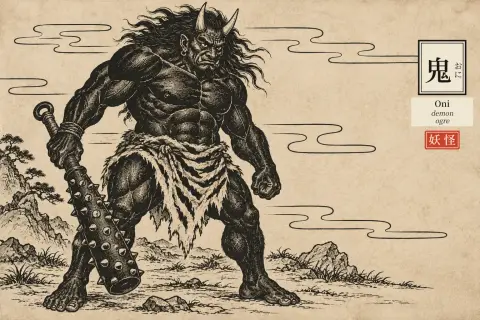
Setsubun is the Japanese day for chasing the oni out of your house. In 2027 it falls on Wednesday, February 3. You throw roasted soybeans and shout "Oni wa soto! Fuku wa uchi!", which means "Demons out! Luck in!"
Here is the strange part. The oni you chase began as the man who chased demons.
Then you eat one bean for each year of your age. Many families also eat a sushi roll in silence, facing the year's lucky direction. This page goes through each step. It also explains why the oni is the one being chased, and where in Japan you can watch it.
When is Setsubun?
Setsubun means "the parting of the seasons." Old calendars had four of them. Today the word means only one: the day before Risshun, the first day of spring on the old calendar.
Risshun is not a fixed date. It is the day the sun reaches a set point in the sky. That point moves a little each year, so the date moves too. Japan's National Astronomical Observatory puts Risshun 2027 on February 4. So Setsubun 2027 is February 3.
Usually that is the answer. But in 2021 and 2025, Setsubun fell on February 2. Until about 2057, it moves to February 2 in each year after a leap year. The next one is 2029.
Why does a spring day matter so much? On the old calendar, the year began in spring. So Setsubun was a kind of New Year's Eve. It was the right night to throw out the bad luck of the old year.
What you do, step by step
1. Get roasted beans
The beans are roasted soybeans, called fukumame, "lucky beans." They must be roasted. Raw beans might sprout, and that was bad luck. Traditionally the beans sit in a wooden box measure first, as an offering at the home altar.
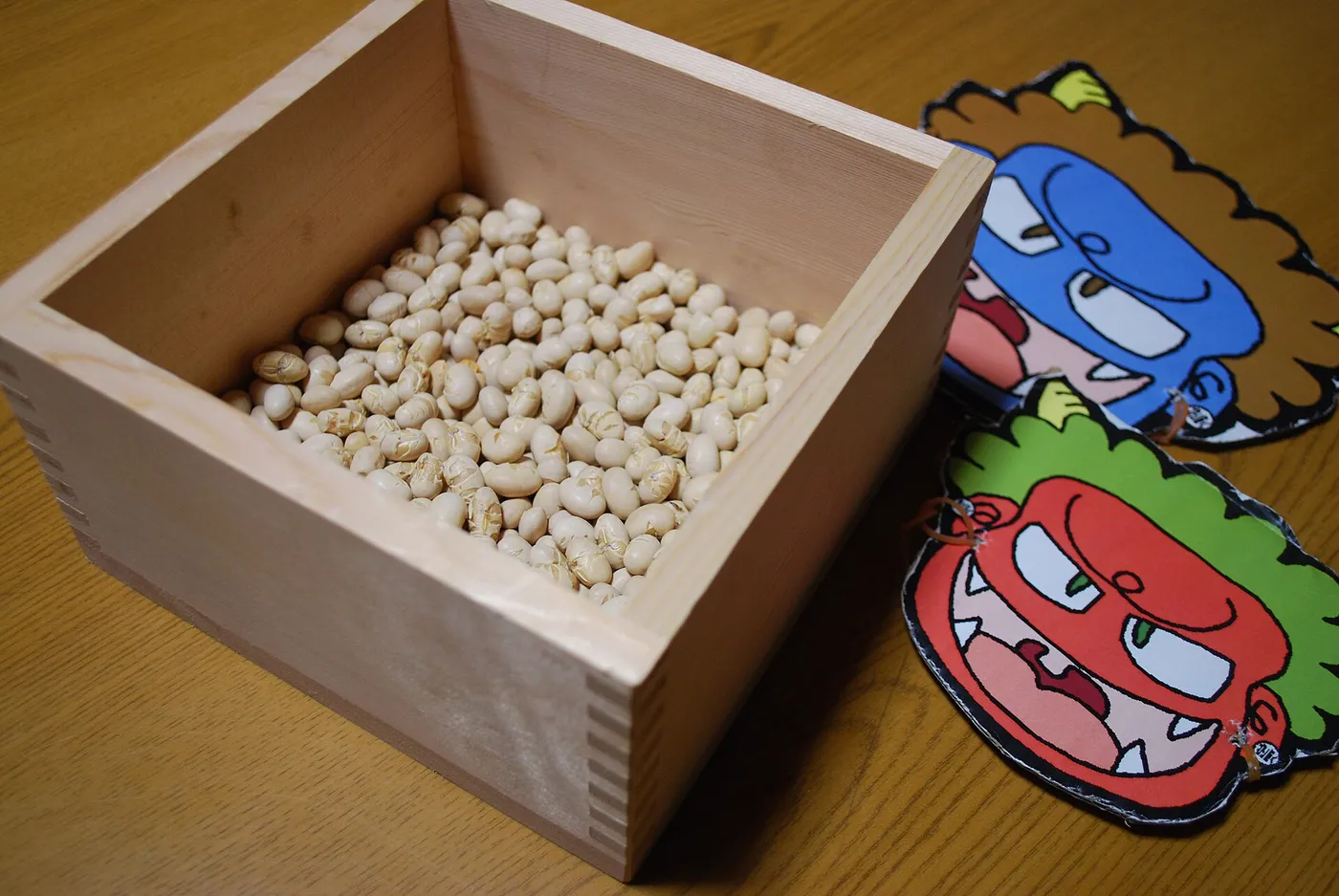 Photo: katorisi, CC BY-SA 3.0. Roasted beans in a wooden box measure, with paper oni masks. Katori, Japan, 2010.
2. Someone wears the oni mask
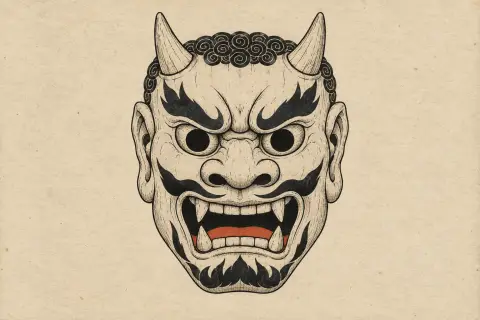
In many homes, one person puts on an oni mask. Often it is a parent, and the children throw the beans. Many bean packs in Japan come with a simple mask.
3. Throw and shout
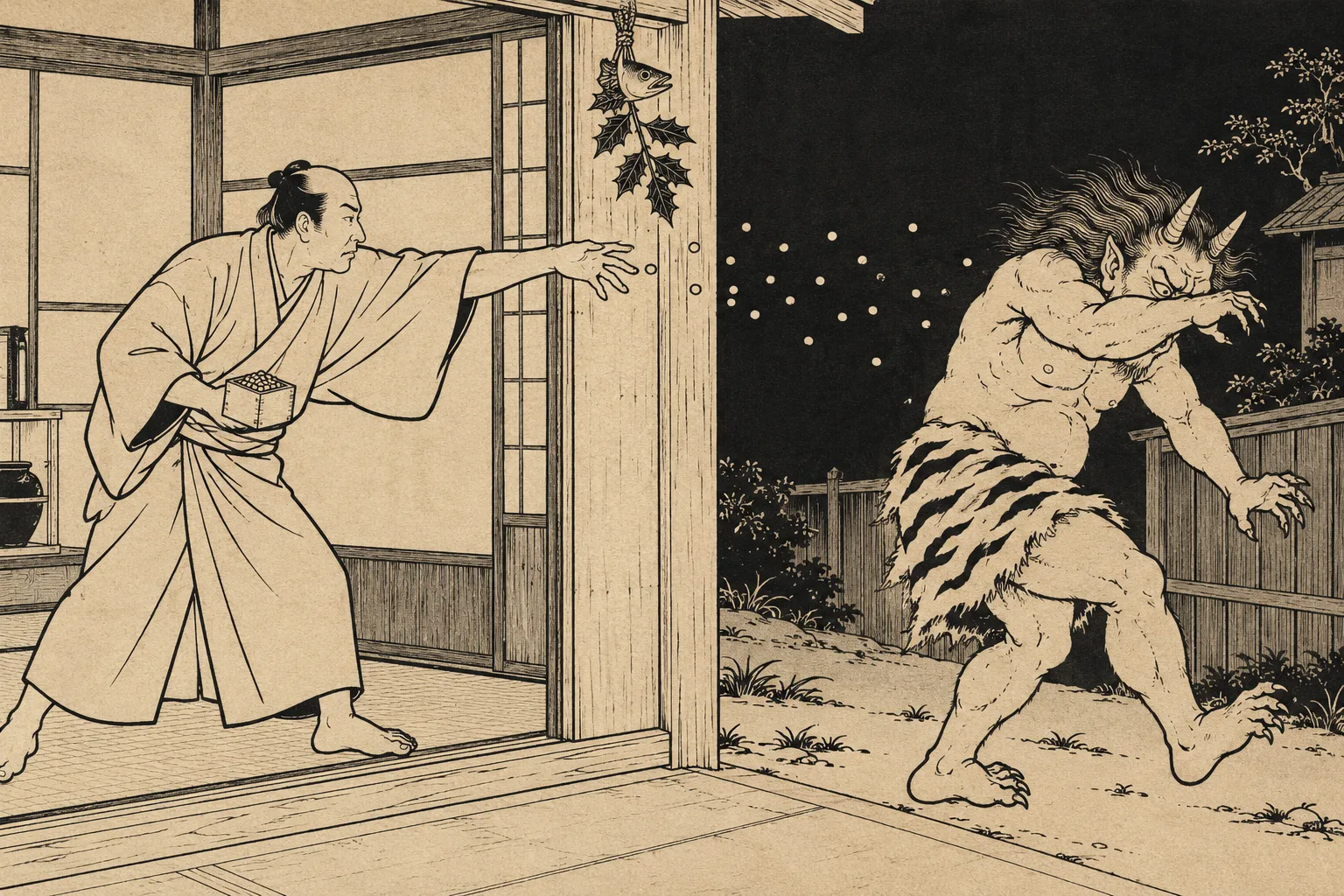
Traditionally the head of the house does the throwing, as the toshiotoko, "the man of the year." Throw beans out the door and shout "Oni wa soto!" Throw beans inside the house and shout "Fuku wa uchi!" Go room by room.
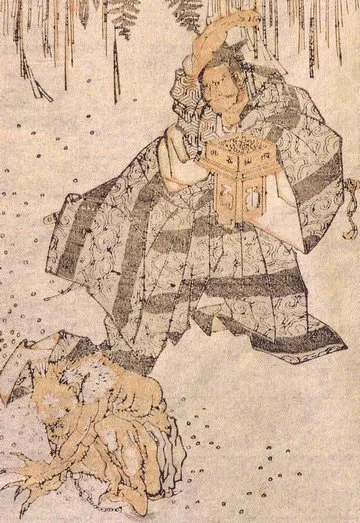 Art: Katsushika Hokusai, public domain. "The Setsubun Oni," from the Hokusai Manga, volume 4 (1804–1818). Beans drive the oni out.
Why beans? Nobody knows for sure. One popular saying is a pun. Mame, "bean," can be written with characters for "demon's eye" or "destroy demons."
4. Eat your age
Pick up beans and eat one for each year of your age. Some families eat one more, for the year ahead. Japanese dictionaries give both ways.
After the beans: the roll and the door charm
5. Eat an ehōmaki
The ehōmaki is a thick sushi roll. You face the ehō, the lucky direction of the year. Make a wish and eat the whole roll in silence, without cutting it.
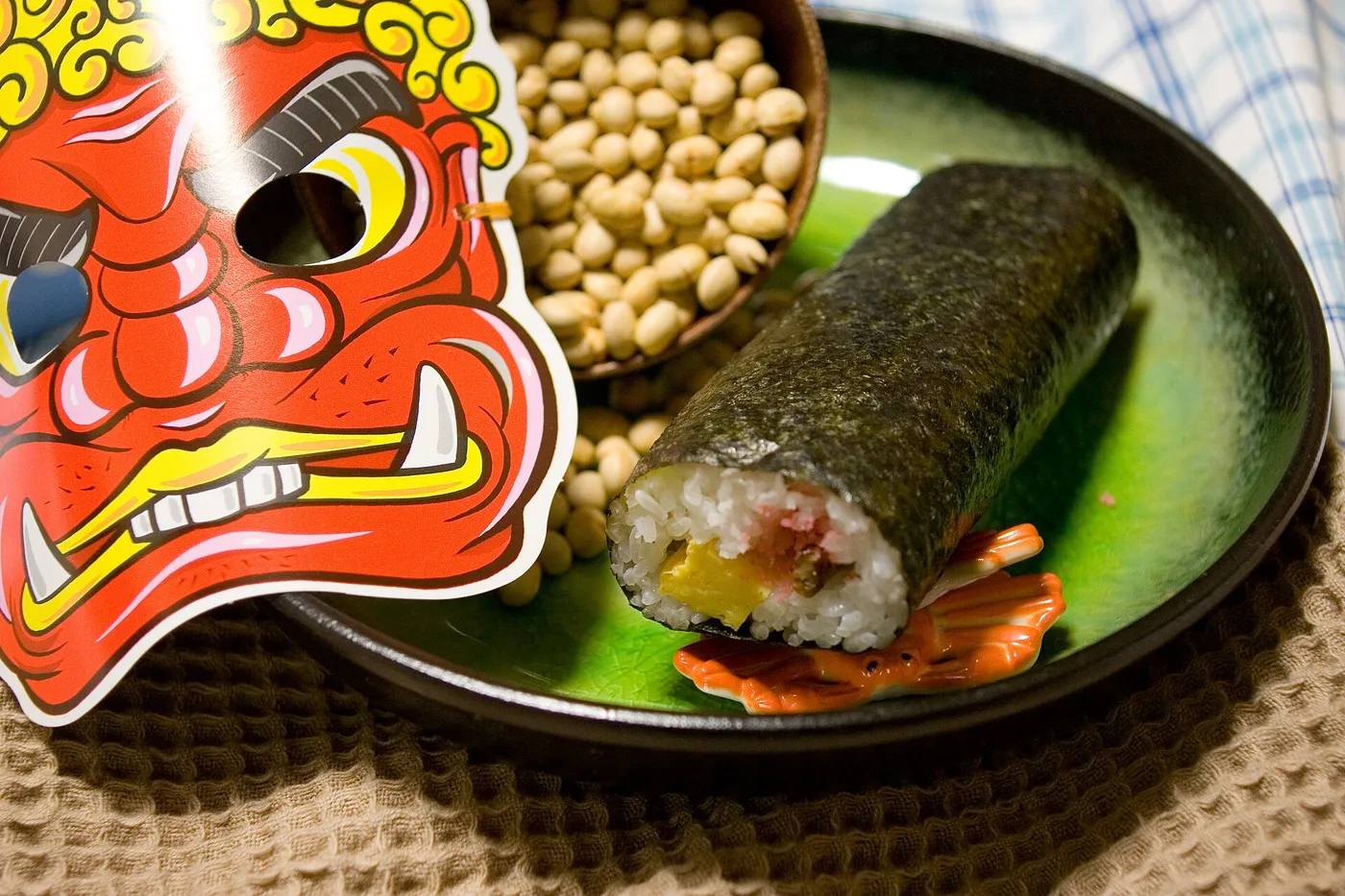 Photo: sakura_chihaya+, CC BY-SA 2.0. An ehōmaki roll and roasted soybeans on February 3, 2008.
The direction comes from the year's place in an old ten-year cycle. For 2027, face north-northwest, then turn a little more toward north.
This custom is newer than the beans. It is often said to come from Osaka, but nobody has proved where it began. Convenience stores spread it. Seven-Eleven first sold it in Hiroshima in 1989, and sold it across Japan from 1998.
6. Hang a holly and sardine charm
Some homes put a hiiragi iwashi at the door. It is a sprig of holly with a grilled sardine head on it. The sharp leaves stab the oni's eyes. The smell of the fish keeps it away.
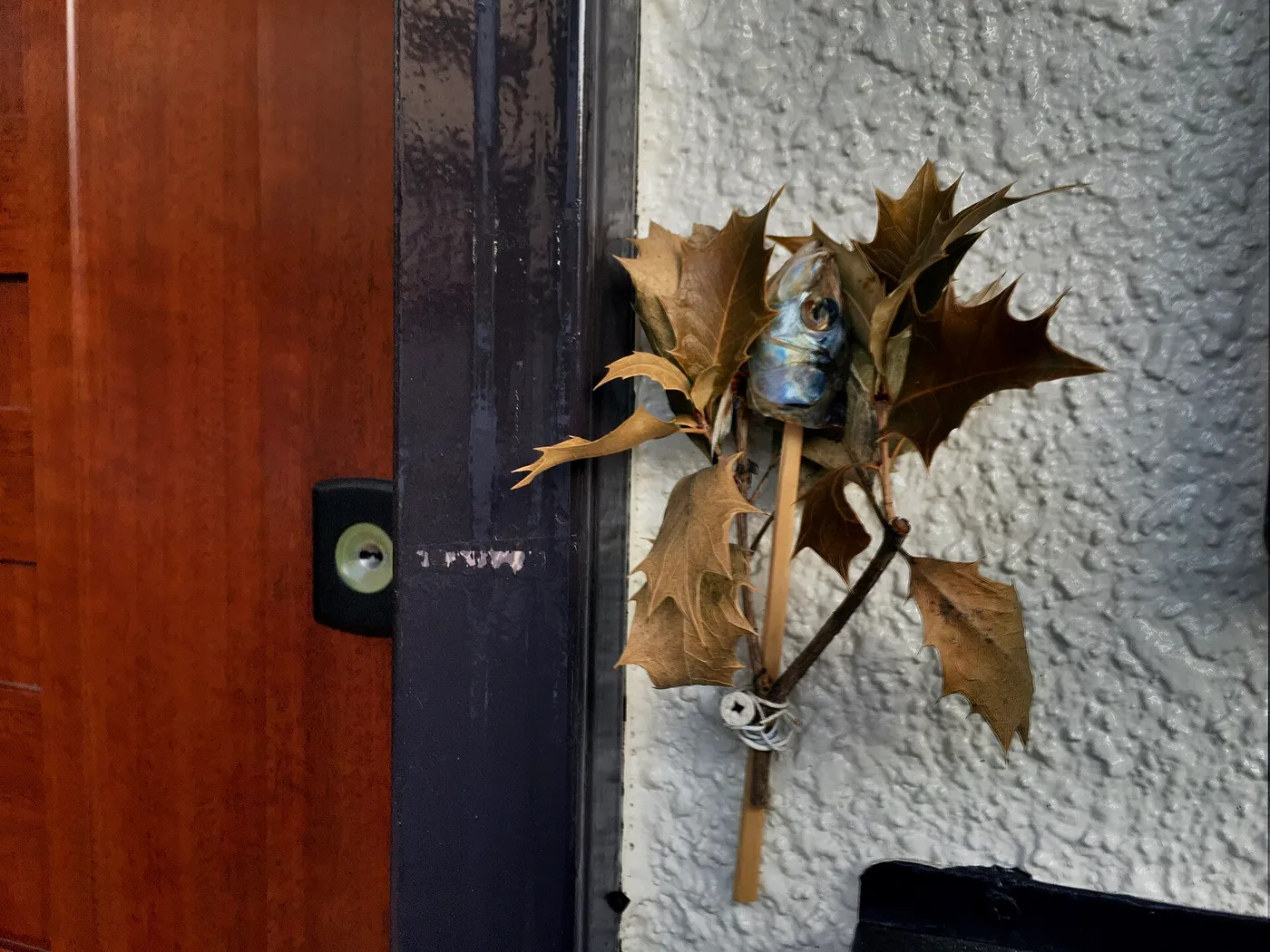 Photo: Nesnad, CC BY 4.0. A hiiragi iwashi by a door in Tokyo: holly leaves and a sardine head.
The idea is old. The Tosa Nikki, a diary from around 935, mentions holly and a fish head on a New Year gate rope.
Why the oni?
The beans come from an older rite, called tsuina. It came from China. Japan's court records first mention it in 706, in a year of plague.
At court it was held on New Year's Eve. A man called the hōsōshi wore a mask with four golden eyes. He chased away the demons of disease. Officials shot reed arrows from bows of peach wood.
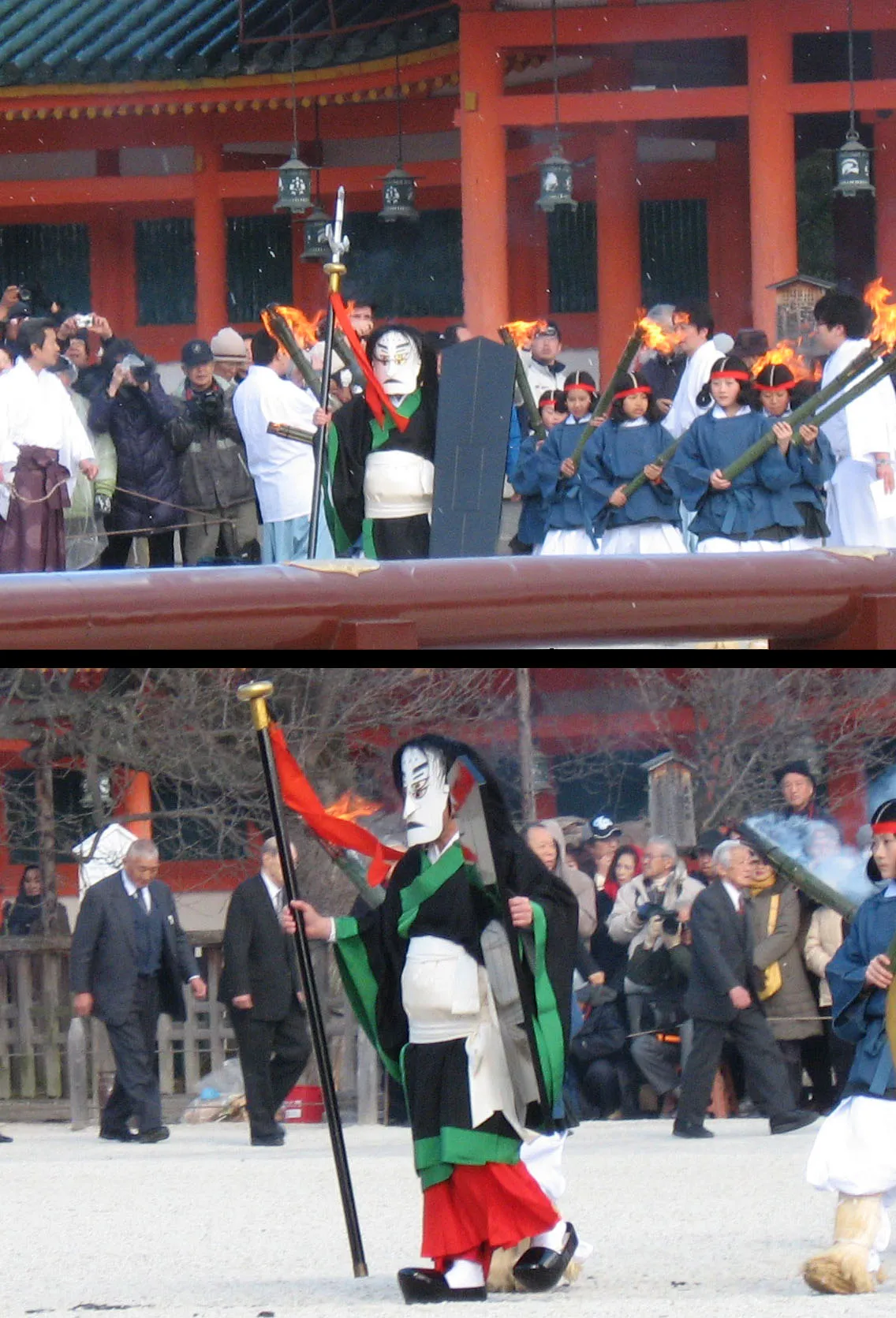 Photo: Wikiwikiyarou, CC BY-SA 3.0. The hōsōshi at the tsuina rite of Heian Shrine, Kyoto, on Setsubun 2010. Masks differ by shrine. At Yoshida Shrine, the hōsōshi wears the four-eyed gold mask.
Then the meaning flipped. The hōsōshi looked so strange that people began to see him as the oni. Over time, he became the one chased away. The demon chaser became the demon.
The rite slowly moved from New Year's Eve to Setsubun, from the Muromachi period (1336–1573) on. The earliest bean-throwing record is from 1425, in a prince's diary, the Kanmon Nikki. Read why oni have horns for how the old calendar shaped the oni's look.
Other visitors on Setsubun night
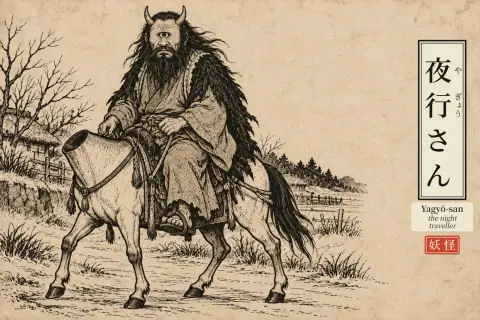
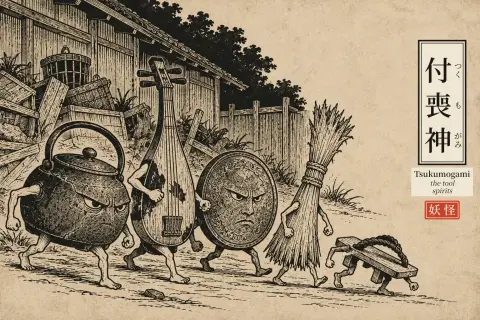
The oni is not the only one out that night. In old Tokushima, Yagyō-san, an oni on a headless horse, rode the roads on Setsubun. And in an old story, thrown-away tools come to life on Setsubun night as tsukumogami and attack people.
How to do it at home, outside Japan
You need only two things.
- Beans. Look for roasted soybeans in a Japanese or Asian grocery store. Or buy plain dried soybeans and roast them in a dry pan until brown. In Hokkaido and the north of Japan, many families throw peanuts in the shell. They are easy to pick up, and you can still eat them.
- A mask. A paper mask is enough. Many bean packs in Japan come with one. Red and blue are both classic oni colors.
The holly charm is optional. Japanese hiiragi is a different plant from European holly, but both have spiky leaves. The ehōmaki can be any big sushi roll you like.
Where to see Setsubun in Japan
Big temples and shrines hold Setsubun events, called setsubun-e or setsubun-sai. Times change each year, so check the official page before you go.
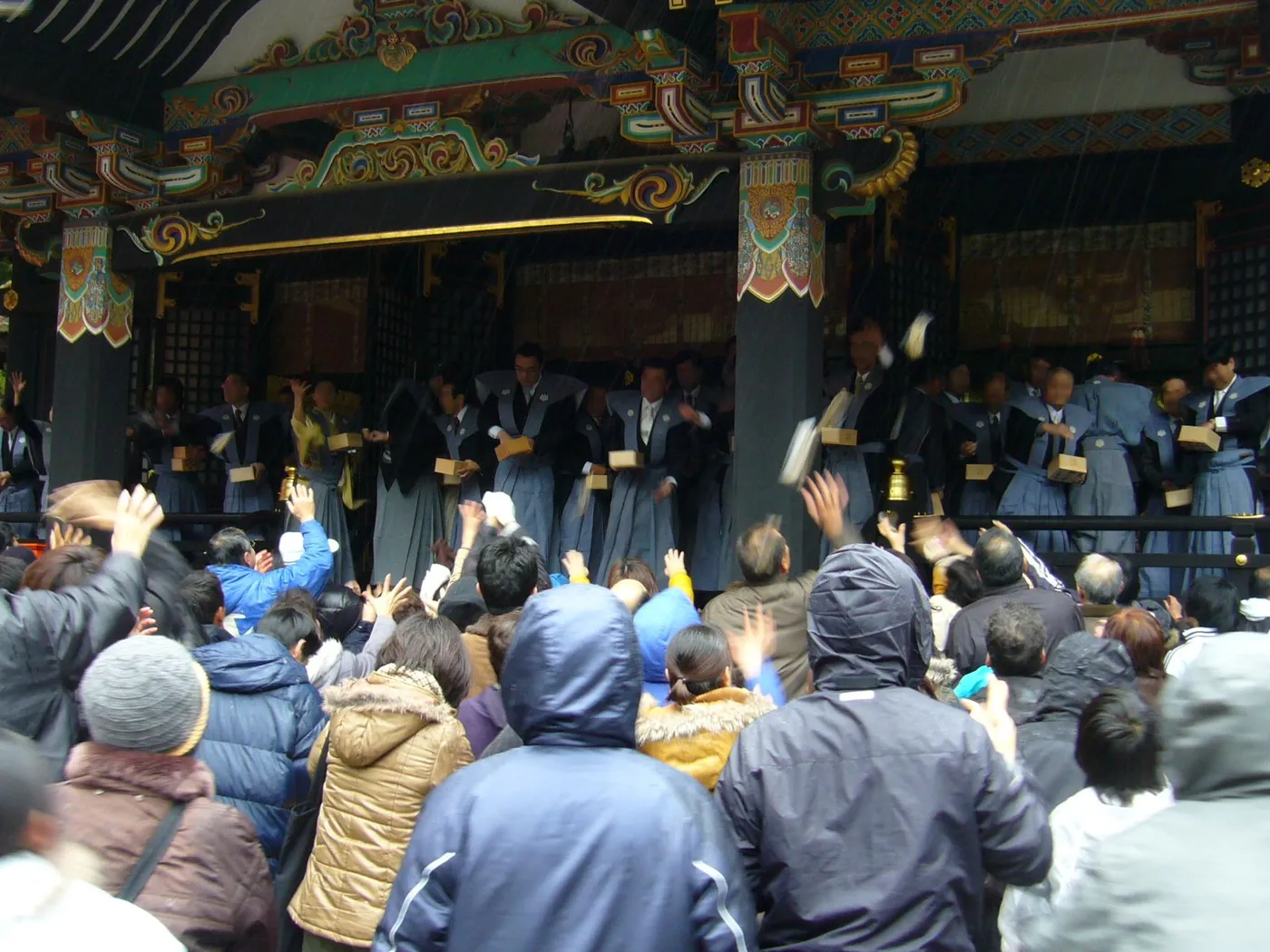 Photo: katorisi, CC BY 3.0. Bean throwing at Katori Jingū shrine, Katori, Japan, 2008. Men throw beans from the hall. The crowd reaches up to catch them.
-
Rozan-ji, Kyoto. Three oni, red, blue and black, stomp and dance on Setsubun day. Kyoto Prefecture says they stand for greed, anger and ignorance. A bow, beans and rice cakes drive them out.
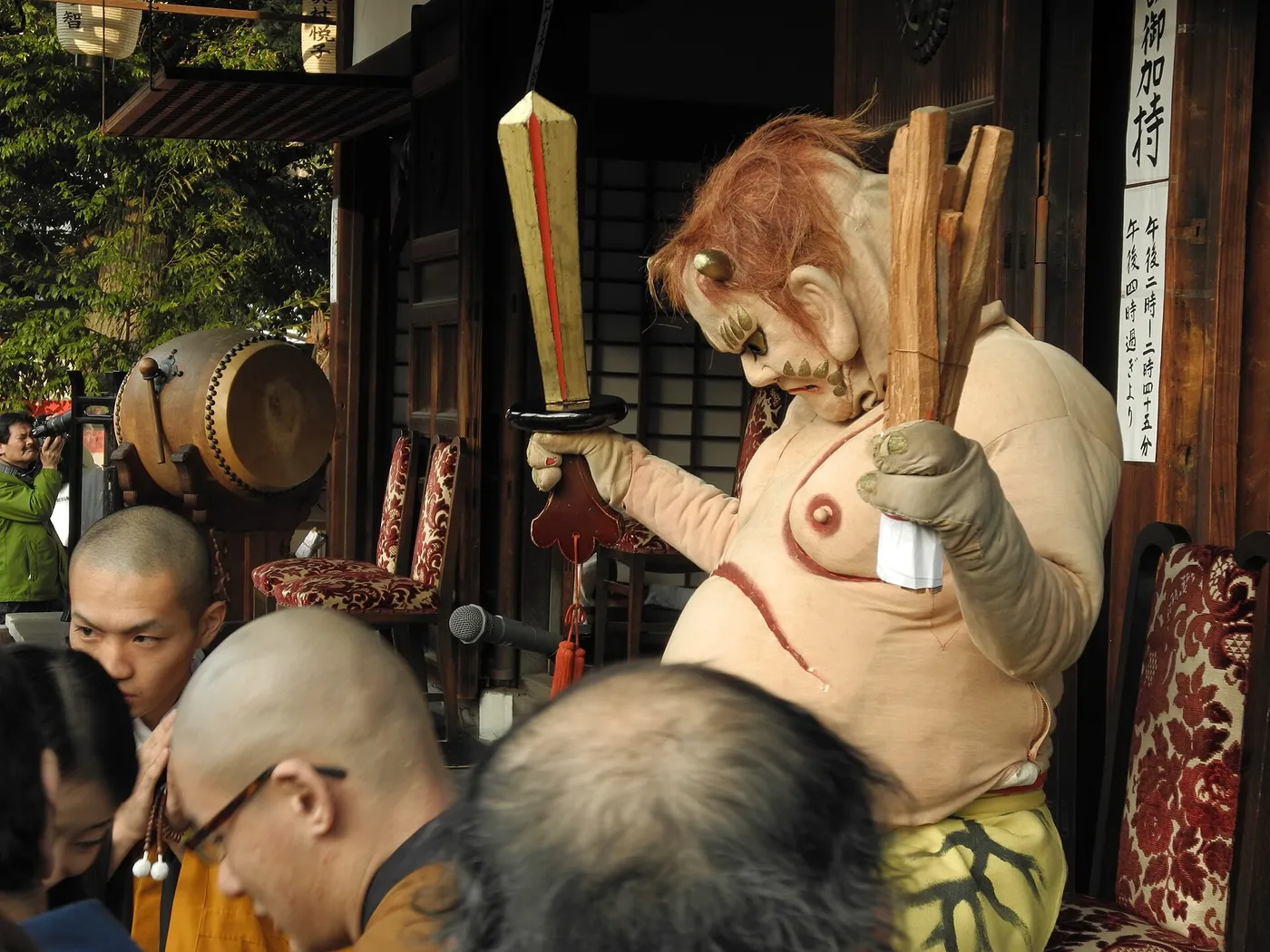 Photo: Fabjan, CC BY-SA 3.0. One oni at Rozan-ji's Setsubun festival, Kyoto, 2013. This one has pale skin and red hair, and holds a sword.
-
Yoshida Shrine, Kyoto. A three-day festival around Setsubun. On the first day, the hōsōshi chases three oni, as at the old court. He wears the four-eyed gold mask.
-
Naritasan Shinshō-ji, Chiba. Sumo wrestlers and famous people throw beans here. The temple shouts only "Fuku wa uchi!" It says that before Fudō, its main Buddhist deity, even an oni changes its heart.
-
Sensō-ji, Tokyo. The shout here is "Senshū banzei, fuku wa uchi!", "Ten thousand years, luck in!" There are no oni before Kannon, the temple's Buddha, so no one shouts "Oni wa soto."
-
Kinpusen-ji, Yoshino, Nara. Here the shout is turned around: "Fuku wa uchi, oni mo uchi!", "Luck in, and the oni in too!" The temple takes in the oni chased from all over Japan. Its founder, the mountain monk En no Gyōja, is said to have tamed two oni himself.
Read more about the oni
If the oni has caught you, one book covers it well. The Book of Yokai by Michael Dylan Foster, a folklore professor, covers the oni with many other yokai. (Affiliate link: we may earn a small commission.)
Or start with our page on the oni itself.
The photos on this page come from Wikimedia Commons. Each credit links to the photo's own page.