Japanese urban legends come with rules because the rule is the part of the story you can use. A story only scares you. A rule tells you what to do. So you can pass it, fail it, try it, and tell a friend.
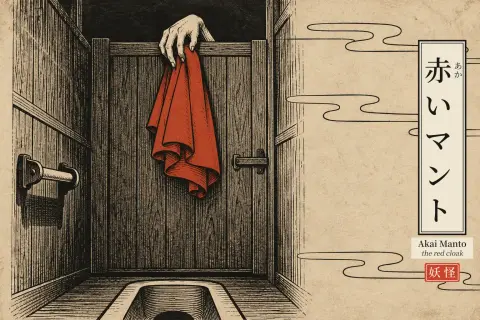
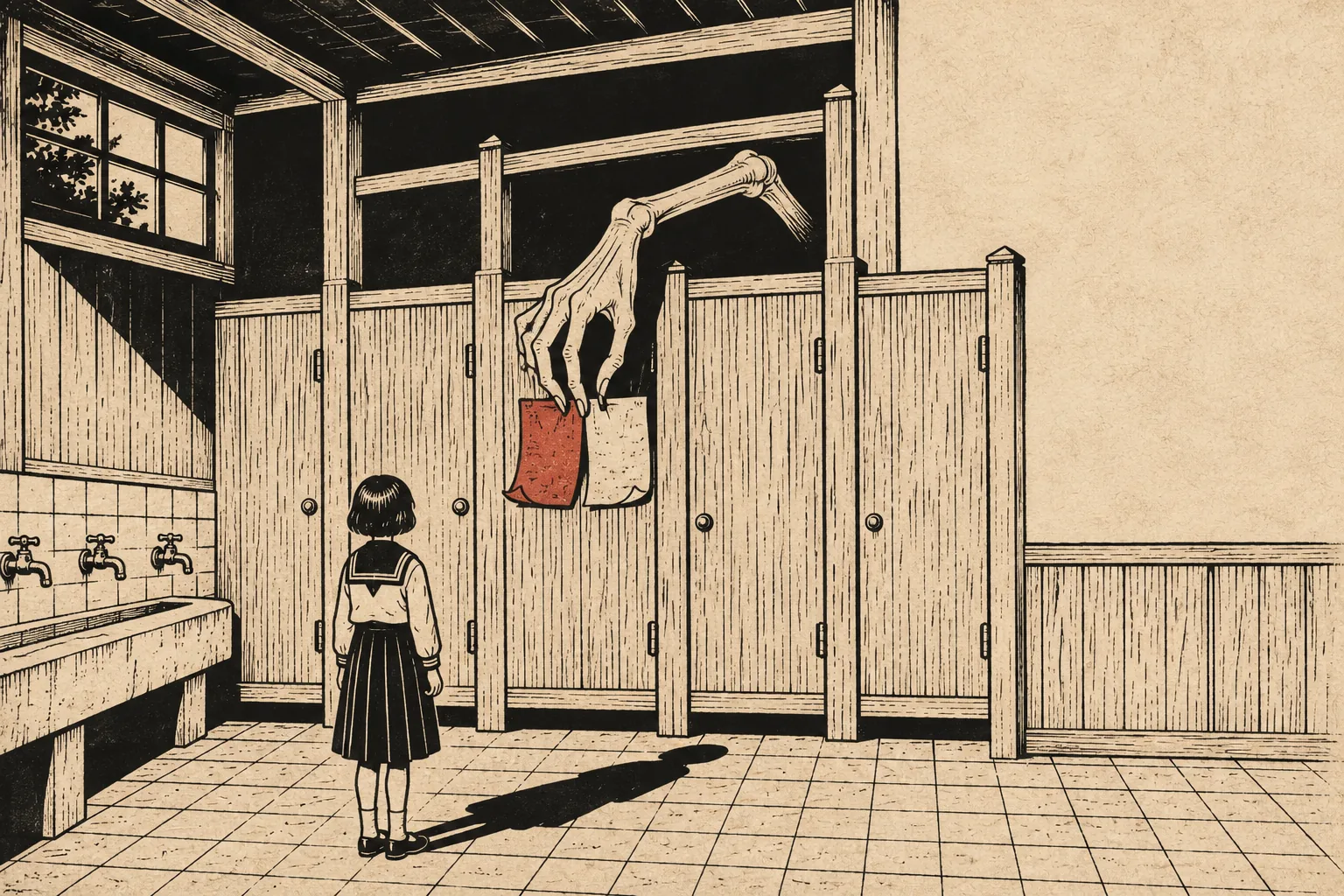
The rules hide the best surprises. One school ghost is beaten by a perfect test score. And the toilet ghost's famous question, "Red paper or blue paper?", began as "red or white." In its oldest form, people asked it of a yokai to send it away. Then the question changed sides.
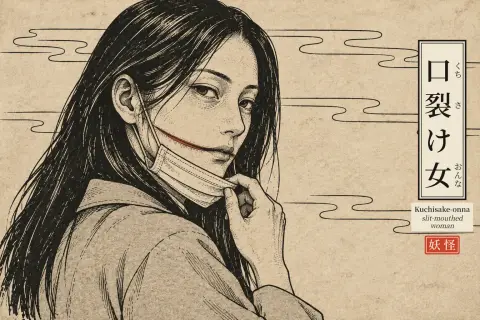
You might expect the newer rules to be old charms, handed down for centuries. Many were not even in the first telling. Children, forum readers and even a manga added them later. Say "pomade" (hair grease) three times to escape the slit-mouthed woman? Schoolchildren spread that in 1979.
We checked 19 well-known Japanese urban legends, all of them on our Modern Urban Legends page. Fifteen have a rule. The four without one give you nothing to answer and nothing to do.
| Legend | The rule | Break it, and… | First on record |
|---|---|---|---|
| Kuchisake-onna | Answer "Am I pretty?" Children added: say "pomade" three times | She cuts you | Gifu, December 1978 |
| Aka Manto | Choose red paper or blue paper | You bleed, or you turn blue | Said to be told in Nara in the 1930s |
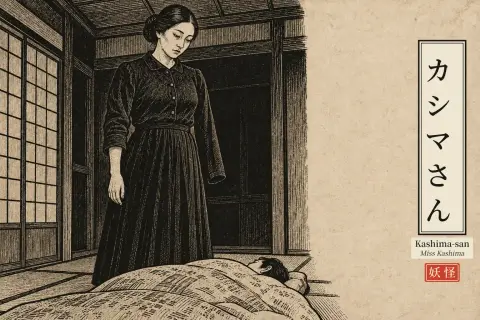
| Kashima-san | Answer her question right: "I need my legs right now" | She takes that part of your body | In a book by 1995 |
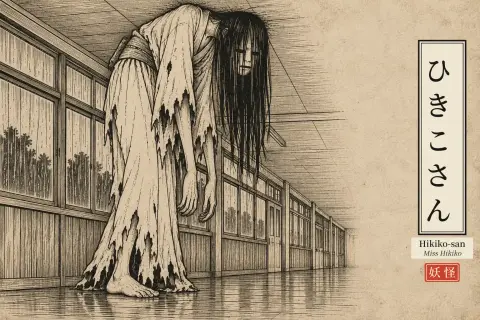
| Hikiko-san | Say her face is beautiful, or show her a mirror | She drags you away | Online, 24 July 2001 |
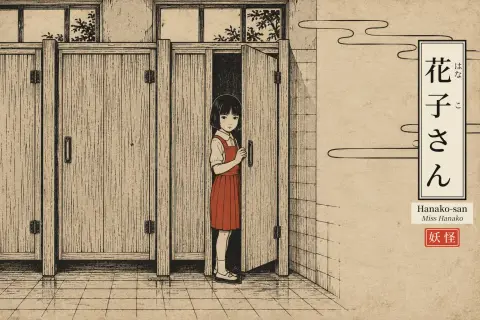
| Hanako-san | Third stall, knock three times, ask if she is there | She pulls you into the toilet | About 1950 |
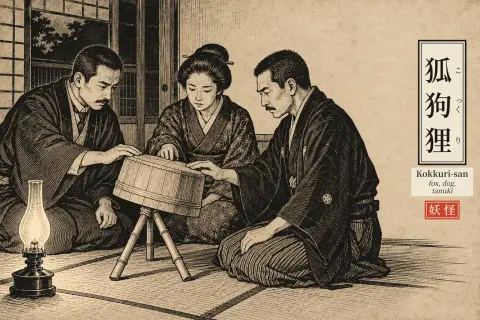
| Kokkuri-san | Call it in, then send it home | It may not leave | Shimoda, about 1884 |
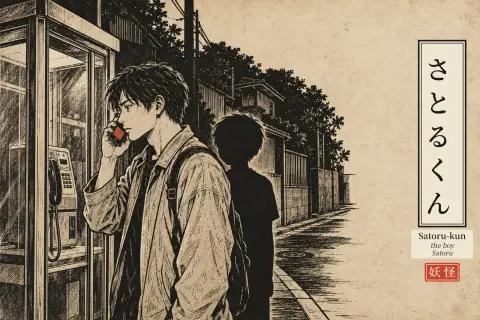
| Satoru-kun | Call him from a payphone. Never turn around | You are taken away | In a book by 2003 |
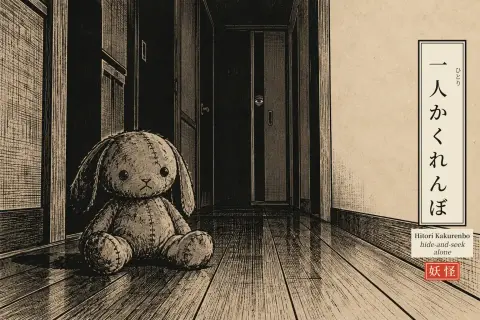
| Hitori kakurenbo | Start at 3 a.m.; end it with salt water | The game does not end | A forum, April 2007 |
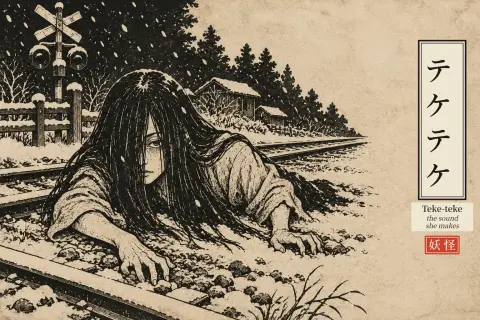
| Teke-teke | Forget the story within three days | She comes to you | A manga, 1990s |
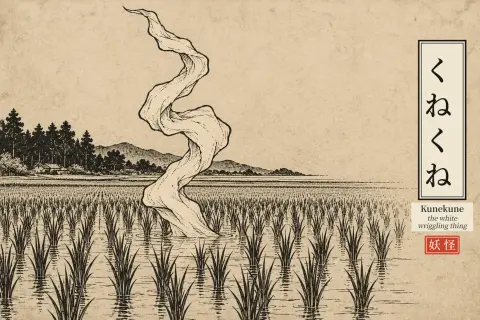
| Kunekune | Do not look closely | Your mind breaks | A forum, 29 March 2003 |
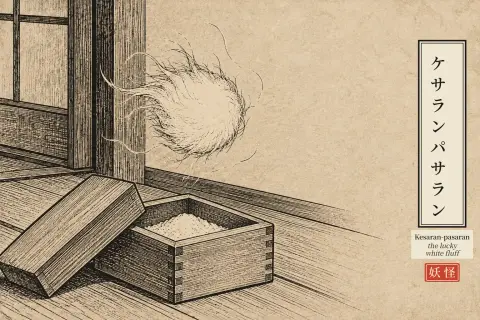
| Kesaran-pasaran | Keep it in a box. Look only once a year | Your luck fades | A folklore journal, 1950s |
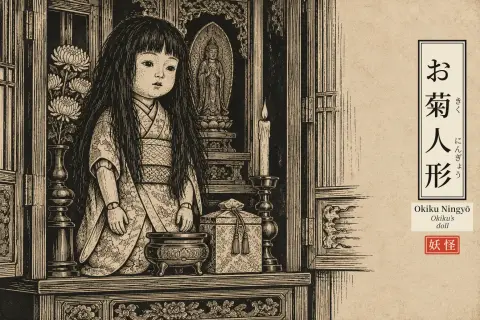
| Okiku doll | No photos at the temple | The doll is said to dislike it | A magazine, 1962 |
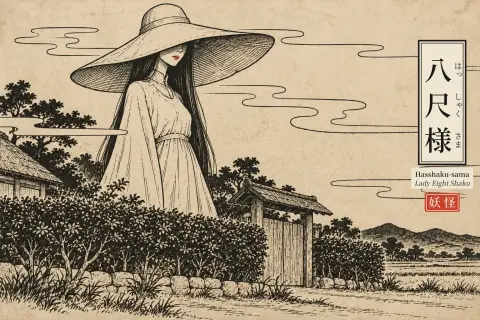
| Hasshaku-sama | Do not speak to her. Stay inside until 7 a.m. | Nobody she meets is saved | A forum, 26 August 2008 |
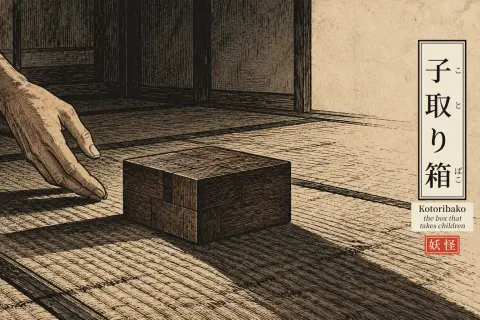
| Kotoribako | Readers added: do not search the name | Readers said they felt sick | A forum, 6 June 2005 |
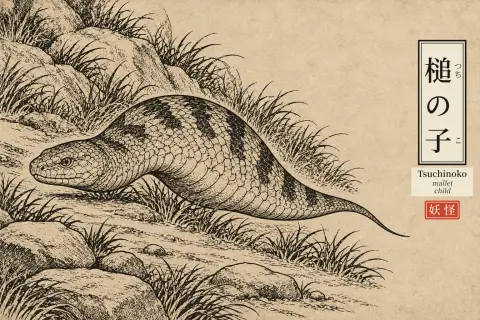
| Tsuchinoko | Run uphill | It bites your leg | An encyclopedia, 1712, under another name |
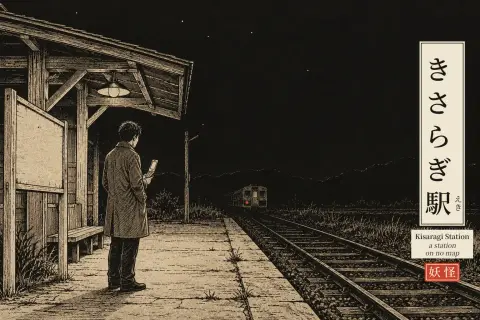
| Kisaragi Station | None | — | A forum, 8 January 2004 |
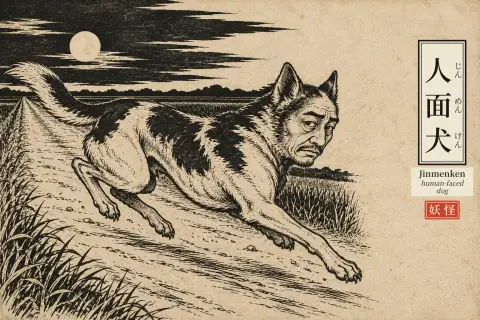
| Jinmenken | None | — | A rumour, 1989–90 |
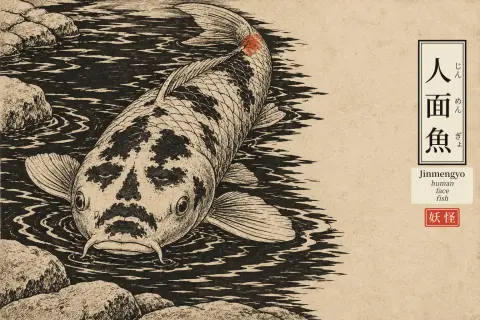
| Jinmengyo | None | — | A magazine, spring 1990 |
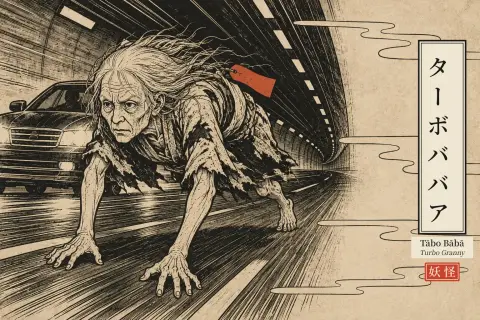
| Turbo Baba | None | — | In a book by 1996 |
The monster asks a test question
Four of these monsters ask you a question. Kuchisake-onna asks, "Am I pretty?" The voice in the toilet asks, "Red paper or blue paper?" Kashima-san asks, "Do you need your legs?" Hikiko-san's cry sounds like a question: "Is my face ugly?"
These stories were told by schoolchildren. At school, a question has a right answer and a wrong one. A wrong answer costs you something. One psychological theory reads the red-paper story exactly this way: it is a child's fear of a wrong answer on a test, made into a ghost.
Hanako-san shows it best. In one telling, you show her a test paper with a perfect 100. She screams and vanishes. The ghost of the school toilet is beaten by a perfect score.
Children wrote the way out
Kuchisake-onna has no safe answer. Say no, and she cuts you. Say yes, and she shows her torn mouth and asks again. So in 1979, children passed around exits. Say "so-so." Give her amber-colored hard candy. Say "pomade" three times.
The red-paper voice is the same. In one telling, you ask for blue, and the voice says there is no blue paper. You must say red. Children kept opening new doors anyway. One telling says answer white. A 1999 book says answer "I don't want anything." Some say yellow saves you. Others say yellow turns your whole body yellow with sickness.
Why so many exits? A scary story is told to friends. And the first thing a friend asks is, "So what do you do?" Each teller needed an answer, so each school made one. That is why the rules never agree. There is not one rule. There are a thousand classrooms.
The ghost's question was once a charm
The red-paper question is older than the school version. In Kyoto, a custom warned of a yokai called Kainade. On the night of Setsubun, the night before spring, it stroked your bottom in the toilet. People kept it away by saying, "Shall I give you red paper, or white paper?"
In a toilet, paper is what your hand reaches for. So people offered the reaching hand some paper. A yokai writer, Murakami Kenji, links this charm to the school toilet. The oldest school form, from 1930s Nara, also offers red or white. Blue came later. Why a toilet? In old Japan, the toilet was a small hut outside the house. At night you went there alone, in the dark. Homes even honored a god of the toilet, and left red-and-white dolls there for it. Hanako-san wears red and white in many tellings, too.
Now look at who speaks. In the old custom, a person asked the question to protect themselves. In the school story, the voice in the toilet asks it. How? A story keeps the words and loses the reason. The Setsubun part was lost on the way into schools. Only a strange question in a dark toilet was left. And a strange voice in a dark toilet sounds like a ghost. The charm changed sides.
A rule you cannot keep
Some rules are built so you fail. Teke-teke's rule came with a 1990s manga episode: forget this story within three days, or she comes. Try not to think of something, and you think of it. The rule keeps her in your head for three days.
Kashima-san works the same way. She comes to whoever has heard her story. The trap closes when the story ends, not when you meet her.
Satoru-kun's rule is "never turn around." So no source describes his face. The rule is the reason nobody has seen him. Kunekune's rule is "do not look closely." The danger is your own curiosity. Even the lucky white puff ball kesaran-pasaran has one: look more than once a year, and the luck fades.
These rules do not protect you. They keep the story in your mind, and that is where a story lives.
Steps travel faster than stories
A story asks to be heard. A list of steps asks to be tried. And every try becomes a new story to tell.
Kokkuri-san, a Japanese coin version of the Ouija board, shows the speed. Around 1884, people at the port of Shimoda learned it, and boatmen carried it from port to port. By 1887 it was reaching the far north of Japan's main island. That took three years, with no phones and no internet. The goodbye rule was there already. An 1887 magazine joked about neighbours who said "please come in" and "please go home" every day.
Hitori kakurenbo, a hide-and-seek ritual game for one person, did the same online. The full steps went up on a forum on 21 April 2007. Readers tried them and posted what happened. By June, a TV show covered it. Later, a post signed as the first poster said several early "players" were him, typing on three phones. He said he never played it himself. A list of steps needs people who say "I tried it." Here, some of the first ones were one person.
No question, no rule
Four legends have no rule at all. Turbo Baba runs beside your car in a tunnel. Jinmenken outruns cars on the highway. Speak to it, and it snaps, "Leave me alone." That is a line, not a rule: it gives you nothing to do. Jinmengyo is a koi fish in a temple pond. Kisaragi Station is a stop that nobody knew, reached by one rider in one night of posts.
None of the four asks you a question. None can be called up, kept, or escaped with a few steps. They just happen, or they are just seen.
A rule lives where there is a test: a question to answer, or a step to take. You cannot get a test wrong if nobody sets one.
Try one, or read on
Two of these rules are full games. How to play kokkuri-san has the steps and a board to print. How hitori kakurenbo is played gives the steps, the ending and where they came from. Nothing bad has ever been shown to happen.
For which legend went furthest into real life, see Japanese urban legends, ranked.
The Kainade and toilet-god links are theories, not records. And one mystery is still open. Why "pomade"? No version of the story explains it.