Toriyama Sekien gave this yokai one of the strangest entries in his whole bestiary. It doesn't haunt, doesn't attack, doesn't even bother announcing itself. It walks into a house at the busiest hour of the evening, sits down in the best seat, drinks the family's tea, and leaves again — and somehow nobody in the household ever thinks to stop it. The name matches the behavior: 滑 (nurari), a word for something slippery and impossible to get a grip on, and 瓢 (hyon), a gourd. A slippery gourd-headed thing that is never quite where you can catch it.
What does it look like?
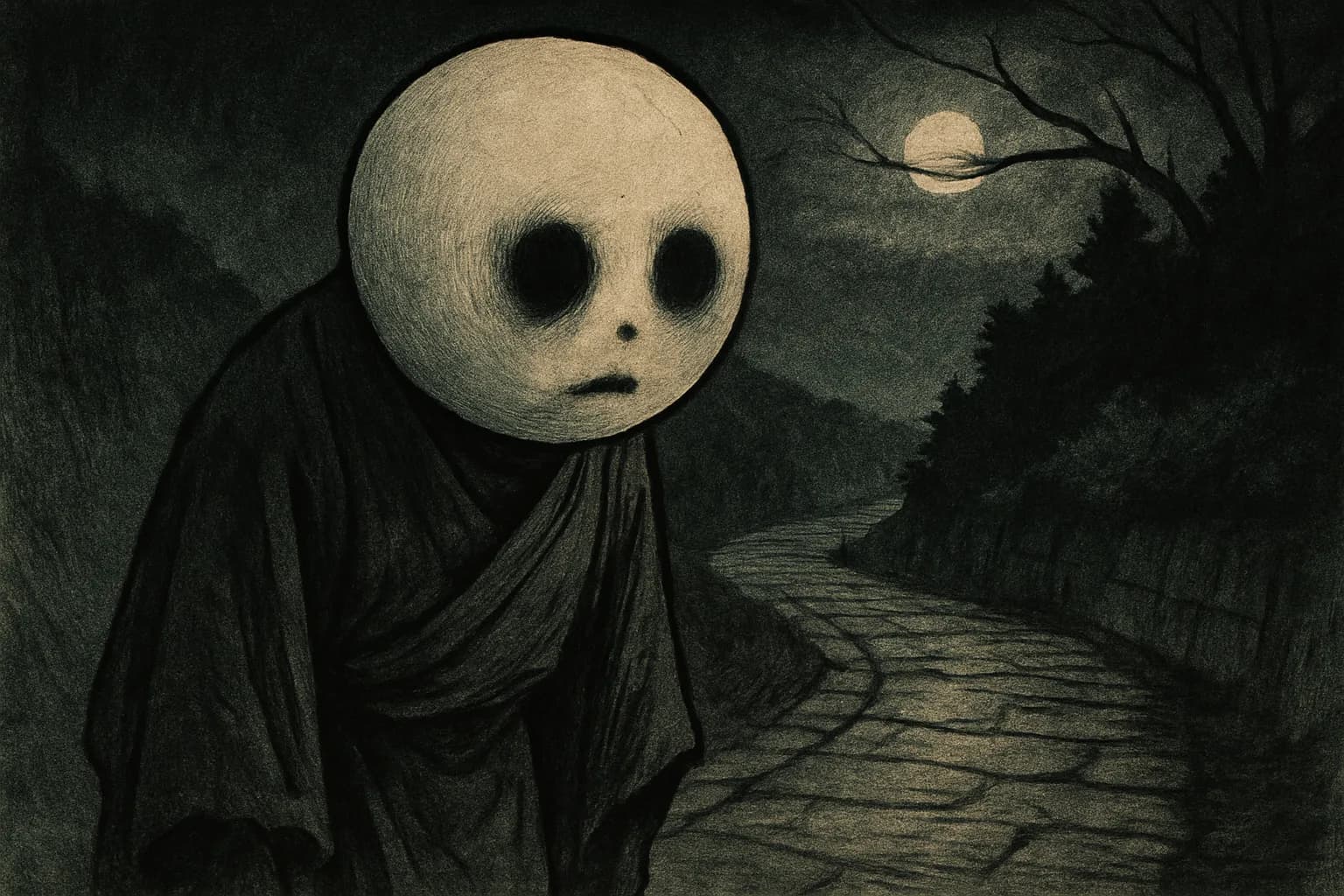
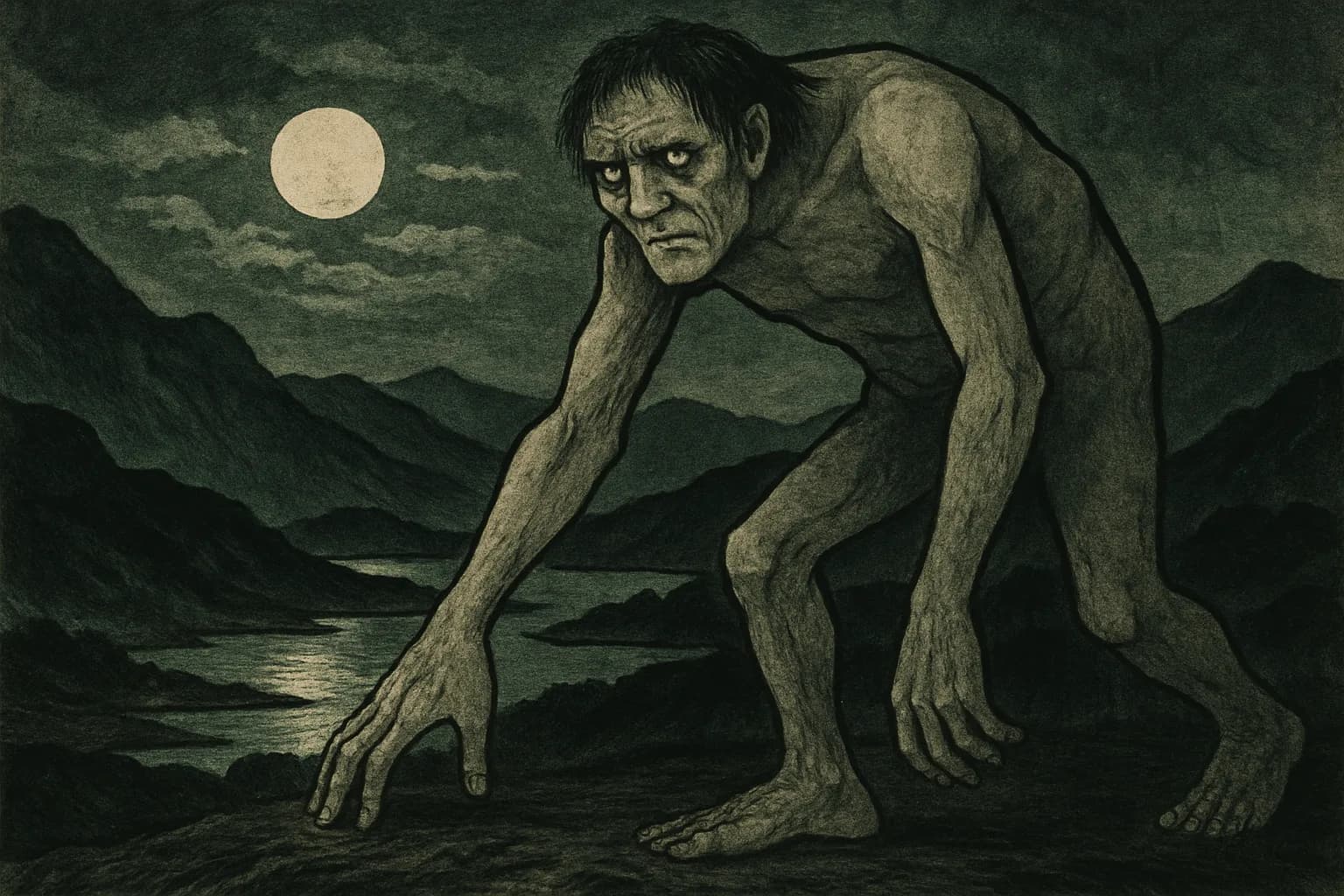
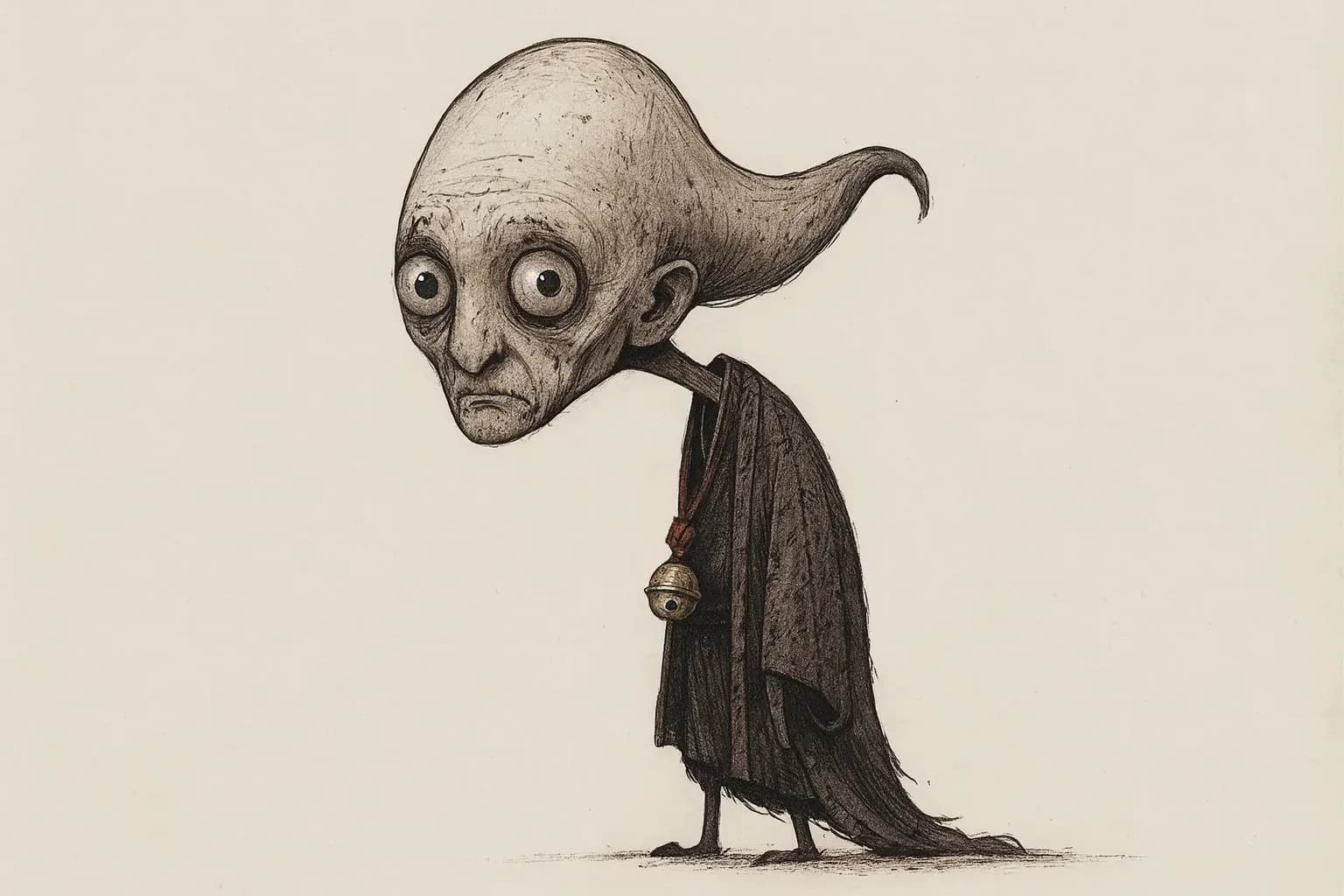
In Sekien's 1776 print collection Gazu Hyakki Yagyo ("The Illustrated Night Parade of a Hundred Demons"), Nurarihyon appears as an elderly man with an oddly elongated, bald head shaped like a hyotan gourd, dressed in the fine robes of a high-ranking Buddhist priest and riding in a palanquin carried by attendants. Nothing about the figure looks monstrous at a glance. That's the point — he is drawn to look exactly like someone who belongs wherever he happens to be, calm and unhurried, the picture of a man used to being deferred to.
The house call nobody agreed to
Modern retellings place Nurarihyon's visits at ōmagatoki, the "great confusion hour" of dusk, when a household is at its most distracted — dinner cooking, children being called in, lamps being lit. He slips through the door in the middle of that chaos, makes himself comfortable, and drinks the family's tea or smokes a pipe as though he owns the place. Servants who might otherwise challenge a stranger take one look at his priestly bearing and assume he must have business there. By the time anyone thinks to ask who let him in, he's already gone. He is, in other words, a monster built entirely out of unearned authority — dangerous not because he threatens anyone, but because he is never once challenged.
A different Nurarihyon, out at sea
A separate, older strand of the name survives in the folklore of Okayama Prefecture, on the Seto Inland Sea. Fishermen there told of a Nurarihyon seen on the surface of the sea: a large, round head bobbing in the water, laughing, that would sink out of sight the moment a boat drew close enough to grab it. This maritime creature has little in common with Sekien's household intruder beyond the name and the sense of something that can never quite be pinned down — which is likely no coincidence, since both center on the same idea of slipperiness the word nurari describes.
Where the name and the story come from
Sekien's four-volume series was largely a compilation — he drew on earlier oral tradition, folk sayings, and older art as much as he invented outright, and often gave brief, dry captions rather than full stories. Nurarihyon's entry is one of the driest of all: no dramatic backstory, just the observation of a stranger who enters a home uninvited and is treated, absurdly, like its rightful master. Read that way, the yokai looks like a folk personification of a very ordinary social anxiety — the guest who overstays, who acts too familiar too fast, whom nobody has the nerve to ask to leave. Giving that figure a name and a gourd-shaped head turned a small daily irritation into something worth drawing.
Nurarihyon today
One detail that shows up constantly online has no basis in Sekien's original text: the idea that Nurarihyon is the "supreme commander of all yokai," ranking above every other monster in Japan. That title has a traceable point of entry. Sekien's plate carries the drawing and almost nothing else — no abilities, no rank, no backstory — and into that silence, in 1929, the folklorist Fujisawa Morihiko published his own commentary on the old illustrations in Yokai Gadan Zenshu, captioning this one kaibutsu no oyadama: the boss of the yokai. The phrase was his, not Sekien's. What carried it to every household in Japan was Mizuki Shigeru. His GeGeGe no Kitarō cast Nurarihyon as the commander of all yokai. That is the version most Japanese readers grew up with. The title is still repeated as fact in English write-ups today. What none of them can do is point to an Edo-period source for it, because there is not one. Its biggest modern vehicle since has been Hiroshi Shiibashi's manga Nurarihyon no Mago ("Nura: Rise of the Yokai Clan," serialized from 2008, with a 2010 anime adaptation), which builds its entire premise around Nurarihyon as a yokai clan boss and grandfather to its half-human protagonist. It's a good story, and it's the version most Western readers meet first — but it's a modern reinterpretation layered on top of the Edo-period figure, not a translation of him. The original Nurarihyon never commanded anything. He just walked in, sat down, and helped himself to the tea.