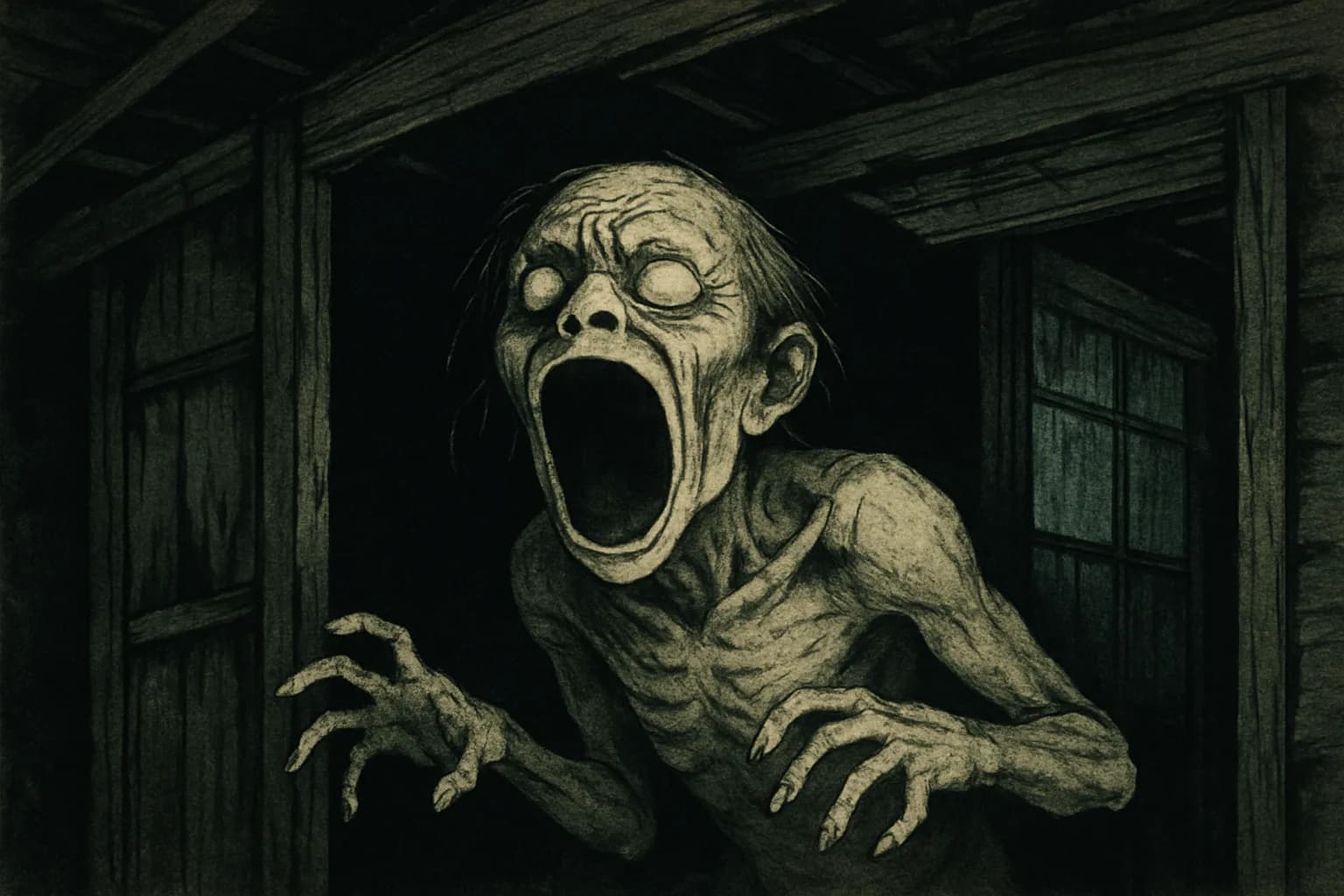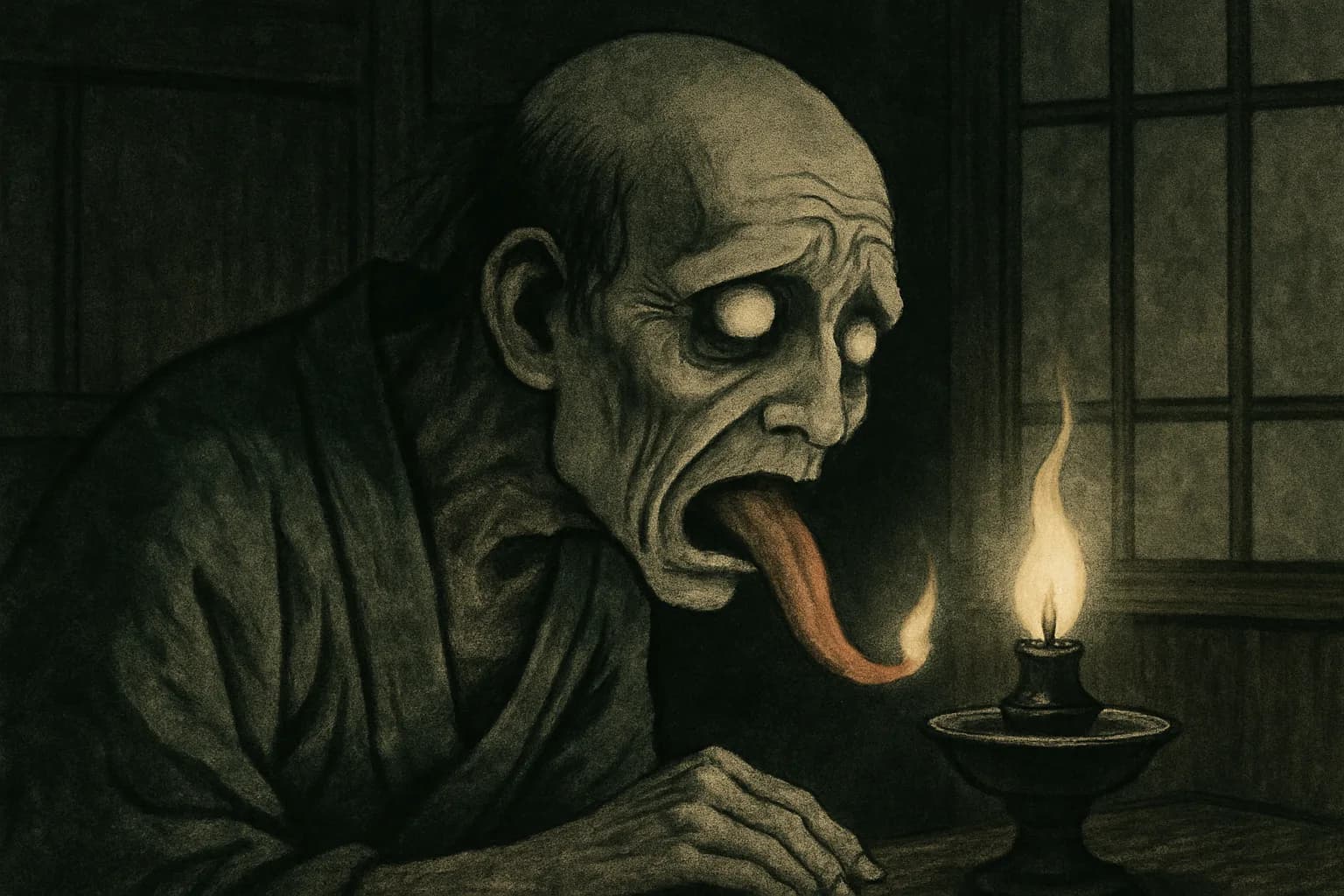
Under the floorboards of an old Edo house, in the last stretch of night when everyone but the diligent has gone to bed, something reaches up toward the lamp. It has no urgency and no interest in you at all — only in the little dish of oil burning at your elbow, and in making sure your work doesn't get finished. Toriyama Sekien named it Himamushi-nyūdō, and gave it, in the same breath as its portrait, the reason it exists: it used to be a person too lazy to live properly, and death didn't fix that.
What does it look like?
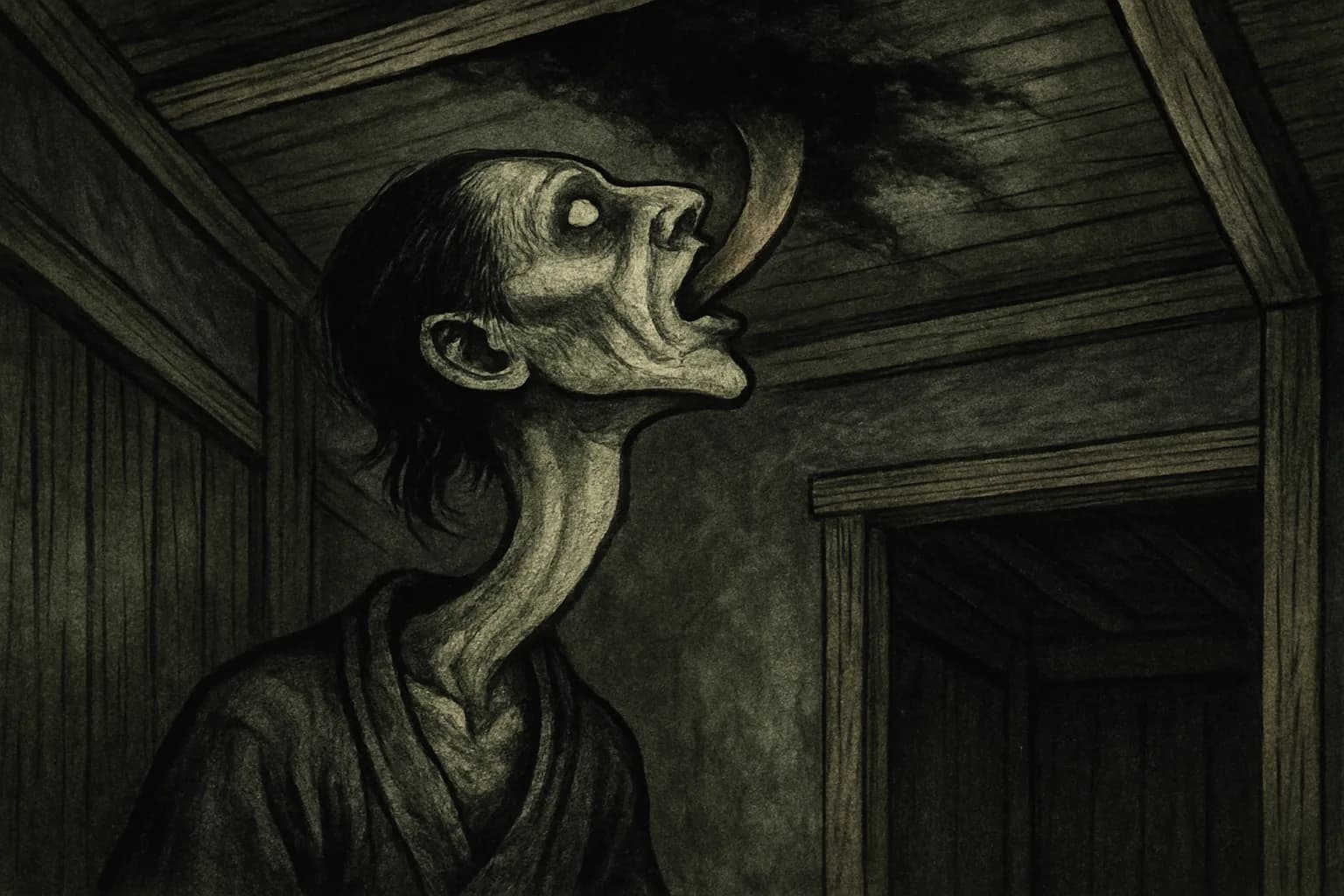
Sekien's 1781 picture book Konjaku Hyakki Shūi (今昔百鬼拾遺, "Supplement to the Hundred Demons of the Present and Past") shows a gaunt, bald-headed figure — a nyūdō, the term for a lay Buddhist who has shaved his head without formally taking vows — hauling itself up from beneath the floor. Its neck stretches toward an andon, the paper-shaded oil lamp used in Edo-period homes, tongue reaching for the small reservoir of oil that keeps the flame lit. No claws, no grimace: the whole picture reads as a lazy trespass, something intruding on your evening, nothing more.
A ghost with a very small job
Sekien wrote directly beneath the image, and the line is unusually blunt for a yokai caption. A person who lived without doing anything useful — idling and idling, stealing free time instead of working — becomes, after death, this thing: a spirit that comes back each night to bother the people who didn't waste theirs. Its one act is licking the oil from the andon while someone is trying to sew, read, or write by its light. Starved of fuel, the lamp gutters low or goes out, and the night's work stops.
Nobody dies here, nobody is dragged into a river. The revenge is smaller and more particular: sabotage timed to the exact task you were finishing when the light went out.
Where the name comes from
The name carries a joke inside it. Edo-period children had a doodle game called hemamushiyo nyūdō, drawing a comic bald-headed face out of hiragana strokes — the same tradition that produced the still-familiar face-doodle he-no-he-no-moheji. Sekien's himamushi plays on that nonsense name while swapping in real characters that spell out the moral: 火 (hi, the lamp's fire), 間 (ma, the empty gap of idle time), 虫 (mushi, a worm or vermin), and 入道 (nyūdō, the tonsured everyman). Read together, the yokai's name is almost a pun on its own backstory — a "bug of idle hours" wearing a doodle-monk's face.
Modern yokai scholarship offers a second, more literal reading. The folklorist Tada Katsumi has suggested Himamushi-nyūdō may be Sekien's fanciful stand-in for something far more mundane: the cockroach. A creature that raids the kitchen at night, is drawn to the fish oil once burned in household lamps, and disappears the moment a light comes on fits the description well — turning a moralizing ghost story into, possibly, a very old joke about pests in the pantry.
Where it comes from
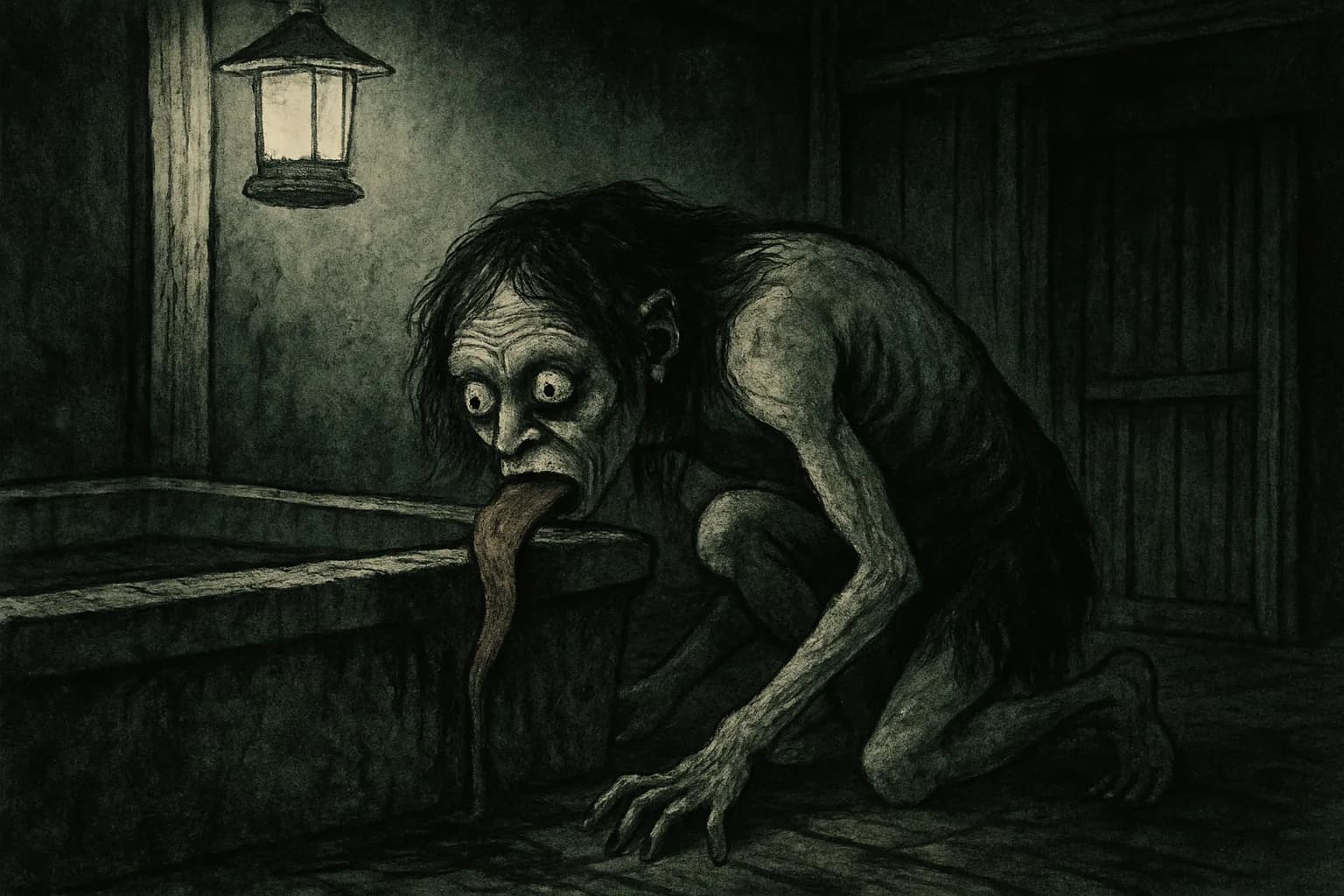
Himamushi-nyūdō belongs to a shelf of Sekien's household yokai built the same way: take an ordinary domestic annoyance — spilled oil, a guttering lamp, a wasted evening — and give it a face and a folk-etymological name. It sits close in spirit to the akaname, the grime-licker that punishes an unscrubbed bathtub, and to abura-akago, the infant-shaped flame that steals lamp oil from travelers on the road. Where those creatures police cleanliness or watch over mountain paths, Himamushi-nyūdō polices something less physical: discipline. Its whole mythology is aimed at anyone tempted to put off the night's sewing, or the day's accounts, until tomorrow.
Himamushi-nyudo today
Himamushi-nyūdō never became a household name outside Japan, and it has no cucumber, no dish of water, no famous shrine attached to it. Its survival is quieter: a page in Sekien's four-volume bestiary, carried forward into the modern yokai encyclopedias — Mizuki Shigeru's among them — that keep minor, half-forgotten entries searchable alongside the famous ones. It's the kind of yokai found only by going looking for it, tucked between better-known neighbors, still halfway out from under the floor, still reaching for the last of the oil.