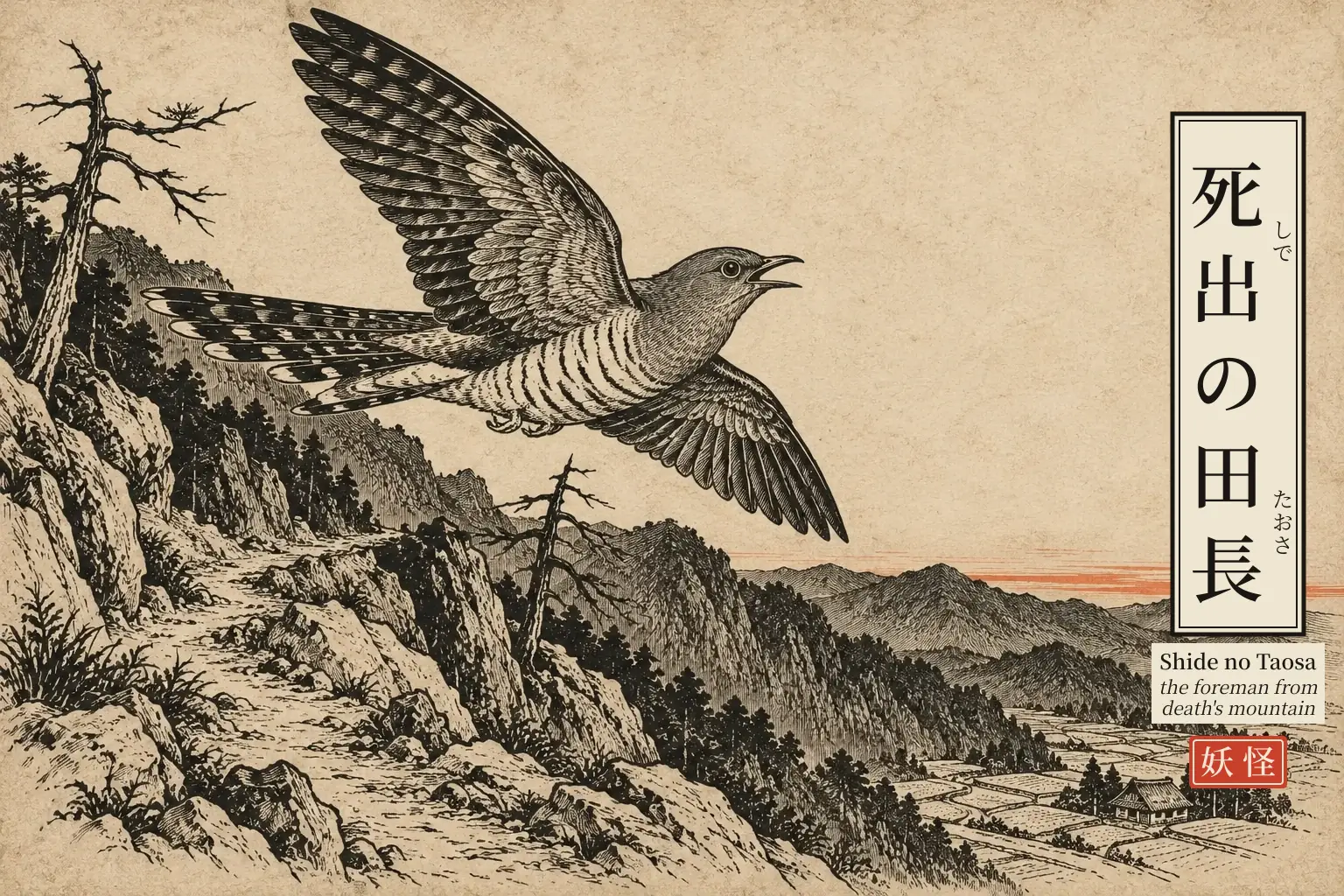
Every May, a plain gray bird returns to Japan from the south. It is the hototogisu, the lesser cuckoo. Classical poets gave it a second name: Shide no Taosa. Written 死出の田長, the name reads two ways at once. One reading is a farm foreman, calling men to the fields. The other is a bird that has flown back across the mountain of the dead.
What does it look like?
The hototogisu is a small, plain bird, about 28 centimeters long. It is slightly bigger than a brown-eared bulbul and smaller than a pigeon. Its head and back are gray. Its wings and tail are blackish brown. The chest and belly are white, crossed with thin dark bars, fainter than on a common cuckoo.
Its call carries further than its looks. The cry is sharp: kyokkyo kyokyokyokyo. Generations of Japanese listeners have heard human words in it. One old mnemonic renders the sound as teppenkaketaka. Another hears a joke about bureaucracy: tokkyo kyokakyoku, "the patent licensing bureau." The bird often calls at dawn. Sometimes it calls straight through the night.
The hototogisu never raises its own chicks. It is a brood parasite, laying its eggs mostly in the nests of the uguisu, the Japanese bush warbler. It winters from India to southern China, then flies north, reaching Japan around mid-May — later than most migrating birds, timed to when its host species starts to breed.
A farmer's joke
One strand of the name is a joke about rice farming. Taosa (田長) meant the foreman who oversaw a rice field. The Kokin Wakashū, an imperial poetry anthology compiled between 905 and 914, preserves a poem on the idea, traditionally credited to Fujiwara no Toshiyuki Ason:
Ikubaku no ta wo tsukureba ka hototogisu shide no taosa wo asana asana yobu.
How much rice field must be worked, the poet asks, for the cuckoo to call its foreman every single morning? The bird's insistent, repeating cry was heard as a foreman rousing farmhands at dawn.
A rival theory, recorded in the same reference dictionaries, drops death entirely. It argues shide (死出) is a worn-down pronunciation of shizu (賤), "lowly." Under that reading, Shide no Taosa just means a humble field foreman. No underworld involved at all.
The mountain of the dead
The darker reading resurfaces again and again, into the Edo period. 死出 literally means "going out to death." The Edo-period scholar Kamo no Mabuchi wrote a commentary on the Kokin Wakashū, the Kokin Wakashū Uchōgiki. In it, he tied the name to shide no yamaji, "the mountain road of the afterlife" — the journey a soul takes once it dies.
A poem in the Shūi Wakashū, a later imperial anthology, leans into exactly this. It is credited to the poet Ise:
Shide no yama koete kitsuramu hototogisu koishiki hito no ue katarinamu.
Cuckoo, the poem says, you must have crossed the Mountain of Death to reach me. Tell me of the one I love and miss. The bird becomes a messenger, flying back from the land of the dead with news of someone gone.
Reference dictionaries list two more names built on the same idea: tamamukae-dori, "the soul-welcoming bird," and meido no tori, "the bird of the underworld."
A feud fought with a bird's name
The name turns up in a court scandal, too. In the Ise Monogatari, a 10th-century collection of poems and short tales, Prince Kaya — a son of Emperor Kanmu — kept a woman in his household and believed he was the only one she favored. Another man found out. He sent her a letter with a drawing of a hototogisu attached, and a poem comparing her to a cuckoo that cries in many villages — one with too many homes, and so too many lovers.
She wrote back, borrowing the bird's other name. Its fame is only in name, her poem said; this morning it cries again, scorned for keeping too many nests. Prince Kaya answered with a poem of his own, telling the cuckoo — meaning her — that he still depends on it, and asking it not to stop calling at his village, however many nests it kept elsewhere.
Where it comes from
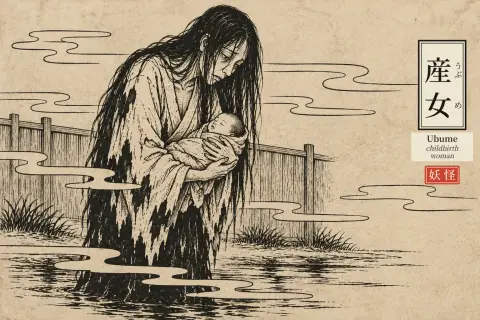
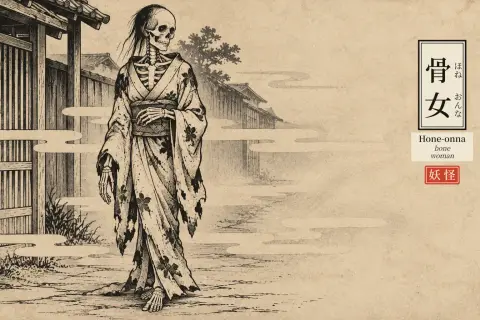
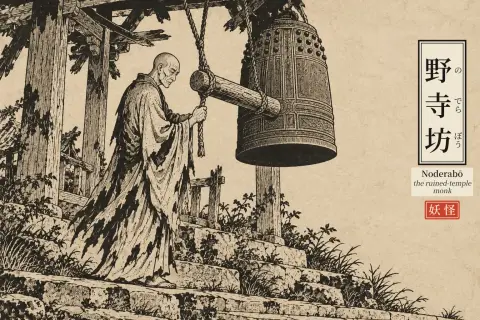
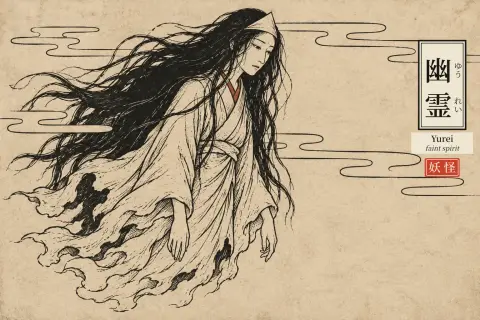
Shide no Taosa never grew a face or a shape of its own. It stayed a bird — a real, ordinary cuckoo — carrying two meanings that classical poets never bothered to choose between: a field foreman calling men to plant rice, and a soul messenger calling from the far side of a mountain no living person has climbed. It sits alongside other Japanese spirits built from a single sound or name — the night-crying yosuzume, the grieving ubume — where the ache often lives in what the name says more than in any single drawing.
On Hachijō Island, far south of Tokyo in the Pacific, islanders say the hototogisu disappears right after the Bon rites end, on the fifteenth day of the seventh lunar month — the days when, in Japanese tradition, the spirits of the dead are sent back. Reference dictionaries record the belief, not a reason for the timing. Islanders simply named the bird for it, and let it fly south again.
Go deeper
Where Japanese ghosts come from.
- Yūrei: The Japanese Ghost →Zack DavissonWhere Japanese ghosts come from, told through old paintings, kabuki and ghost stories.
- Kwaidan: Stories and Studies of Strange Things →Lafcadio HearnThe classic 1904 collection of Japanese ghost stories that shaped how the West first met kaidan.
Some links are affiliate links; if you buy through them we may earn a small commission at no extra cost to you.