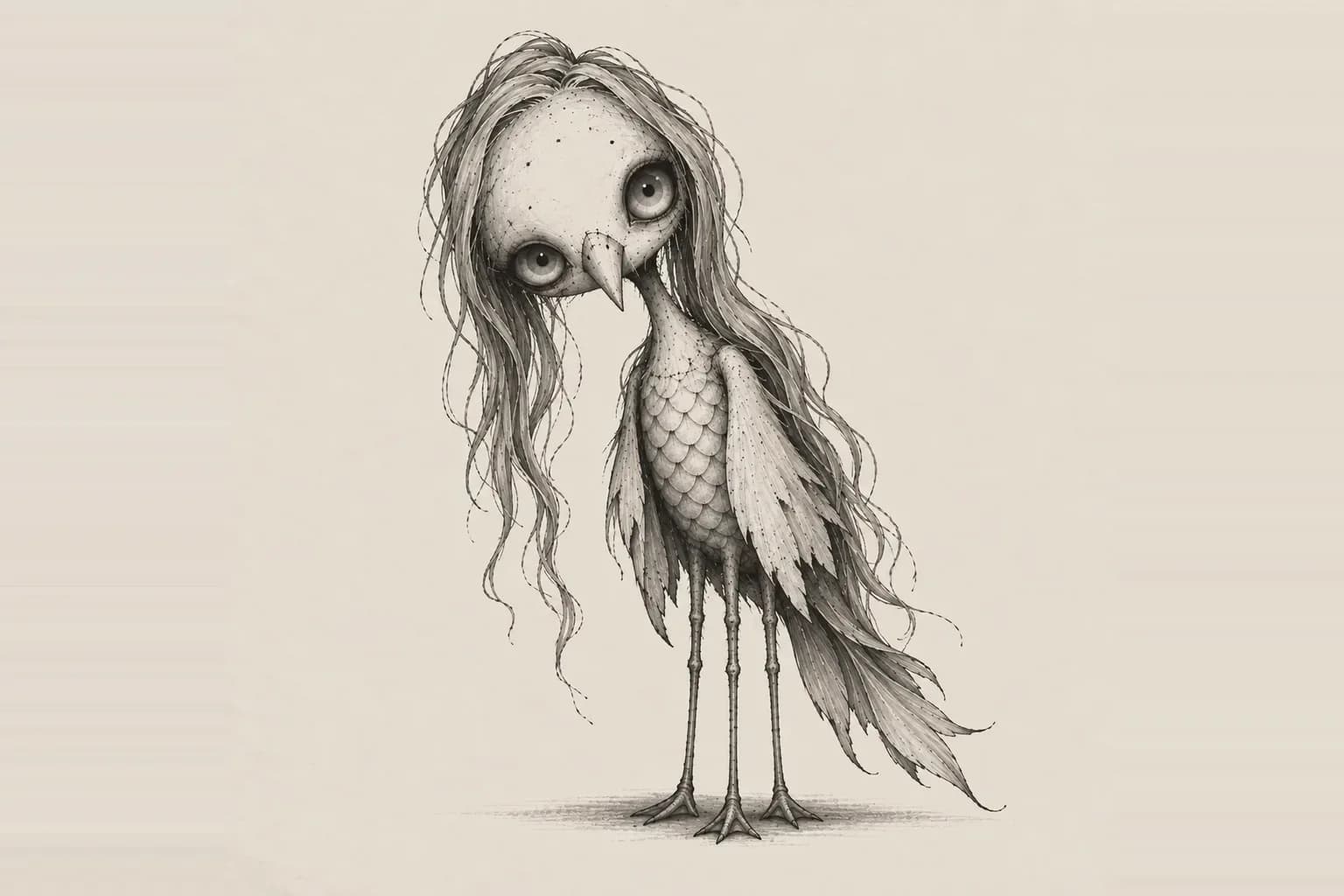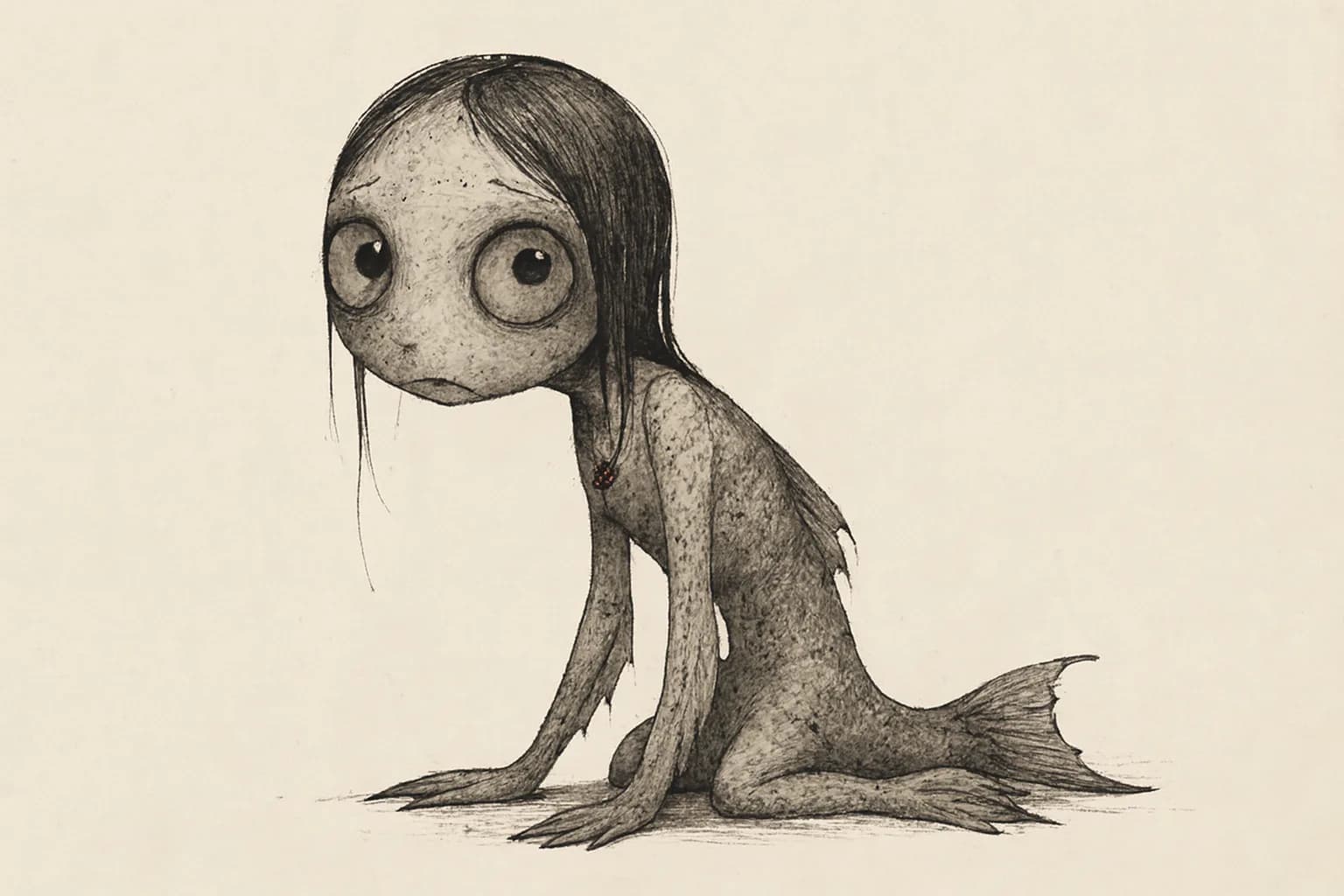
An old man was watching a neighbor's shed on the coast of Izumo. Inside sat a barrel of salted mackerel, and his job was simply to keep it safe. He sat weaving straw sandals by lamplight when two eyes lit up outside the window. He climbed straight to the attic and stayed still. Something came in carrying a child, worked through the barrel of fish, and left before morning. The villagers had a name ready for it: umi-nyōbō, the sea wife.
What does it look like?
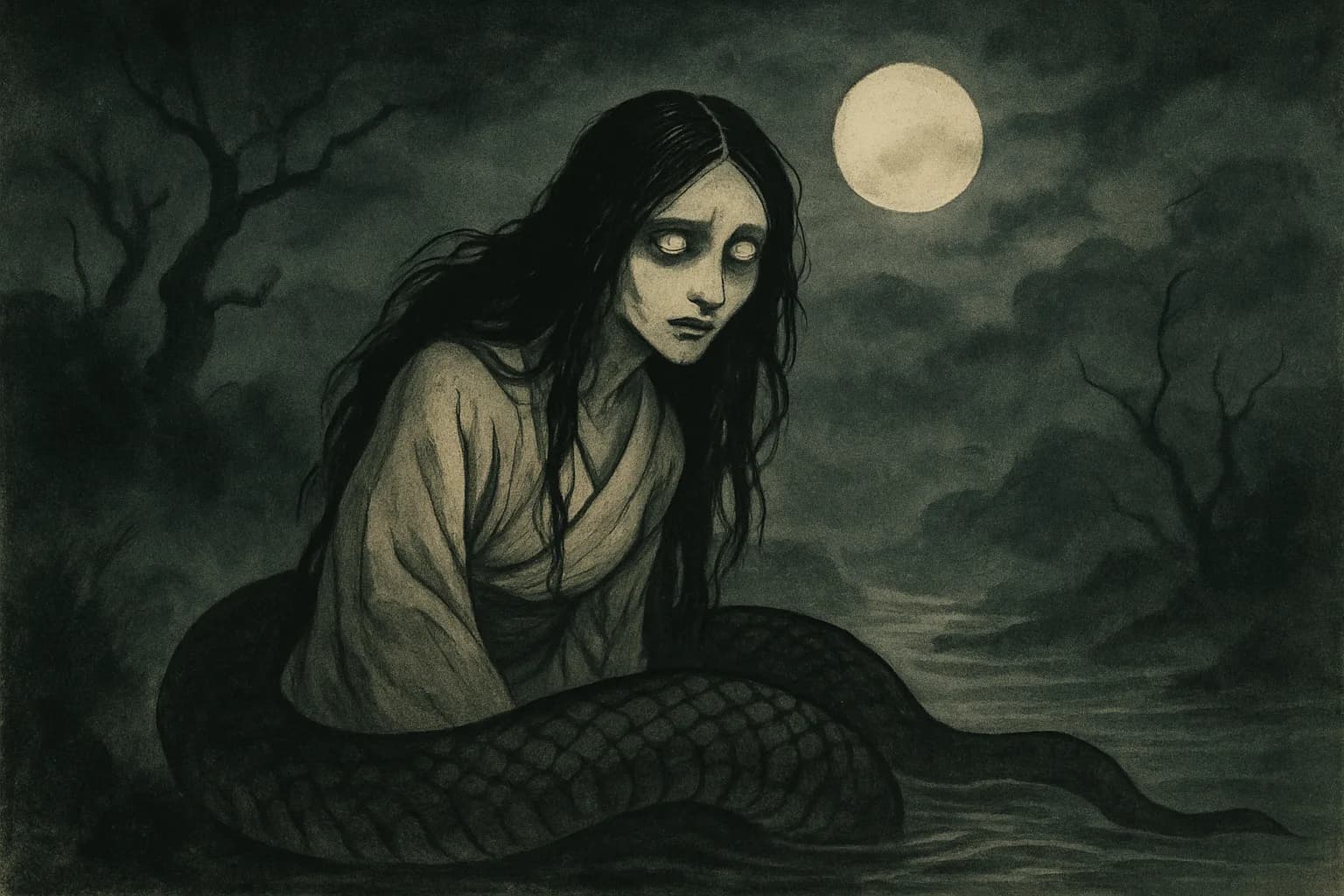
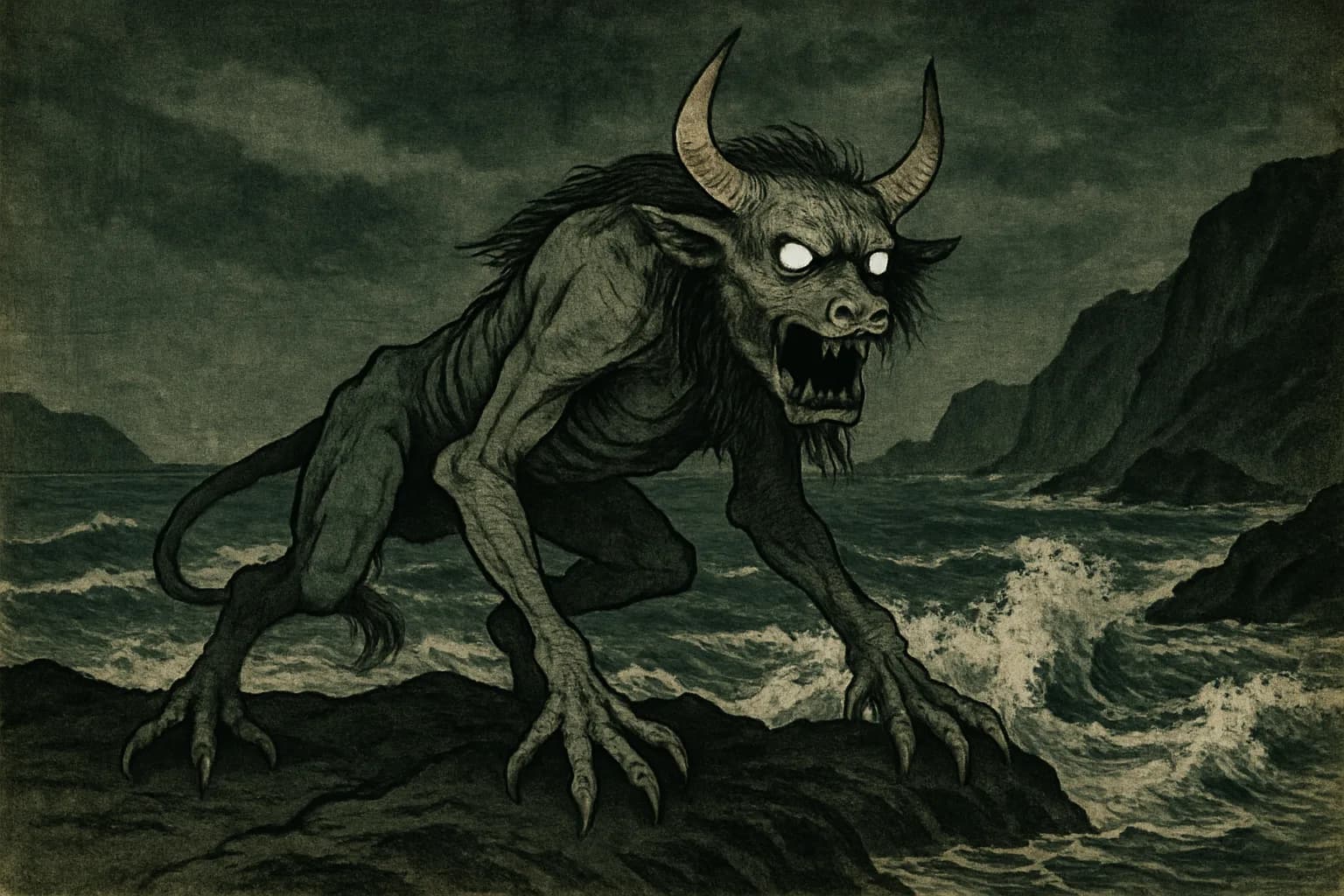
The name is plain. 海 (umi, "sea") and 女房 (nyōbō, "wife") describe exactly what she is said to be. She looks mostly like a woman, but not entirely. Her skin runs to scales. Her fingers and toes are webbed, closer to fins than hands. Her teeth are sharp enough that witnesses mention them first. She is far stronger than her size suggests.
She lives mainly in the sea, but she is not bound to it. Older accounts say she can stay on land for several days before the water calls her back. A 1709 natural history encyclopedia, the Yamato Honzō, describes a similar sea-wife as unable to speak — yet most of the folk tales about her have her talking just fine.
A hunter with a taste for the pantry
Umi-nyōbō is not a ghost that haunts a place. She is a predator that raids one. Coastal households along the San'in coast treated stored fish as a genuine target, not a metaphor. A larder left unwatched at night was an invitation.
Some storytellers call her the wife of umibōzu, the shaven-headed monk-shaped shape that rises beside fishing boats out at sea. No account explains how that marriage works. It only ties her, by name, into a family of dangers the coast already feared. Others group her with the iso-onna, another sharp-toothed woman who haunts the shoreline farther south and west. The two are close enough in shape and habit that older tellers sometimes traded one name for the other.
The watchman of Shōjima
The clearest surviving account comes from the fishing hamlet of Shōjima, in what is now Izumo City. An elderly man agreed to watch a neighbor's shed of salted mackerel while its owner was away. Alone at night, making sandals from straw, he saw the two glowing eyes appear at the window first. He fled upstairs into the loft rather than face whatever was outside.
He was right to run. A creature entered the shed carrying a child, worked steadily through the barrel of preserved fish, and left the way it came. Nothing in the account says it searched the loft or found him. The story survives because he stayed quiet and lived to describe it. Villagers who heard it afterward called the visitor an umi-nyōbō, and the folklorist Shimizu Hyōzō recorded the tale in an article titled "Izumo Zatsuki," printed in the journal Kyōdo Kenkyū in 1913 — one of the oldest written records of the creature.
Where it comes from
Folklorists place umi-nyōbō alongside the coast's other dangerous women — nure-onna to the east, iso-onna to the south — as a shape given to real anxieties about the shoreline at night. A missing barrel of fish needed an explanation a family could tell its children. Some tellers say she is the spirit of a woman who drowned. Others make no claim about her past at all; she is simply hungry, and the sea is where she goes when she isn't. It came ashore only to eat. Then it went back to the sea.
Umi-nyōbō today
She has kept a small, steady place in Japan's yokai culture rather than a famous one. Mizuki Shigeru catalogued her among the hundreds of creatures in his yokai encyclopedias, and today she stands as one of the 177 bronze yokai statues lining Mizuki Shigeru Road in Sakaiminato, Tottori — a fish-scaled woman cast in metal among tengu, kappa, and oni, for visitors who may never have heard her name before walking past it.
Back on the San'in coast itself, the barrel-raiding story is not treated as history. It is the kind of tale a fishing family tells about why a shed should never be left truly empty, and why a light in a window after dark is worth a second look.