妖怪Yokai Almanac
← All symbols
Komainu

Motifs

Komainu

狛犬

By Kaito Mori

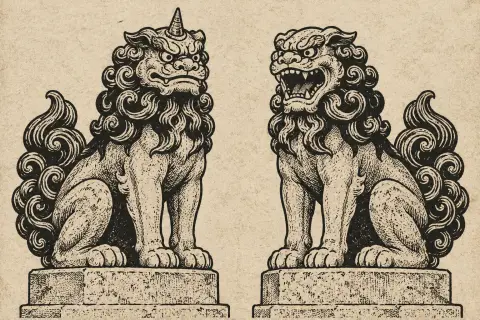
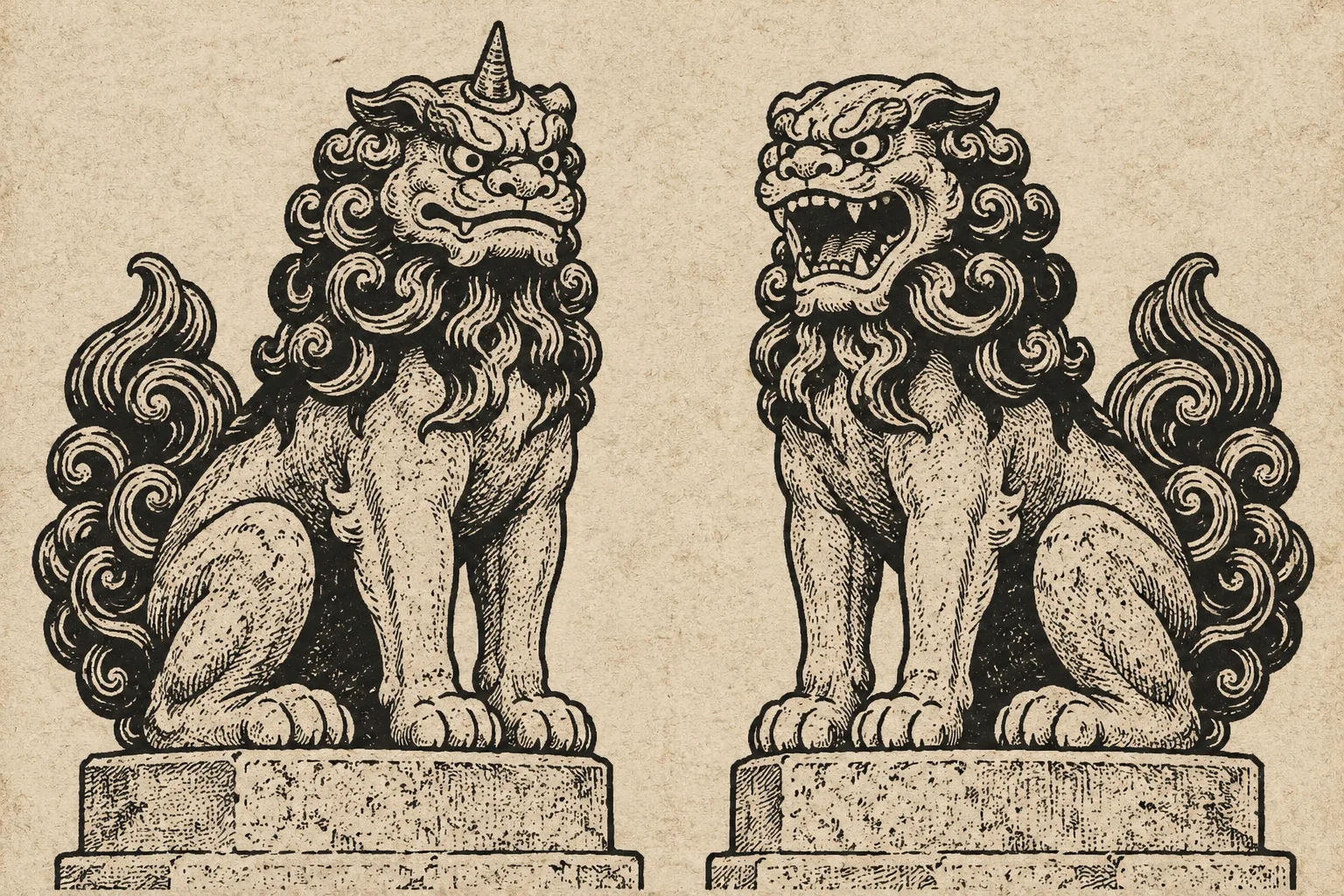
Komainu are lion-like guardians at Japanese shrines and temples. Usually, one has an open mouth and the other has a closed mouth. They are believed to drive off evil and protect the ground around the shrine's god.

In short:

  • Open mouth: the sound a, the beginning. Closed mouth: the sound un, the end.
  • The horn: in some older pairs, the horned one is the dog-like guardian. The hornless one is the lion.
  • Not quite foo dogs: on one Chinese pair, the male holds a ball and the female a cub.

About 1,000 years ago, figures like these held curtains and screens in place at Japan's imperial palace.

The meaning of “Komainu”

狛komakoma, an old Japanese name for the kingdom of Goguryeo, in Korea
犬inudog

狛犬 · Komainu · literally “koma, an old Japanese name for the kingdom of Goguryeo, in Korea + dog”

Why one mouth is open

JAANUS, a dictionary of Japanese art, explains the pair as a-un (阿吽). The open mouth says a, and the closed mouth says un. In Buddhist art, a stands for the beginning and un for the end. They can also stand for breathing in and out.

What each part means
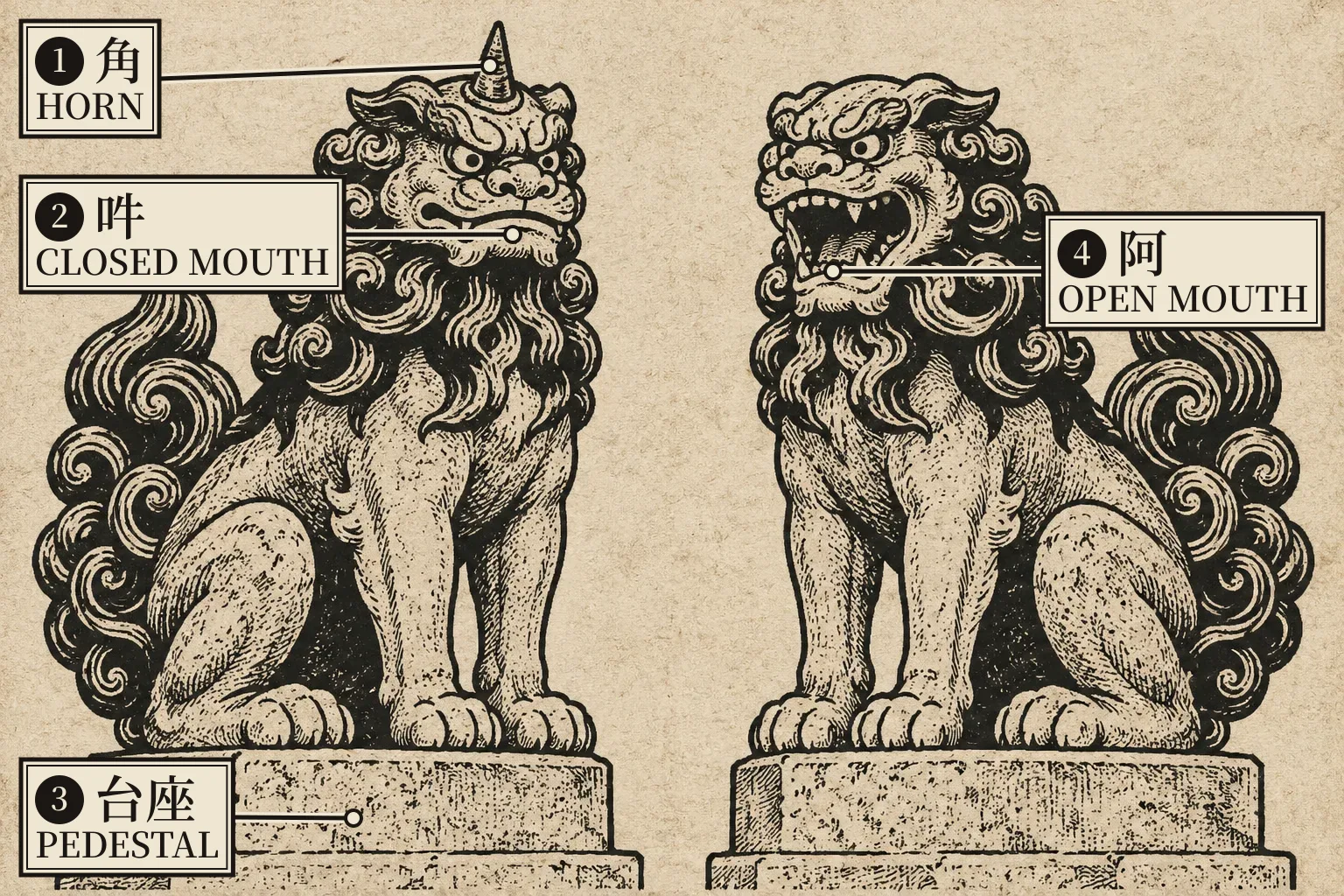
A pair of stone komainu with four numbered labels: horn, closed mouth, pedestal and open mouth Our diagram. The table says what each part means, where a source says.

#PartWhy it looks like this
1HornIn some older pairs, the horned one is the dog-like guardian. The hornless one is the shishi, the lion. (Kyoto National Museum)
2Closed mouthThe sound un, the end. Some pairs share the same mouth pose instead. (JAANUS, Nipponica)
3PedestalThe stone base. Some bases record a donor's name. One in Kyoto names Mizuno Tadakuni, who donated it in 1839. (Kotera)
4Open mouthThe sound a, the beginning. Facing the pair, it is usually on the right. (JAANUS, Mypedia)

Lion or dog?

Strictly, a pair was once two different animals. In older pairs, the open-mouthed one is the shishi, a lion, with no horn. The closed-mouthed one is the komainu, a dog-like beast, sometimes with a horn. As their shapes grew alike, the name komainu came to cover both.

The name points abroad. Koma was the old Japanese name for Goguryeo, a kingdom in Korea. Kokugakuin University's encyclopedia says it may simply have meant "foreign." It traces the figures to Tang China, by way of the Korean peninsula. Kyoto National Museum traces paired lions on Buddhist altars back to India.

Palace weights and shrine guards

In the Heian palace, figures of lions and lion-dogs held curtains and screens in place. A court tale from about 970 to 999 describes four silver komainu with incense burners.

Shrines kept them inside too. Hiyoshi Taisha says lion-dogs first guarded the god inside the main hall's inner room. Yakushi-ji in Nara still has a painted wooden pair from the 10th or 11th century. Two wooden figures at Kōzan-ji carry the year 1225 on their bases.

One early stone example, at Takamori Shrine, dates to 1355. Stone pairs became common along shrine paths in the Edo period.

Komainu and foo dogs

"Foo dog" is the English name for Chinese guardian lions. On one Chinese pair, the male holds a ball and the female holds a cub. One museum reads the ball as power and the cub as care for the family line.

Some Edo-period komainu also hold a jewel or a cub. No source we read gives them the Chinese meanings. Okinawa's shisa, the lion guardians on roofs and gates, come from Chinese guardian lions too.

Not always dogs
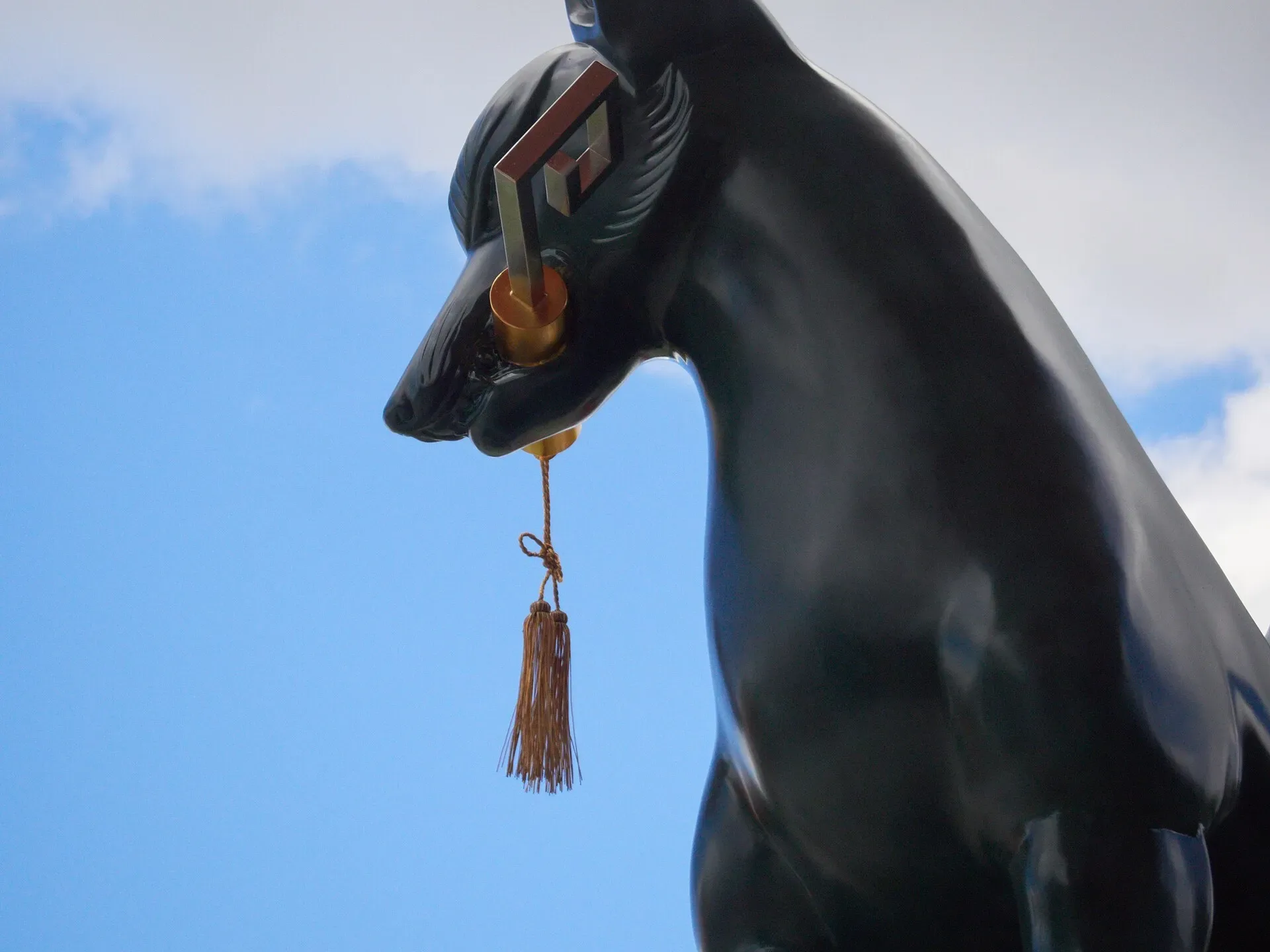
A black fox statue holding a key in its mouth, against the sky at Fushimi Inari A fox with a key in its mouth at Fushimi Inari, Kyoto. Photo: lumoplank, CC0

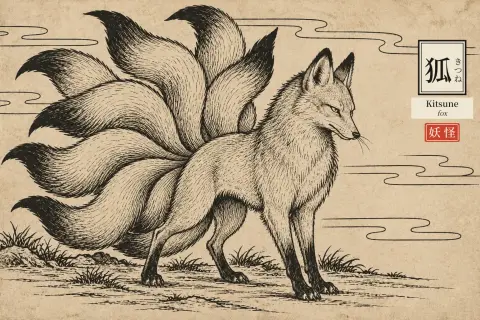
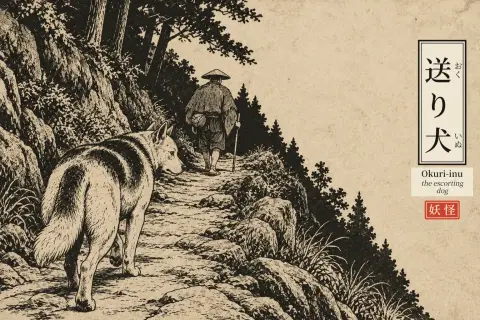
The guardian does not have to be a lion. At Inari shrines, you may see fox statues. Foxes are messengers of the god Inari. Mitsumine Shrine honors a wolf that, by shrine tradition, guided the hero Yamato Takeru. Ōtoyo Shrine in Kyoto has guardian mice, a guardian monkey and guardian foxes at its smaller shrines.

Frequently asked questions

Which side is the open mouth on?

Usually the right, as you face the pair. But it is not a fixed rule. Old court records put the lion on the left, without saying from which side.

Are they male and female?

Kokugakuin's encyclopedia says pairs are typically male and female. It does not say which mouth is which.

Who made the stone lions at Tōdai-ji?

A temple record credits four stonemasons from Song China, in 1196. Sources name different carvers.

Sources

The yokai behind it

More symbols

Torii

Motifs

Torii鳥居

A torii is the gate of a Shinto shrine. It marks where the everyday world ends and a god's ground begins. Why many are red, why people bow, and why one held 586 secrets.

Shimenawa

Motifs

Shimenawa注連縄

A shimenawa is a straw rope that marks a sacred place in Shinto. What the zigzag paper and straw tassels mean, and the myth where a rope kept the sun goddess out of her cave.

Tanuki statue

Charms

Tanuki statue狸

The Shigaraki tanuki statue stands outside shops in Japan for good business. What its hat, eyes, belly, sake flask and other parts mean, and the monk credited with those meanings.

Omikuji

Charms

Omikuji御神籤

An omikuji is a paper fortune you draw at a Japanese shrine or temple. What each line on the slip means, why the order of luck changes from place to place, and whether to tie it or take it home.

Tengu mask

Masks

Tengu mask天狗

A tengu mask is a red face with a very long nose. At some Japanese festivals it walks first, worn by the person playing the god who shows the way. Its jobs, how it compares with the oni mask, and where the name comes from.

Shishi lion mask

Masks

Shishi lion mask獅子

The shishi is the carved lion head of Japan's lion dance, and of the masks on our list, the first named in a dated record, in 747. What it chases away, and where it came from.

Okina mask

Masks

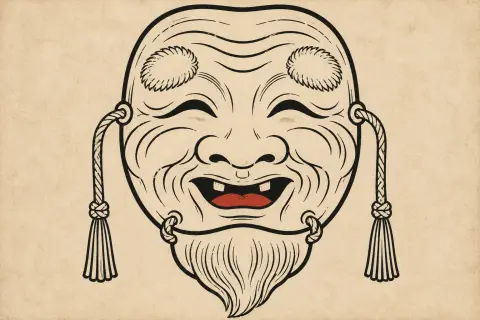
Okina mask翁

The okina mask is a laughing old man, a sacred face set apart in Noh theater. What the white and black masks mean, why the chin is a separate piece, and how old it is.

Okame mask

Masks

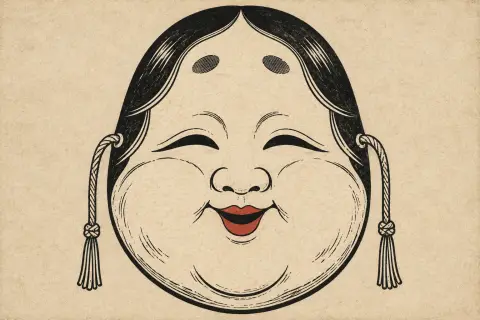
Okame maskお多福

An okame (otafuku) mask is the round, laughing face of a comic woman from Japan's village shrine dances. Why it is a lucky charm, and what the name otafuku really says.

Japanese masks

Masks

Japanese masks面

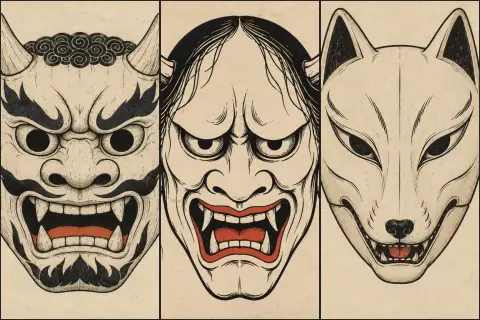
Oni, hannya, fox, tengu, okame, hyottoko, okina, lion and more. Ten Japanese masks, who each face plays, and where the oldest records come from.

Hyottoko mask

Masks

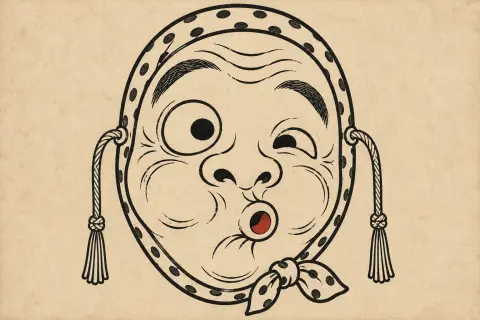
Hyottoko mask火男

A hyottoko mask is a clown with his mouth pushed out, as if blowing on a fire. Why he is called the fire man, and why northeast Japan hung him above the hearth.

Kagami mochi

Charms

Kagami mochi鏡餅

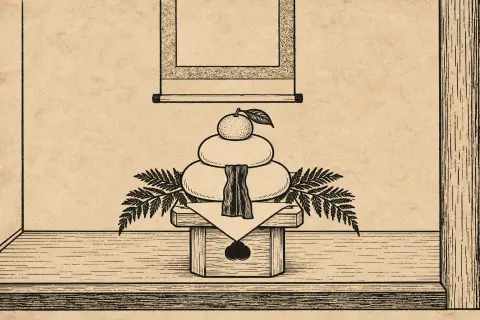
Kagami mochi is a stacked rice cake offered to the god of the new year. What each part means, why it is called a mirror, when to put it up, and when to break it and eat it.

Kadomatsu

Charms

Kadomatsu門松

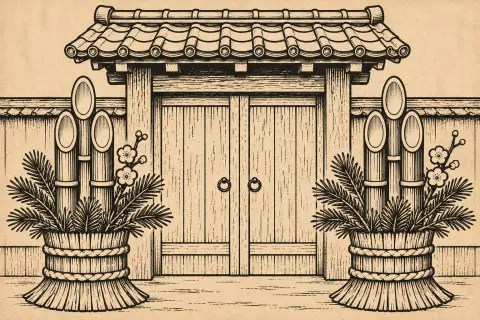
A kadomatsu is the pine-and-bamboo pair set by a Japanese door at New Year, as a seat for the year god. What each part means, why the bamboo is cut at a slant, and when to take it down.

Omamori

Charms

Omamori御守

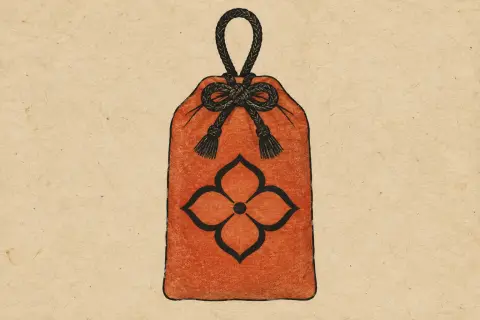
An omamori is a small protective charm from a Japanese shrine or temple. Which one to choose for each wish, whether the colors matter, giving one as a gift, and how to return it.

Maneki neko

Charms

Maneki neko招き猫

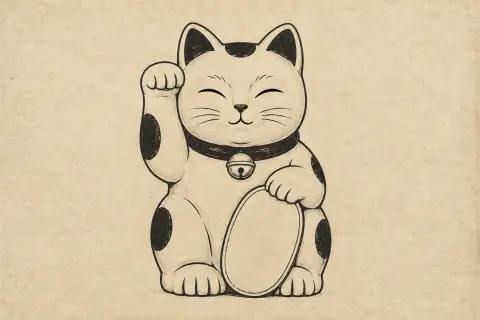
A maneki neko is a Japanese lucky cat that beckons customers and money. What the left and right paw mean, why color charts disagree, and why many people think it is Chinese.

Oni mask

Masks

Oni mask鬼面

An oni mask is the face of a Japanese demon, the one chased out with beans at Setsubun. Why it has horns, what the colors mean, and how it differs from a hannya.

Kitsune mask

Masks

Kitsune mask狐面

A kitsune mask is the face of the fox, said to be the messenger of Inari. Where it is worn, what the fox stands for, and what the colors do not tell you.

Daruma

Charms

Daruma達磨

A daruma is a round red doll for making a wish. What its face means, which eye to paint first, whether the colors mean anything, and what to do with it after.

Hannya mask

Masks

Hannya mask般若

A hannya mask is a Noh mask of a woman turned into a demon, most often by jealousy. What the horns, the three colors, and the name tell you, and how it differs from an oni mask.