Every English page about Japanese water yokai starts in the same place. A kappa. A river. A pond. A cucumber.
We keep a ledger of 327 creatures, of which 127 are written up so far. So we sorted the whole ledger by the water each one actually sits at — not just the ones we have published, because what we publish first is an accident of our own queue.
Two things came back. The sea is much bigger than the river. And the paddy is the hole.
Where the water actually is
| Where | In the ledger of 327 | Written up so far |
|---|---|---|
| Sea, shore and ships | 23 | 6 |
| Rivers | 10 | 7 |
| Rice paddies and irrigation | 7 | 0 |
| Wells | 6 | 2 |
| Ponds and marshes | 3 | 2 |
| Lakes | 2 | 1 |
The pond is thin — three in 327. So the "rivers and ponds" of every English summary is already half wrong.
But look at the row under the river. The paddy is the hole.
The paddy is the hole
Seven creatures in the ledger belong to the flooded rice field. We have published none of them.
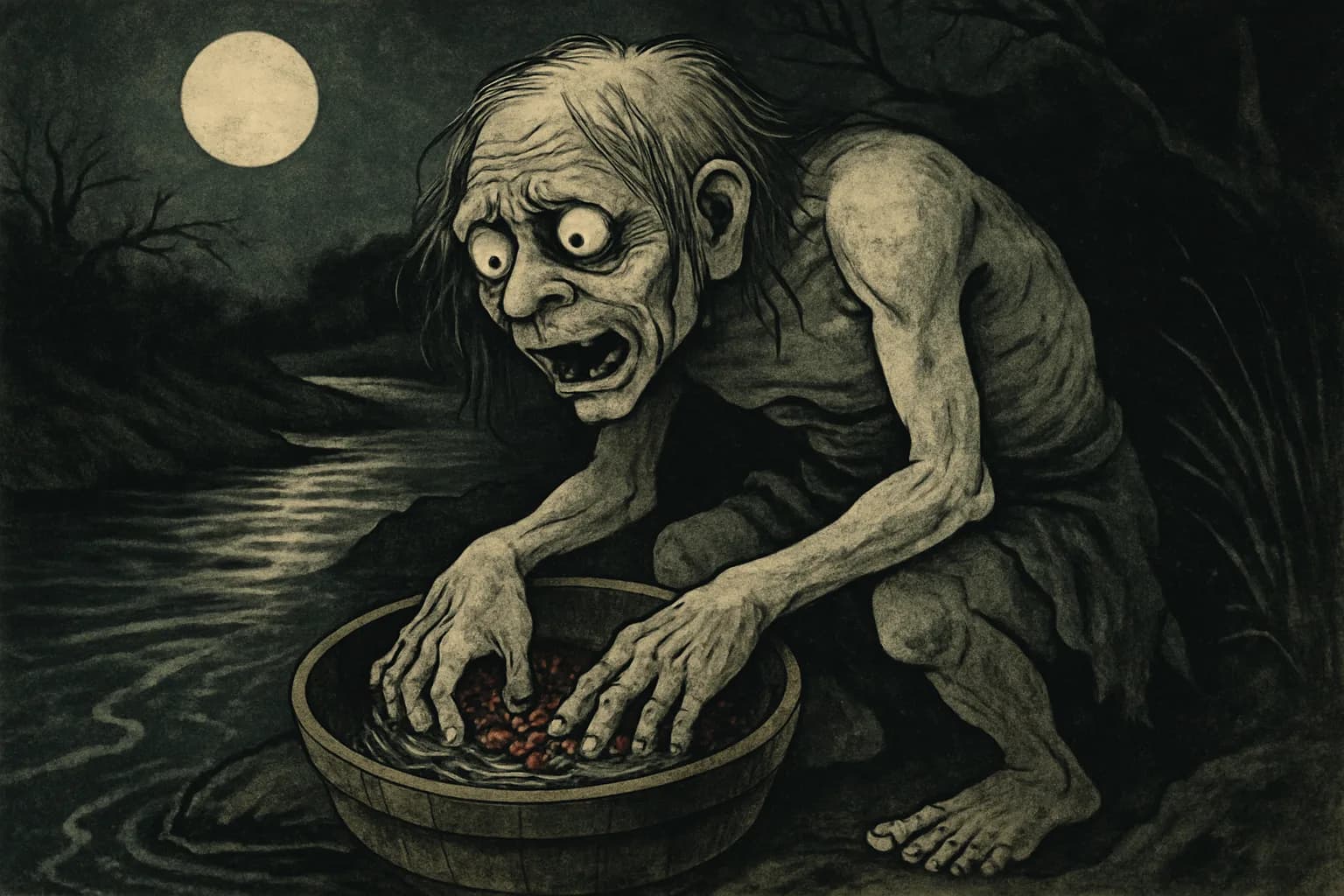
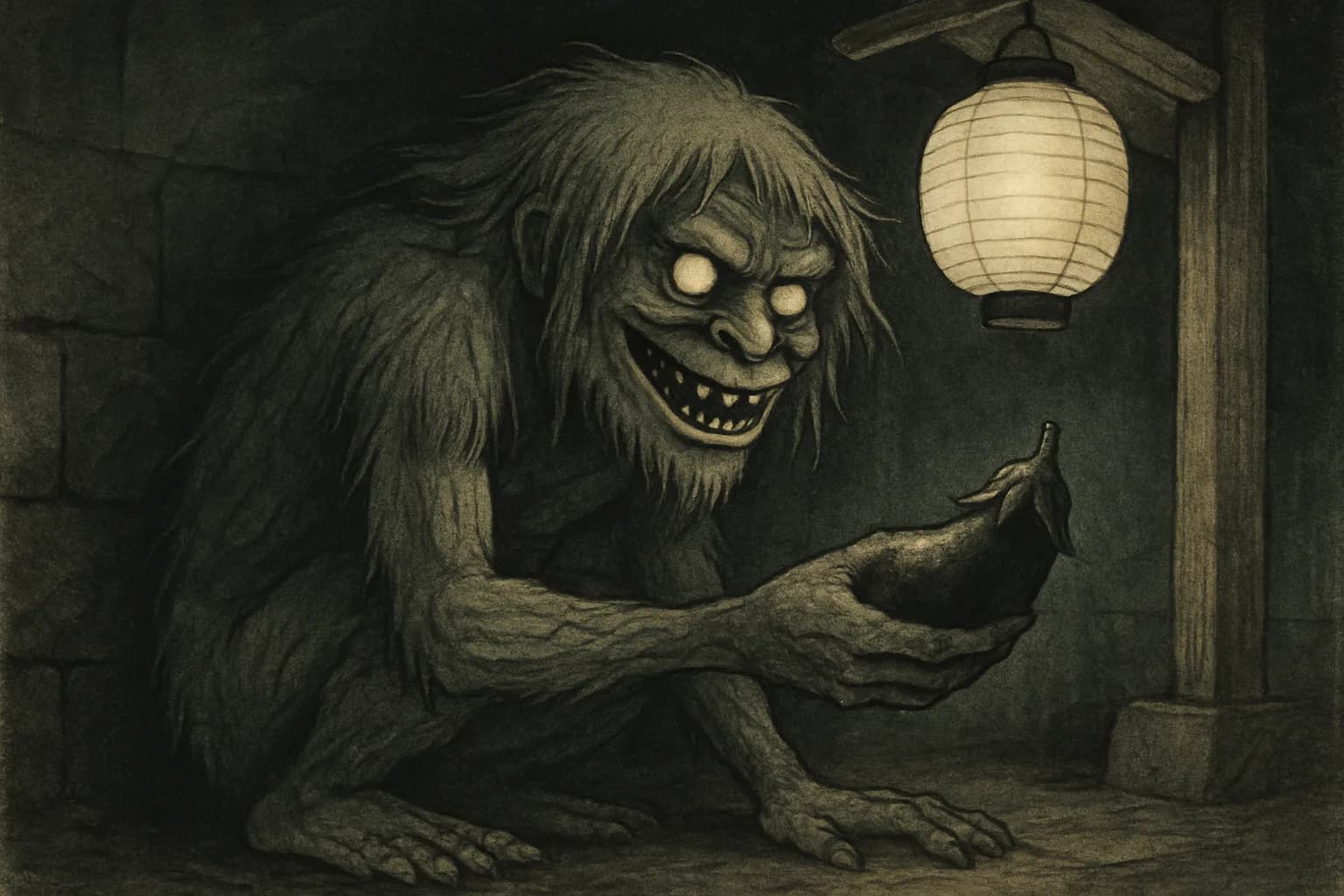
Dorotabō rises out of a flooded paddy at night, one-eyed and three-fingered, crying for the field back. Kunekune is a white thing writhing far out in the rice field on a windless day, and you are not supposed to look at it closely. Akabōzu comes up out of a well or a paddy.
And three of the seven are not monsters at all. Ta-no-kami is the god of the rice field. Yama-no-kami is the same god in his other season, who comes down in spring and works the paddy all summer. Suijin is the god of the water you drink, and the reason nobody swims in certain places. Sanbai-sama is the rice god of the Chūgoku hills, called down onto the paddy.
This matters more than it looks. Most water in Japan is not scenery. It is infrastructure — moved through channels onto flooded fields, and shared by a village that had to agree about it.
The English-language shelf of Japanese water yokai, ours included, is built out of rivers and seas. The water people actually stood in every day is missing.
Is "many" even true?
Not really. Counting the ledger, 53 of 327 creatures touch water at all — about one in six.
On the published shelf, mountains-and-the-wild holds 37 and ghosts 26, against 17 water spirits. Water is not where the yokai are. It is just where the famous one is.
The rest of this piece works from the 17 we have written up, because the deeper sort needs the article text, and the unpublished 200 have only a one-line description. That limit is real, and it is the same limit that hid the paddy from us until we went back to the ledger.
The sea half is about boats
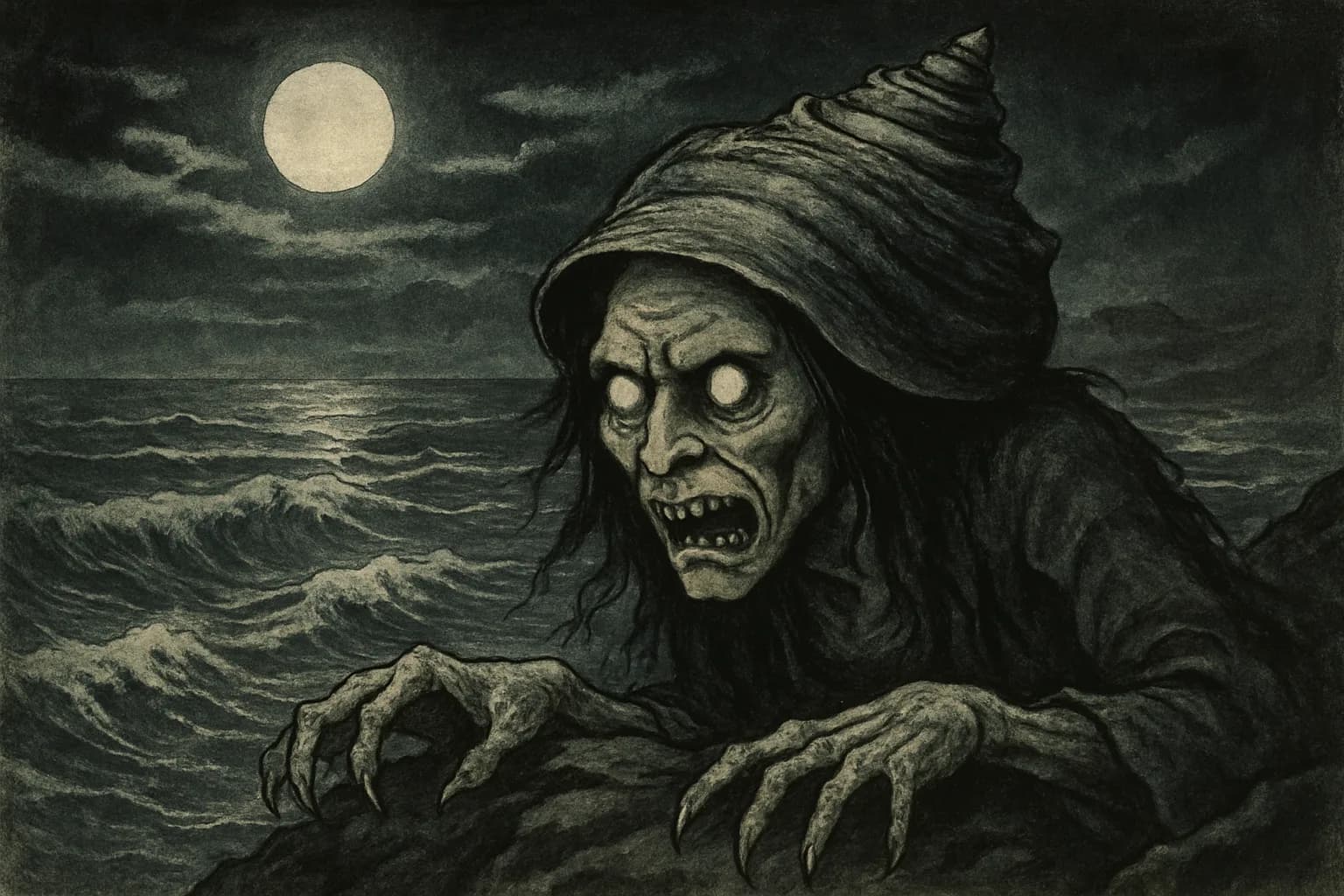
Nine entries are at sea. Six of the nine mention a ship, a boat or a crew.
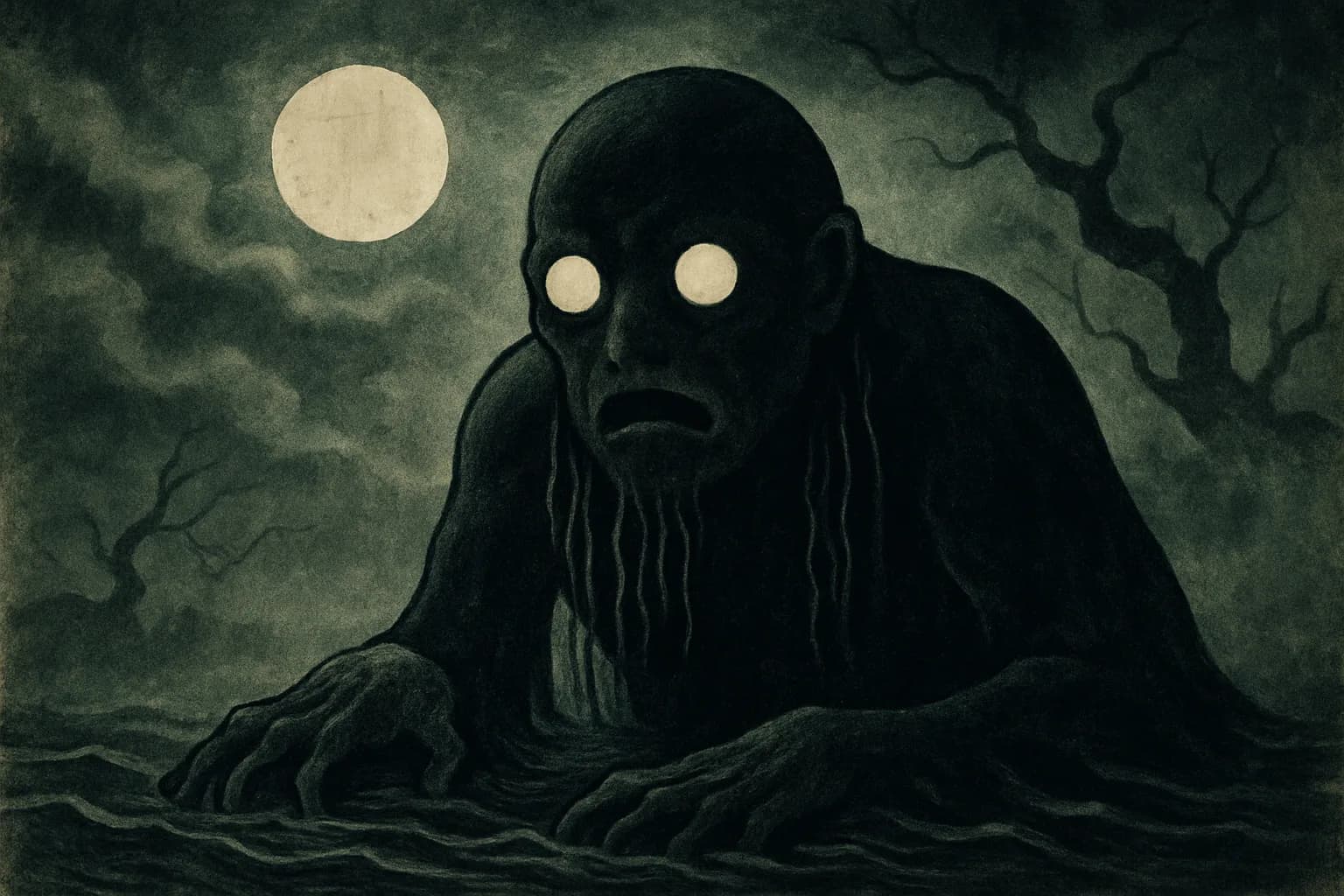
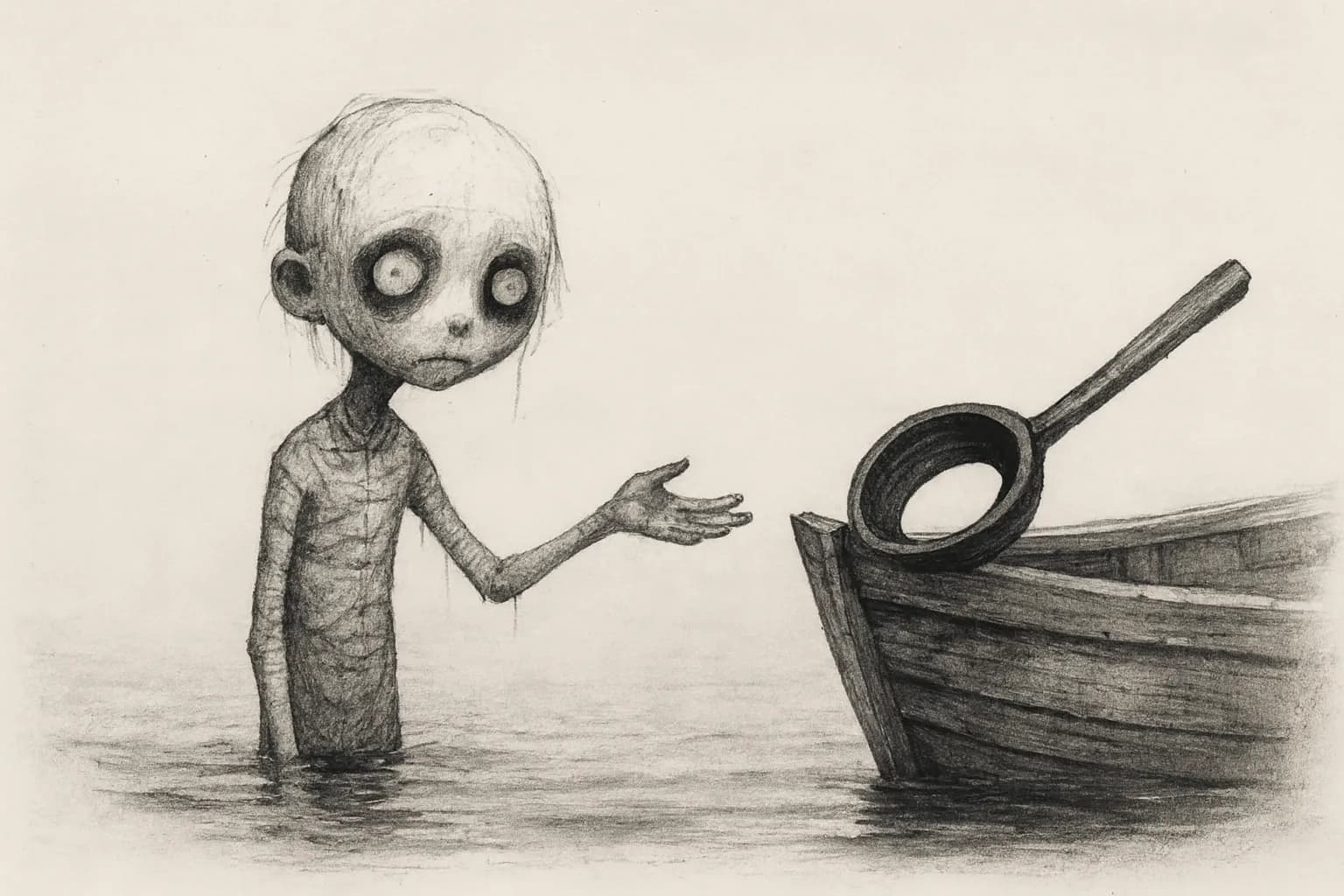
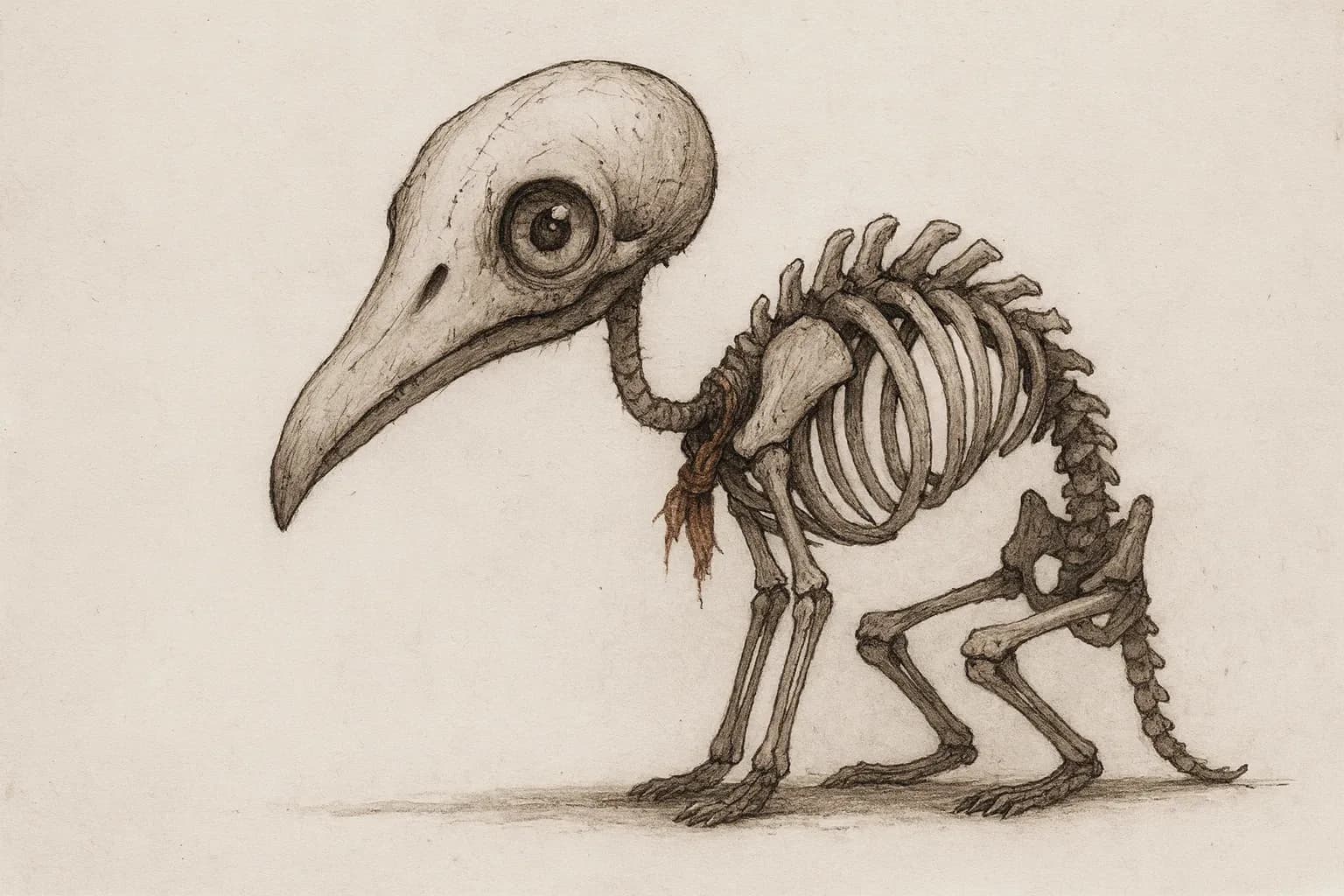
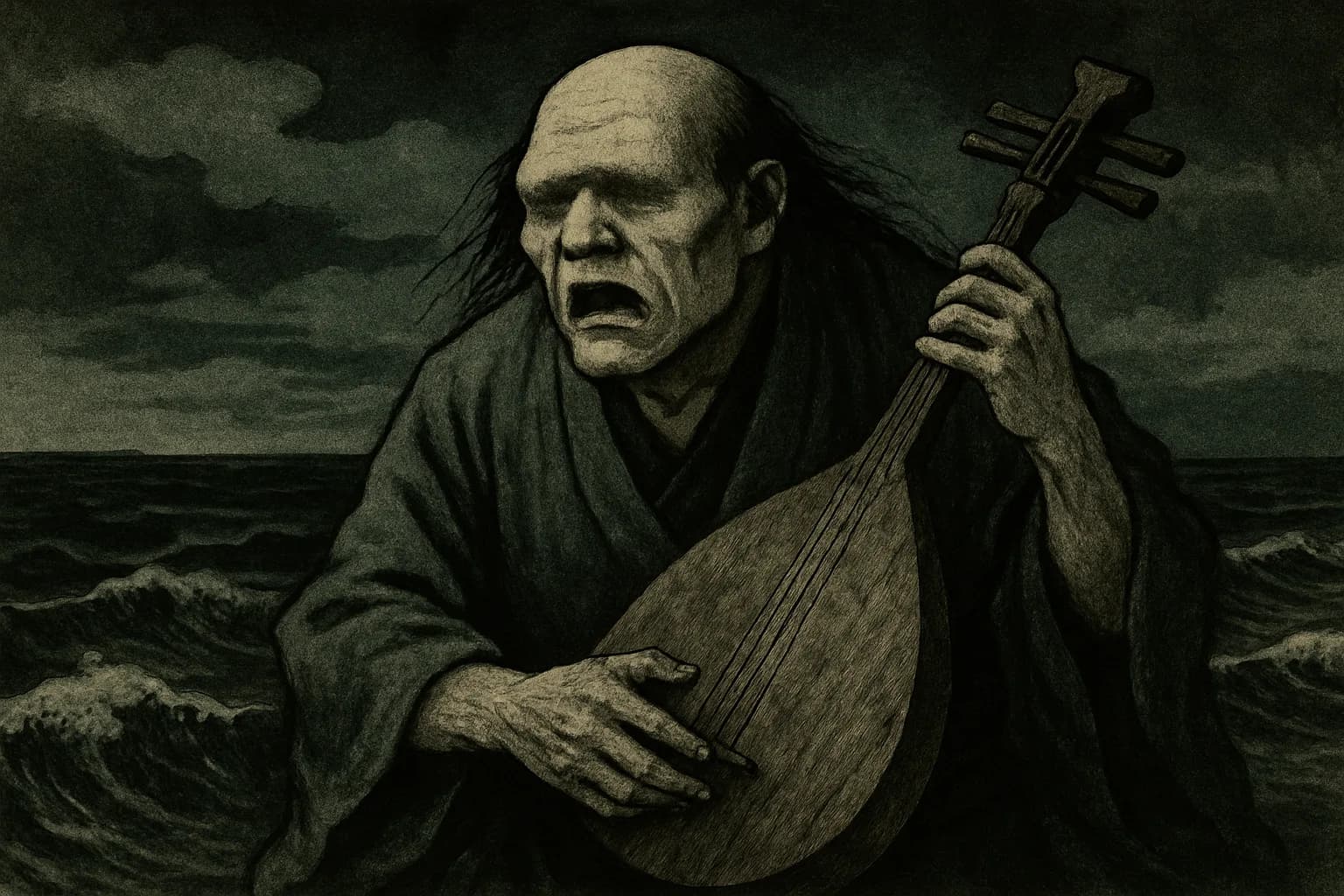
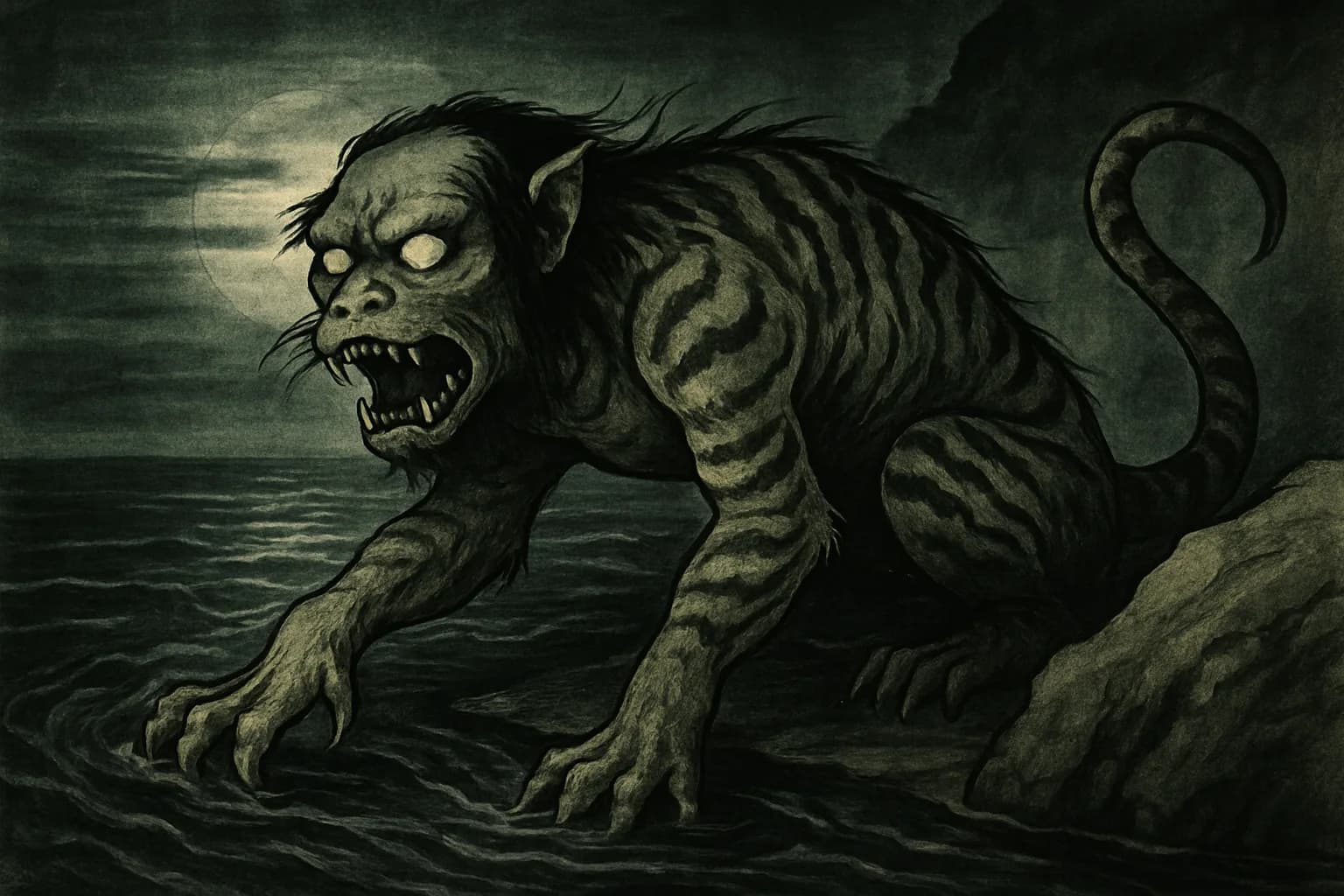
Umibozu rises out of calm water and capsizes the vessel. Funayurei are the ghosts of the drowned; they ask passing boats for a ladle, then use it to swamp them. Bake-kujira is a whale of bare bones, surfacing off Shimane in the rain. Umizato is a blind giant who wades the open sea and puts questions to the ships he meets.
These are not stories about water. They are stories about being on a boat when something arrives.
The river half is about children
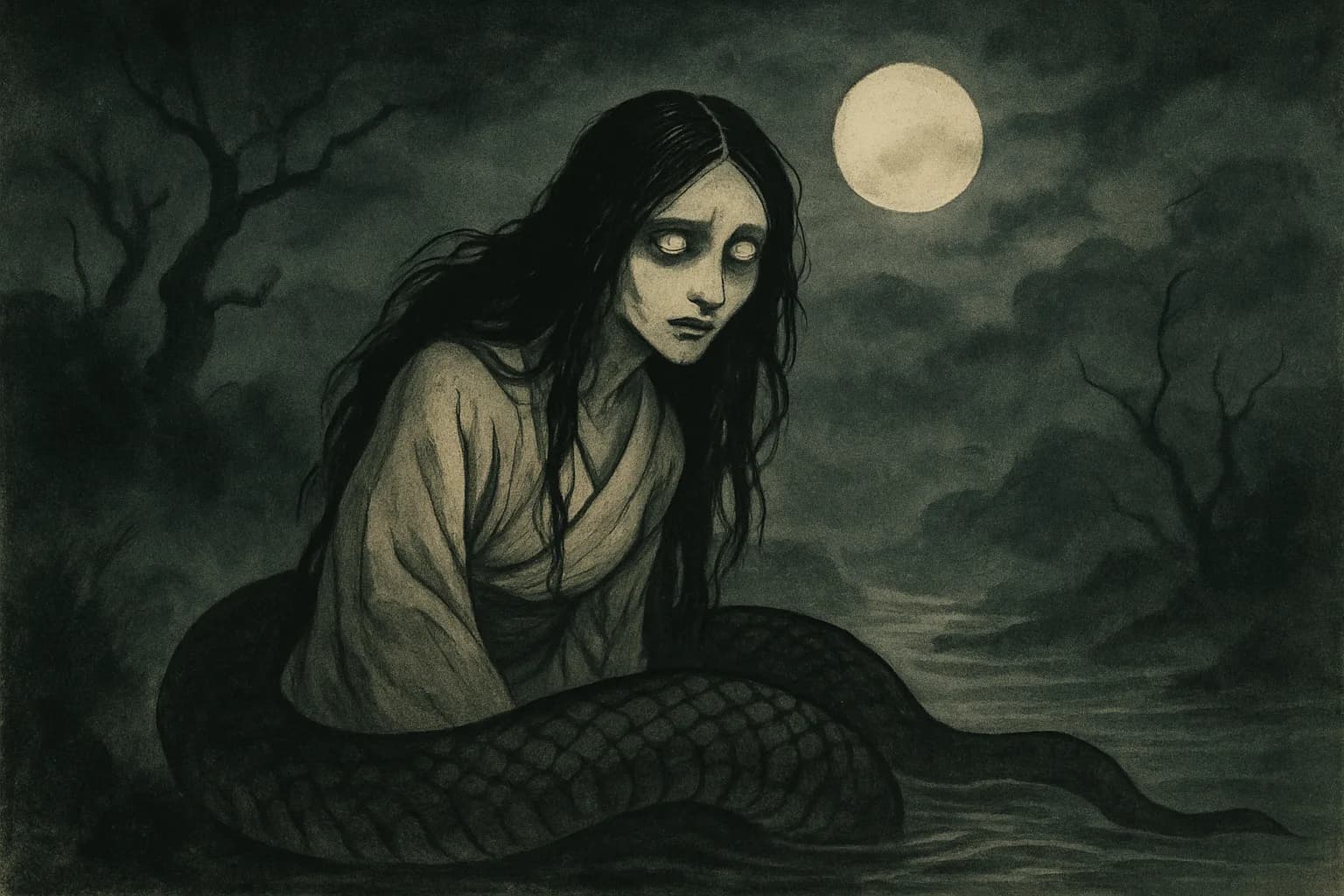
Seven entries are in rivers. Not one of them mentions a boat. Six of the seven mention a child.
The word itself says it. Kappa is written 河童 — 河 (ka, river) plus 童 (ppa, child). The river child.
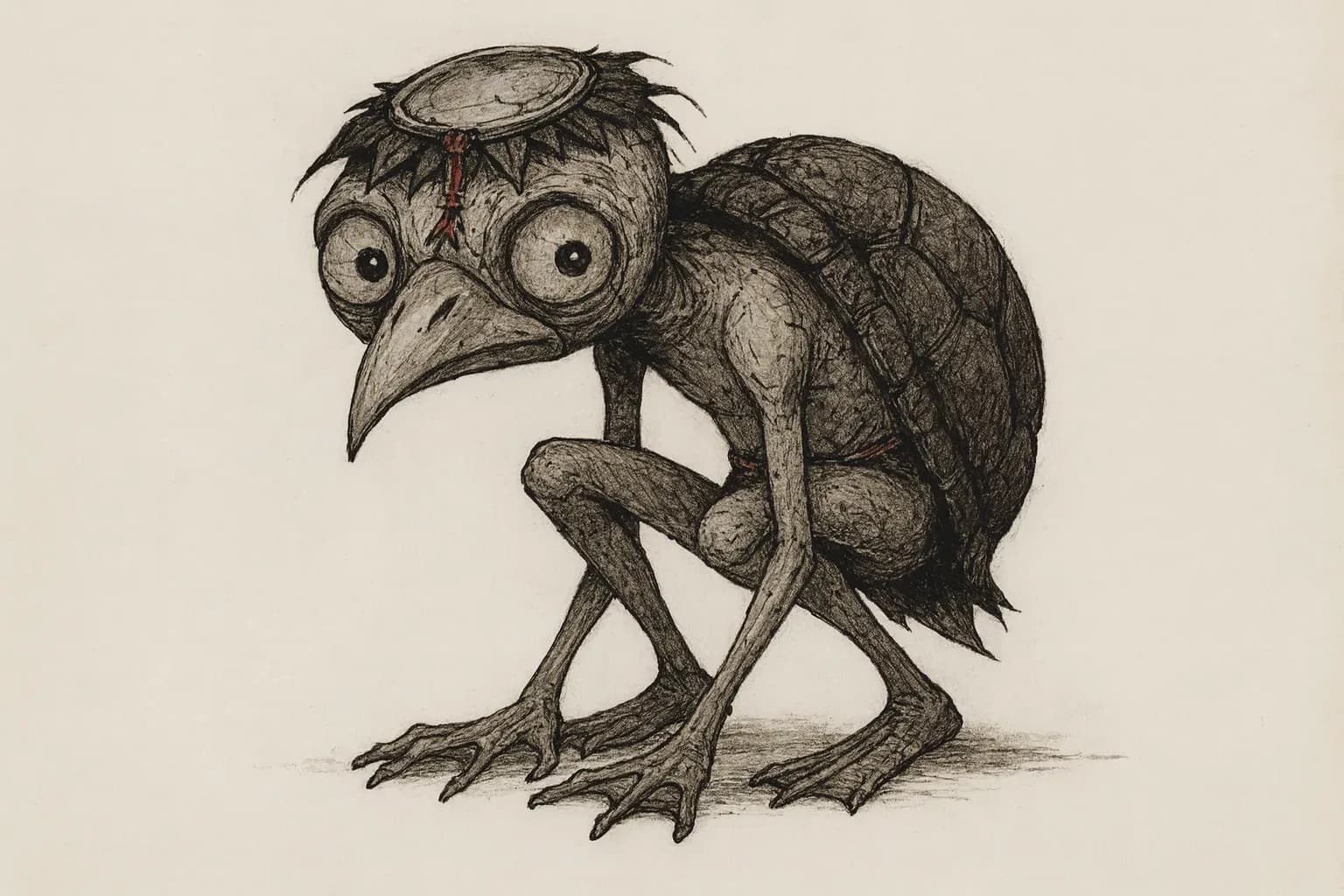
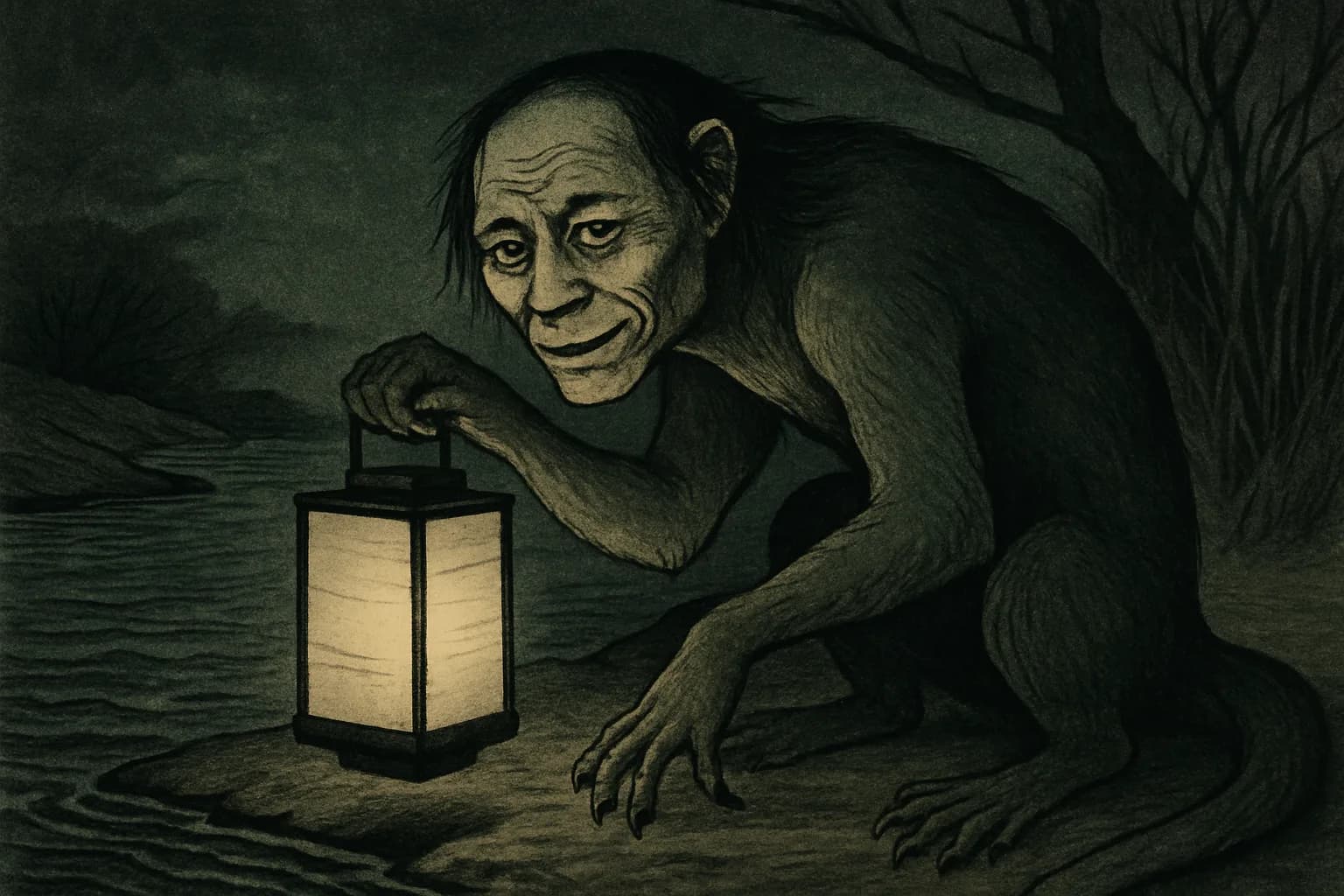
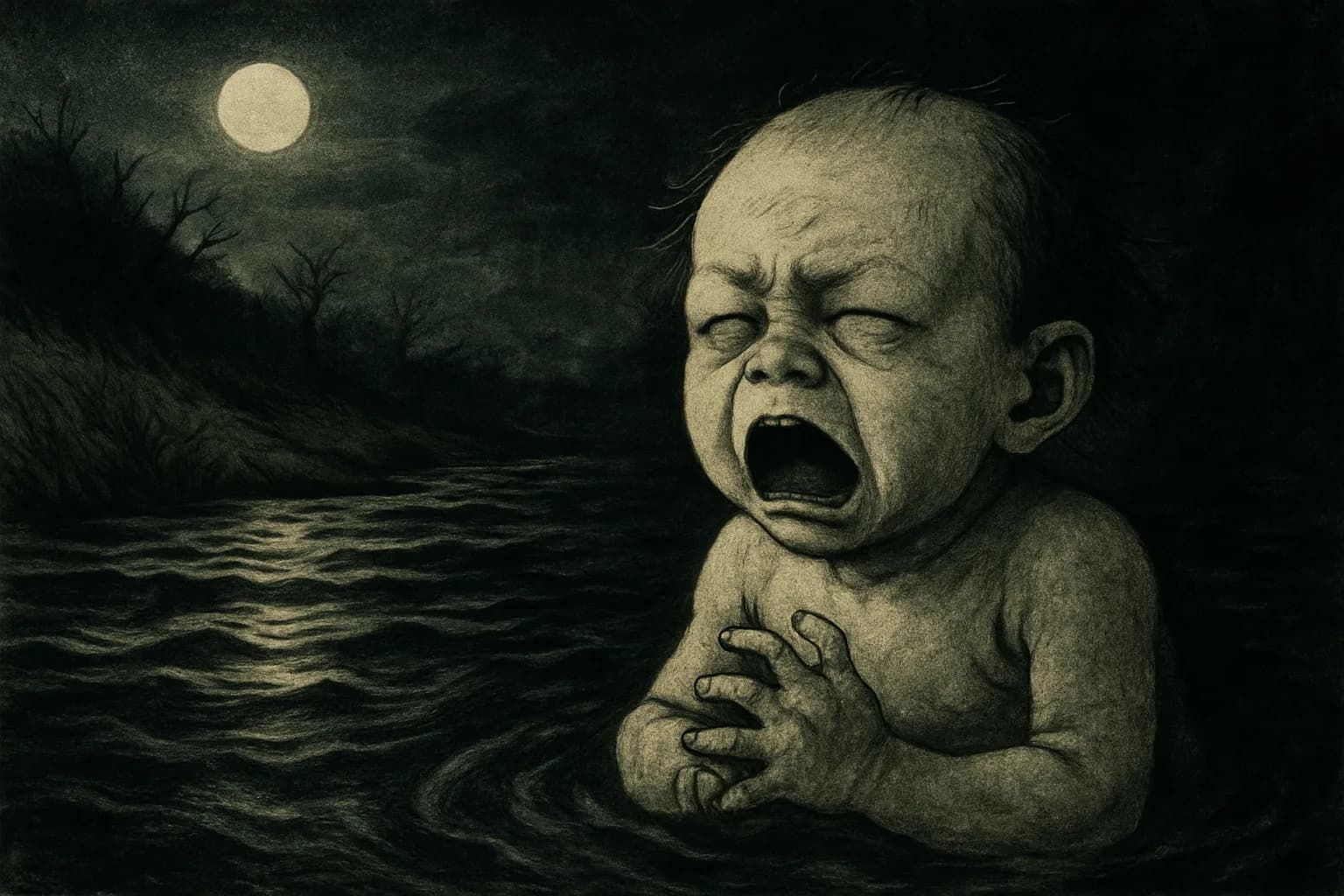
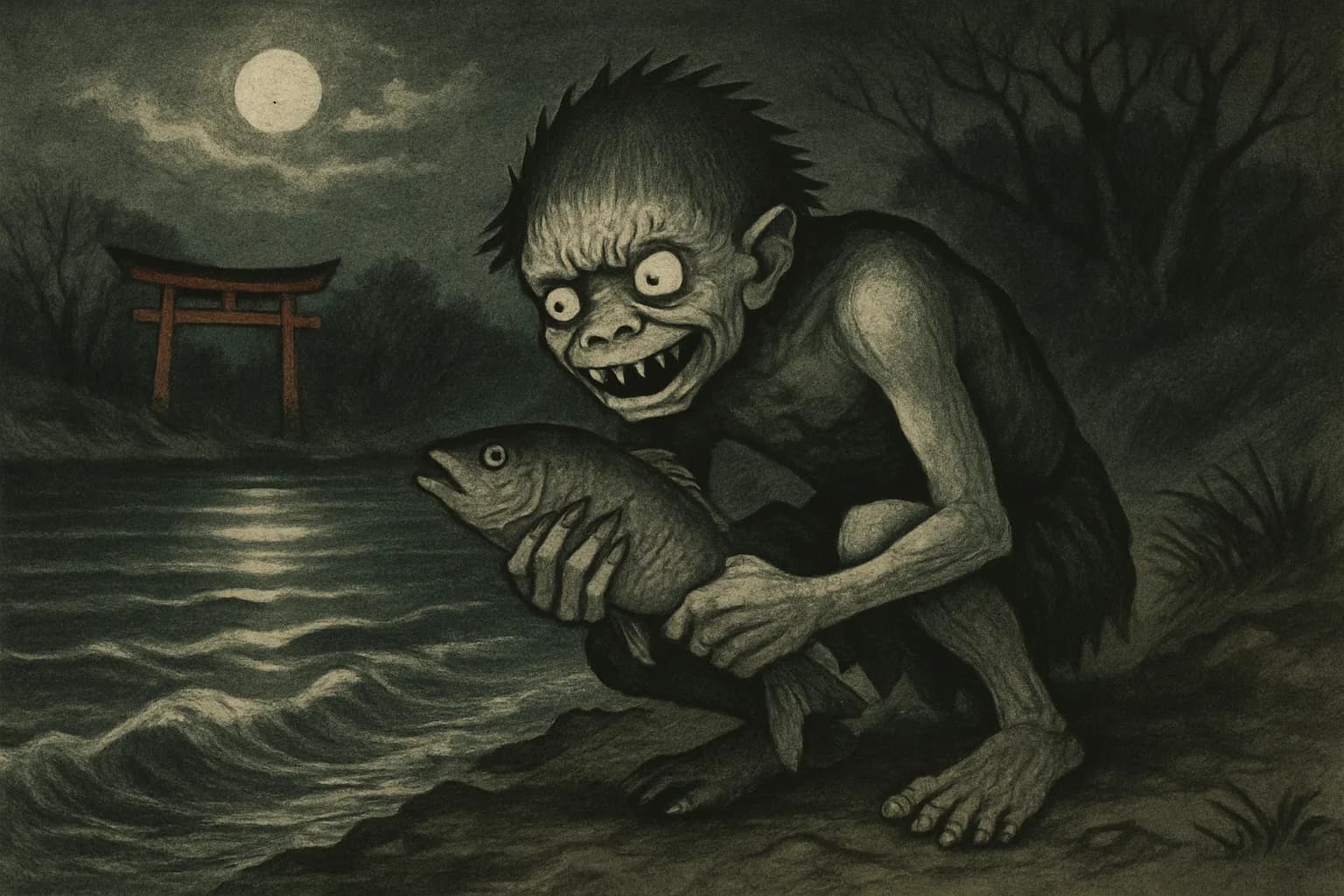
It keeps going from there. Kawaakago is the river baby, crying from midstream so that you wade out to it. Gangi-kozo is the river boy with saw teeth who out-fishes any man. Hyosube is the kappa's hairy cousin. Suiko is the one that drags you under.
One shelf, two entirely different fears. The sea takes the boat. The river takes the child.
The sizes follow the same line
We did not sort for this. It falls out of the same split.
| Giants | Child-shaped | |
|---|---|---|
| Sea (9) | 4 | 0 |
| River (7) | 0 | 4 |
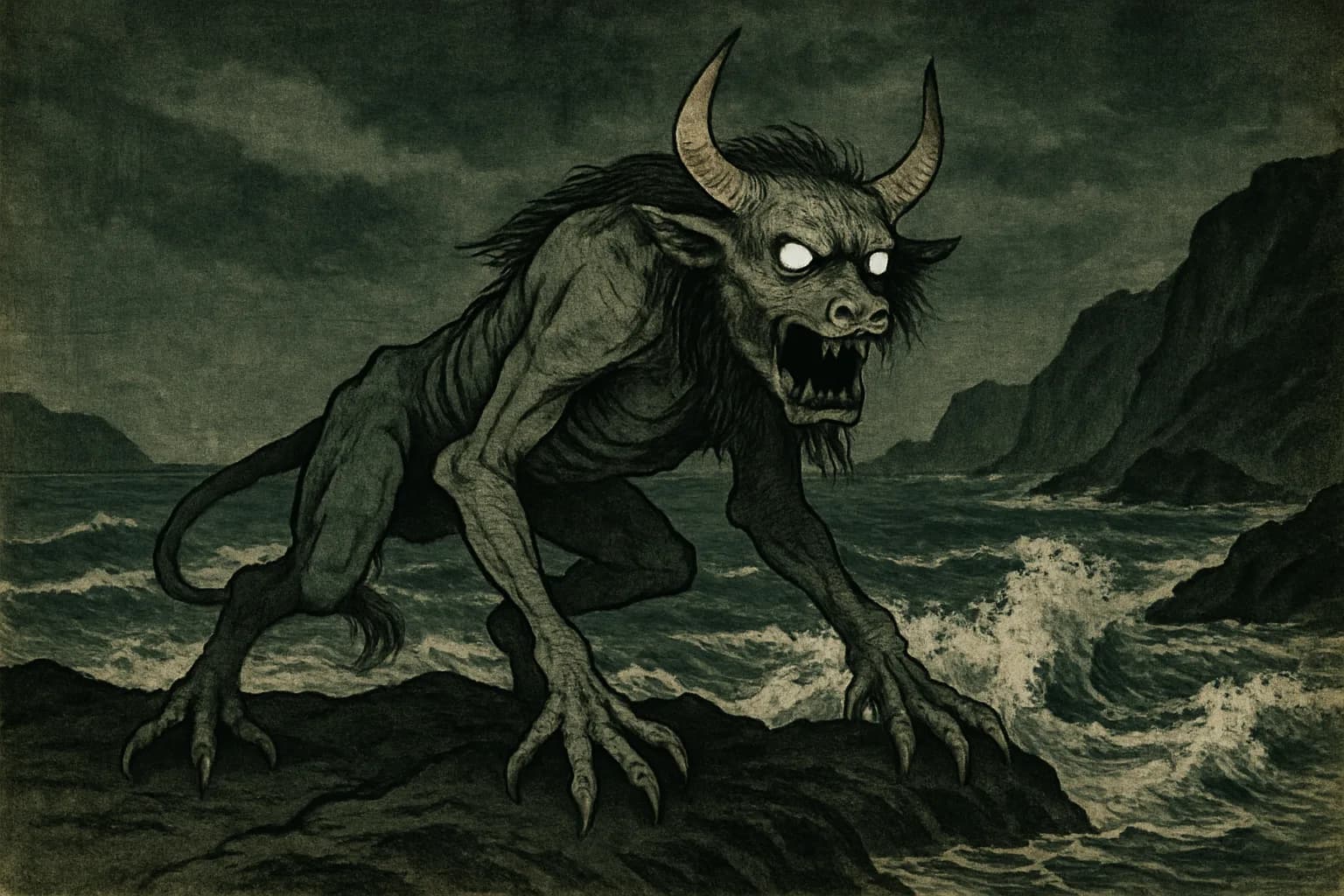
The sea has umibozu, umizato, bake-kujira and ushi-oni — all of them enormous. The river has nothing bigger than a person, and four things smaller.
A river drowns one child at a time. A sea takes a boat with everyone on it. The creatures seem sized to the accident.
The two halves also come from different places
Sort the same 17 by where the entry's earliest named source is, and the split holds a third time.
| From a Sekien print | From port, village or news | |
|---|---|---|
| River (7) | 7 | 0 |
| Sea (9) | 3 | 6 |
Every river entry runs through Toriyama Sekien's picture books of 1776, 1779 and 1781. He worked in Edo, and his books were a commercial catalogue of creatures for city readers.
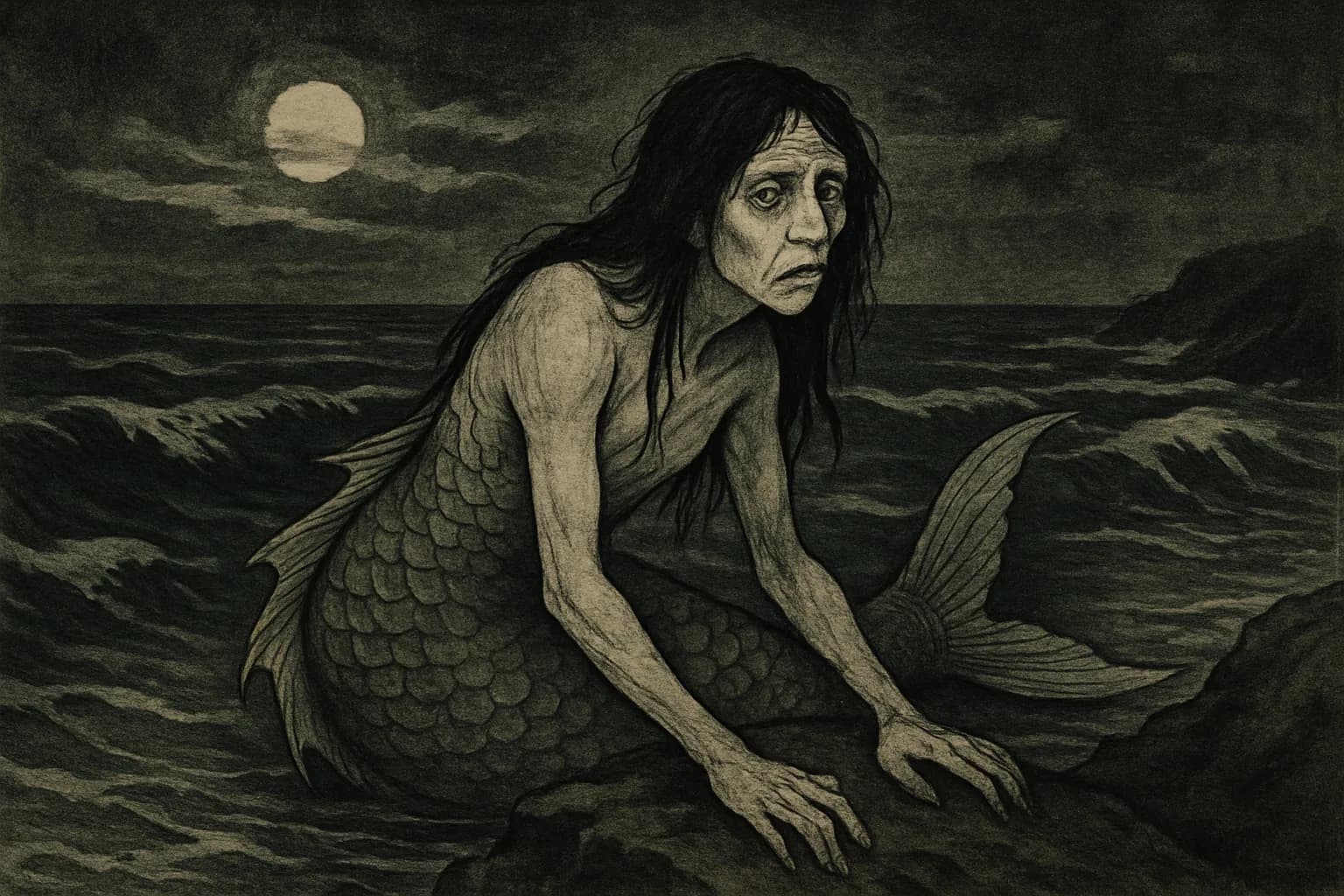
The sea half mostly did not come that way. Umibozu, funayurei and bake-kujira are Edo-period coastal belief, kept by the people who went out on the water. Ningyo and ushi-oni are older still, medieval.
And amabie is not folklore at all in the usual sense. It is a kawaraban — a single-sheet news broadside, printed in 1846, reporting a sighting off Higo like a story in a paper.
So the river half is a city publisher's version of country lore. The sea half is what ports and print shops were saying at the time. That difference is worth holding onto: it is the reason the two halves do not describe the same fear.
There is one more layer underneath both. The oldest water monster on this site is not on this shelf at all. Yamata-no-Orochi comes from the Kojiki of 712: an eight-headed serpent taking one daughter a year from a river family, until a god gets it drunk. A thousand years before Sekien, the river was already taking children.
The sea half sits on the Inland Sea
The region tags lean west. Counting the tags on the 17: Kyushu 5, Chūbu 4, Kansai 4, Chūgoku 3, Shikoku 1, Tōhoku 1. Seven are marked nationwide.
The sea ones cluster tighter still. Chūgoku 3, Kansai 3, Shikoku 1 — that is the Seto Inland Sea, the water between Honshu and Shikoku.
In the Edo period that was the main shipping lane to Osaka, and it is said to have been the busiest water in the country. Eleven of the 17 first appear in Toriyama Sekien's picture books of 1776, 1779 and 1781 — published in a city that ate rice and fish carried in by sea.
We cannot show you cause from a count. The sea monsters sit on the sea lane, and the entries that mention crews are the ones that sit there — that reads as two things in the same place, not as one making the other.
What the count is, and is not
The water-body sort uses the one-line description and region field, which every ledger entry has. The boats-and-children sort uses the full text, which only the published 17 have. Those are different samples and we have kept them apart.
The first version of this piece counted only the 17 and reported that no creature lives in a pond. That was true of the shelf and false about the subject: going back to the 327 put seven paddy creatures on the table, none of them published. It suggests a rule we did not have before: what we publish first is our queue, not the tradition.
Japan's water yokai are not river spirits with cucumbers. One half of the shelf is the river, and it is about children. The other half is bigger, is at sea, and comes for the boat.
And the third water is not on the shelf at all yet. It is the one with a god standing in it, six inches deep, growing rice.