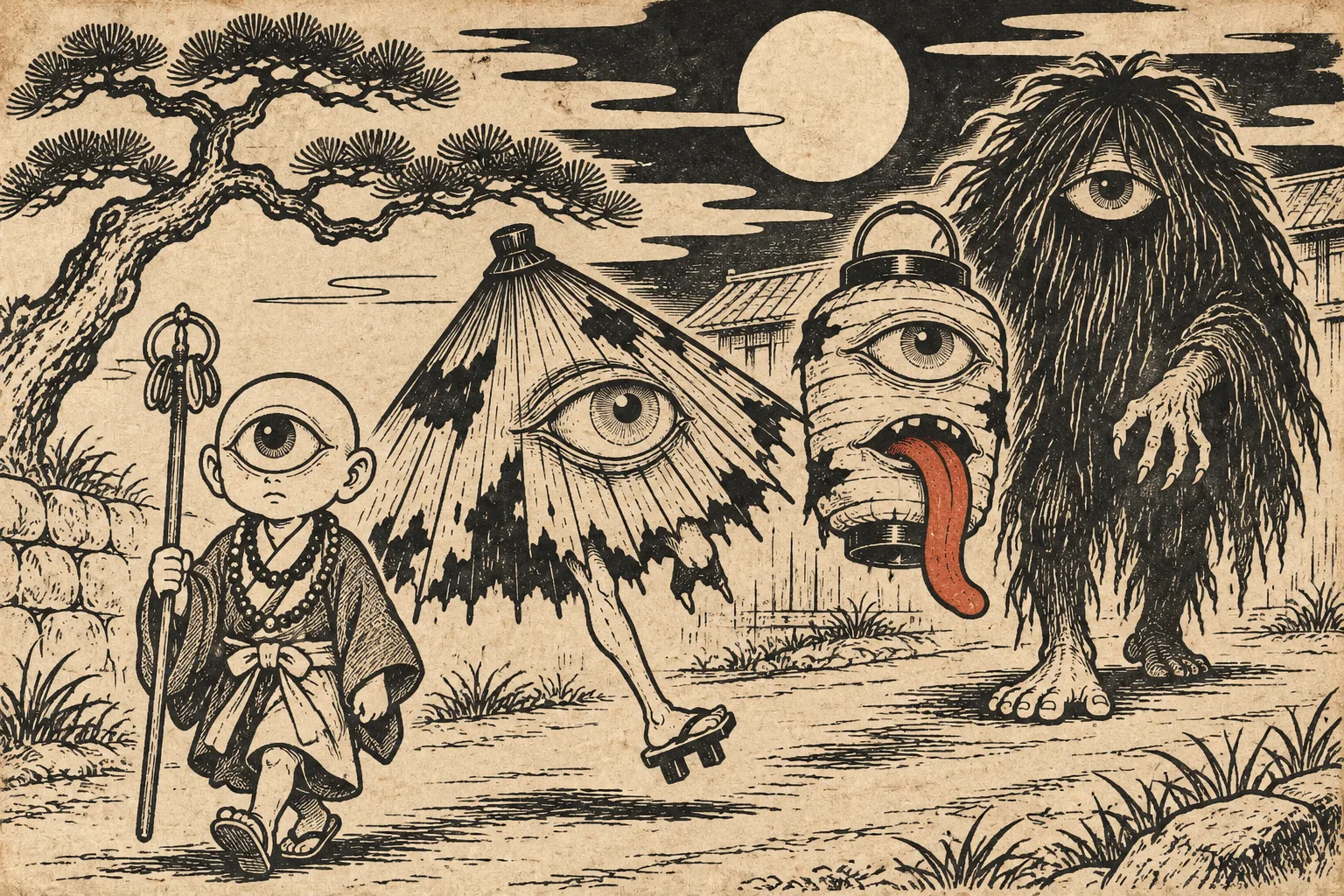
One-Eyed Yokai
A demon in a 733 report. A boy with one eye in the middle of his face. An umbrella that hops on one leg. Here are the one-eyed yokai of Japan.
Many readers remember these yokai by the eye, not the name. This page puts them all in one place.
One eye is one of the oldest yokai bodies on record. In 733, a report from Izumo noted a demon that ate a man. The only detail it gives is that the demon had one eye.
Why one eye? There is no single answer. The folklorist Yanagita Kunio thought one-eyed yokai were mountain gods who had lost their worship. In some regions the mountain god was said to squint, and the word for a squint could also mean one eye. He also suggested that people chosen to serve a god were once marked by damaging one eye.
Another theory looks to iron-making. Smiths stared into the furnace, and some say they lost an eye. Others say they shut one eye to judge the heat by the colour of the iron. Their god, Ame-no-Mahitotsu, has "one eye" in his name. These are readings, not records.
The umbrella is different. Nobody ever met one. Its one eye comes from Edo pictures, not from village stories.
We only list a yokai here if its own page gives it one eye. Three have one eye only in some tellings, and we list them apart. Each page names the oldest source we found.
One-eyed man-eaters
A demon written down in 733, and a killer of Iwami's night roads, first recorded in 1929.
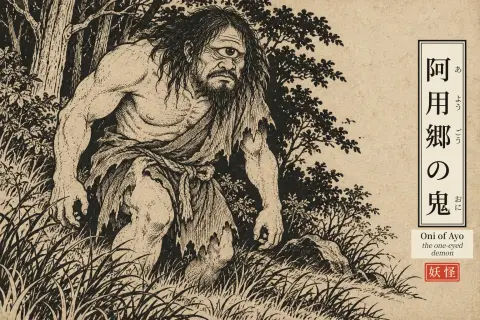
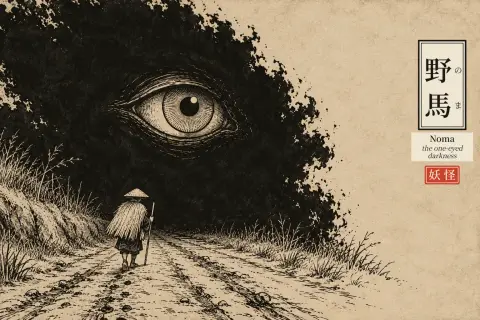
A boy, a mountain kappa and a mud monk
One eye in the middle of the face.
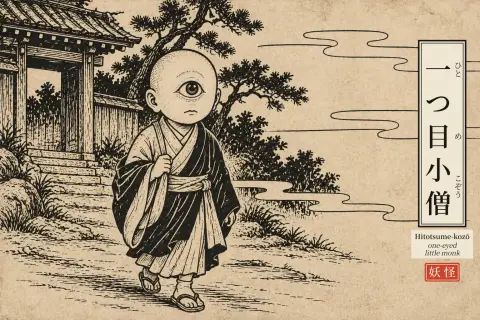
Hitotsume-kozo
一つ目小僧A childlike, one-eyed monk yokai that startles people on lonely roads.
harmless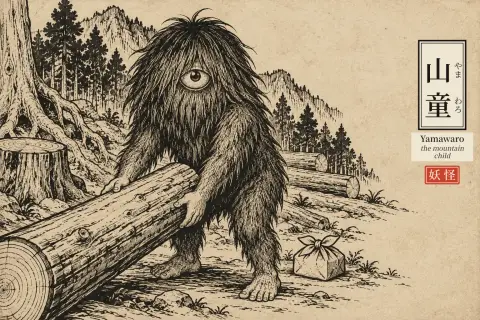
Yamawaro
山童A one-eyed, hairy mountain child (the kappa's mountain form) that helps loggers in exchange for food.
ambiguous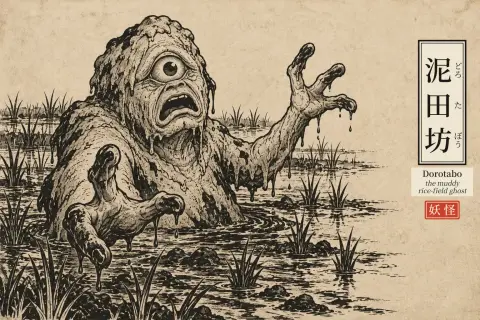
Dorotabo
泥田坊A one-eyed, three-fingered shape rising from a flooded paddy, crying 'Give back my field!'
sorrowfulAn umbrella and a lantern
Old things come to life. The lantern often has one eye, sometimes two.
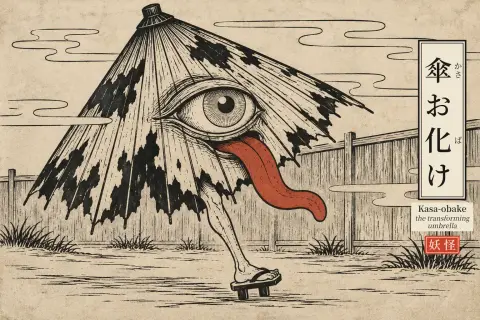
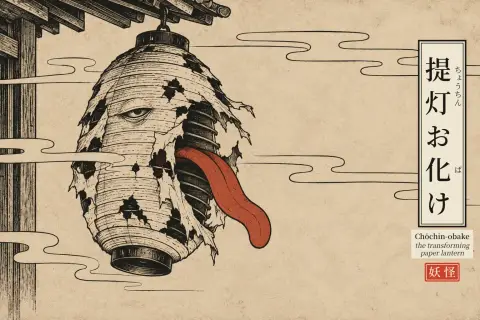
One eye in some tellings
Most tellings give them two eyes, or no face to speak of. One local story or some pictures give them one.
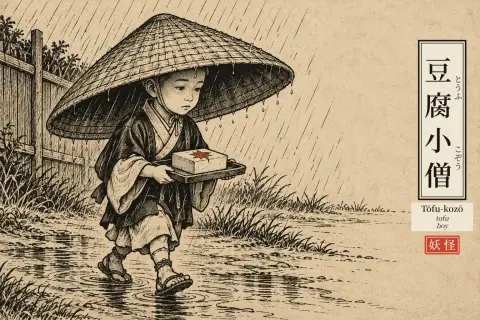
Tofu-kozo
豆腐小僧A harmless boy yokai who trots through the rain carrying a block of tofu.
harmless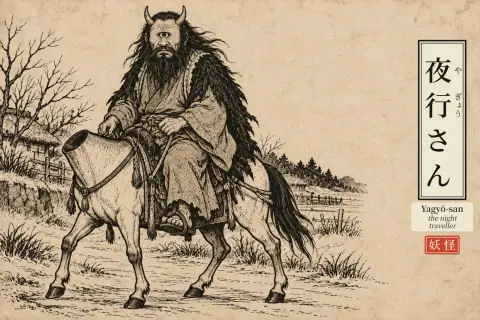
Yagyō-san
夜行さんAn oni riding a headless horse, abroad on setsubun night and the year's turn.
menacing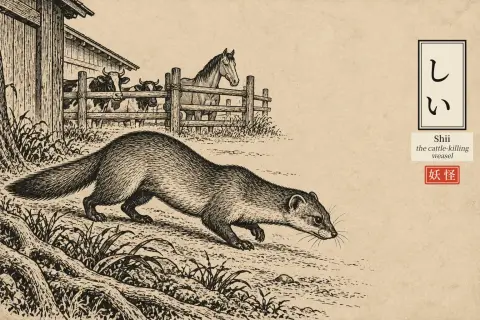
Shii
𤯝A weasel-shaped thing that goes for cattle and horses, listed among the beasts in an Edo encyclopedia.
fierceToo many eyes
The other way round: eyes on a screen, on a woman's arms, or in the wrong place.
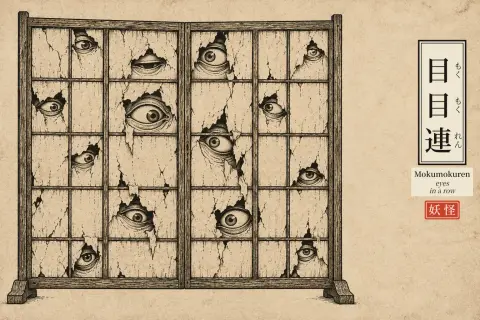
Mokumokuren
目目連Countless eyes that appear on the paper sliding screens (shoji) of a ruined house.
eerie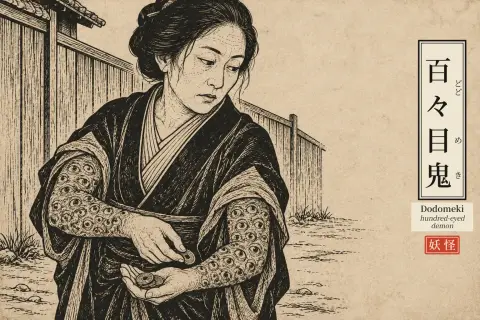
Dodomeki
百々目鬼A thieving woman whose arms sprout countless bird-eyes as punishment for stealing coins.
cunning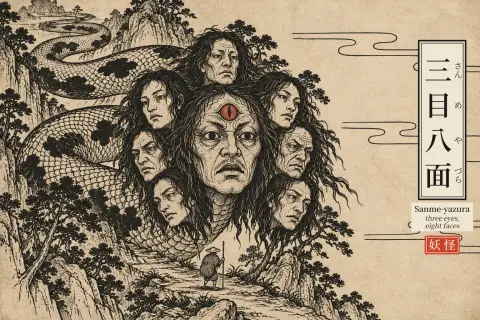
Three Eyes, Eight Faces
三目八面A three-eyed, eight-faced man-eater that preyed on travelers from a Kōchi mountain, until it was burned alive.
eerie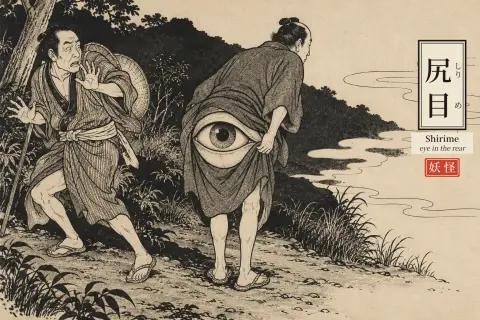
Shirime
尻目A bald figure on a Kyoto road with a single shining eye where its anus should be.
prankish