In the hills above what is now Kōchi city, a mountain called Saruyama once had a monster living on it. It had three eyes and eight faces. That is nearly the whole physical record. Travelers walking the path to the next village did not come back, and the way this yokai finally died is still written into two place names on the local map.
What does it look like?
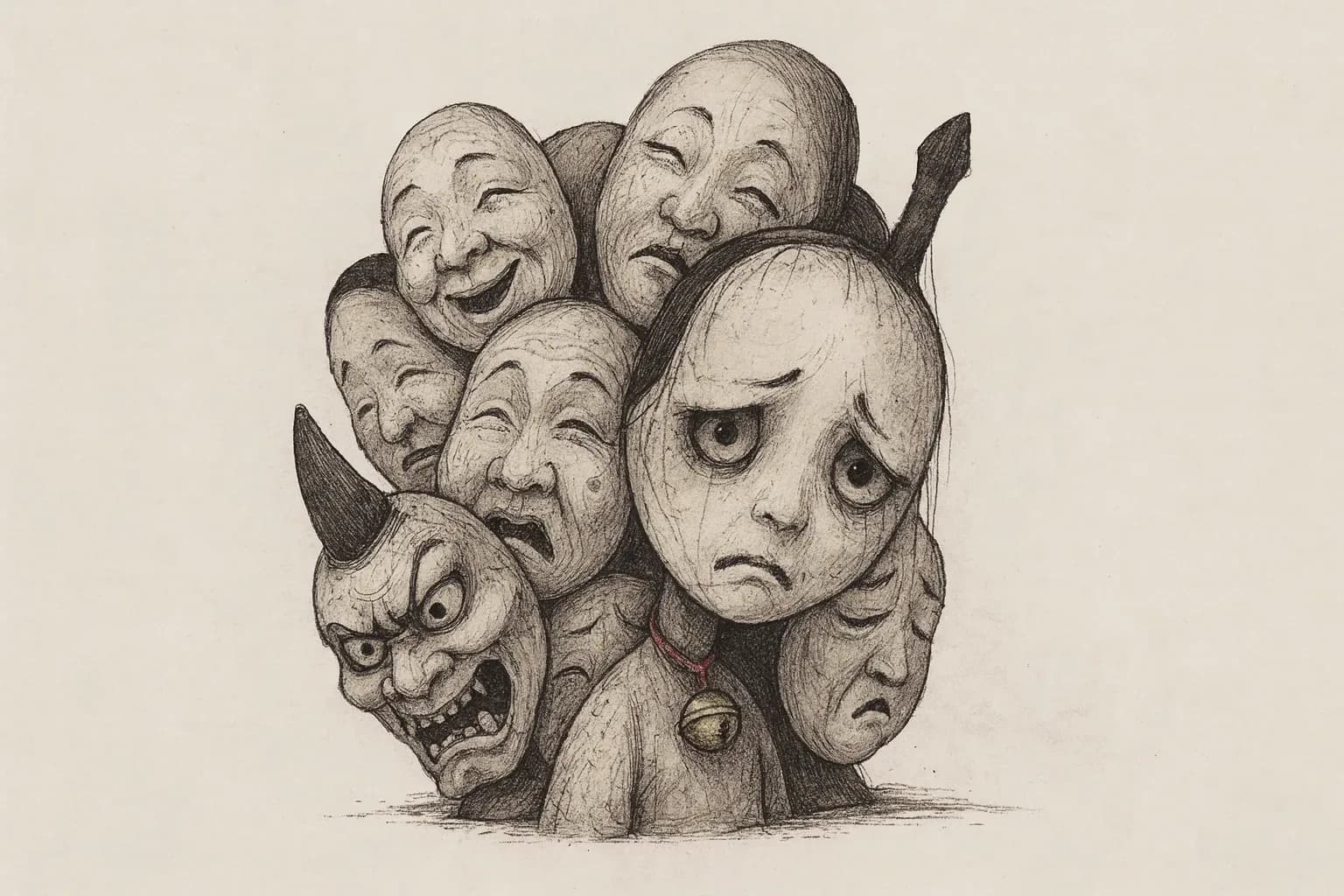
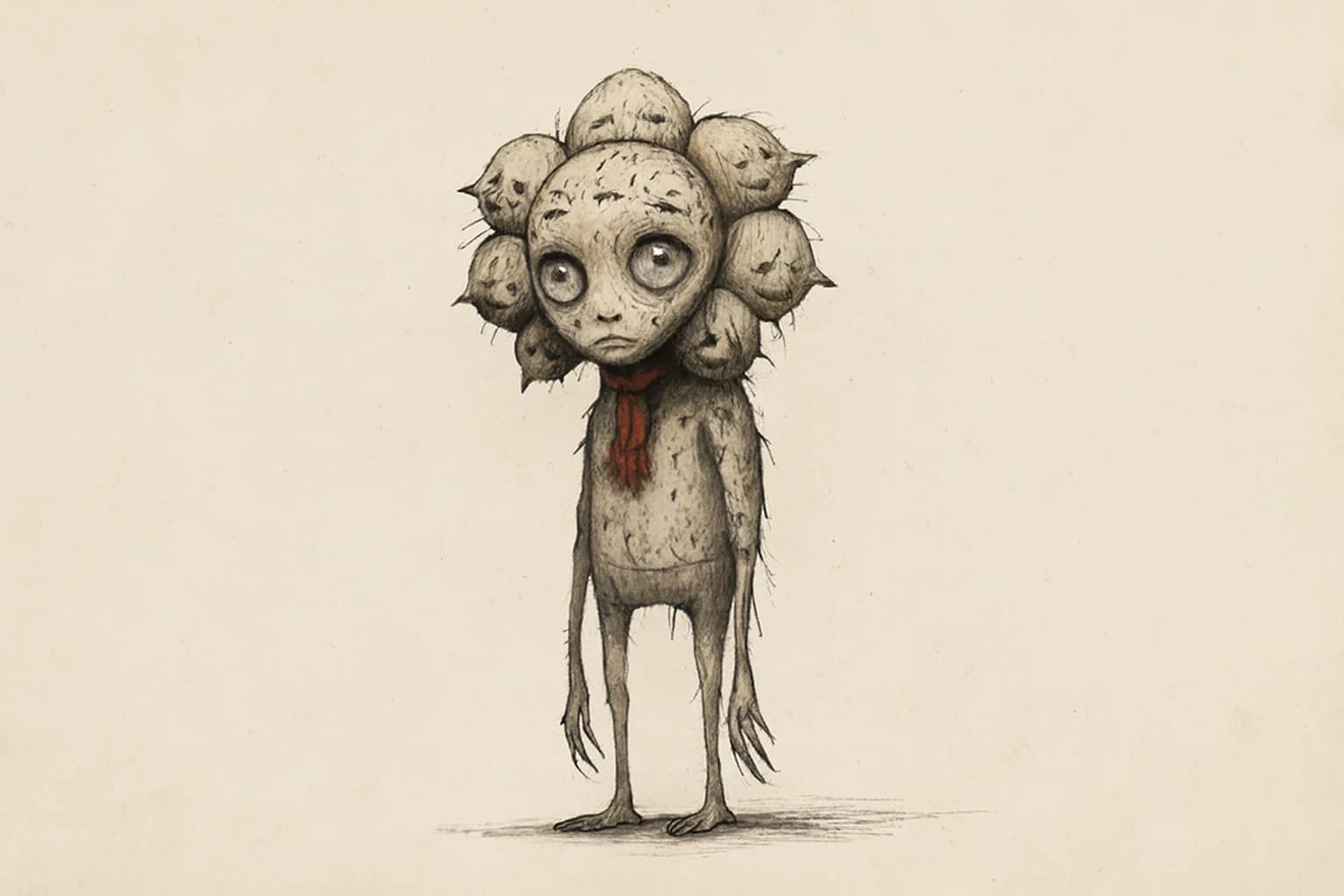
The name says most of what is known. 三 (san) means three, 目 (me) means eye, 八 (ya) means eight, and 面 (zura) means face. Three eyes, eight faces — sources give no further detail about its body, its size while alive, or what it wore.
One clue survives anyway. After it died, its burned corpse was said to be so enormous that it stretched across into the next village over. The yokai researcher Murakami Kenji used that single detail to guess at the rest. A body big enough to span two villages, carrying eight faces, reads to him as long and snake-like rather than human-shaped. He also flags a possible relative: another Kōchi legend about an eight-headed giant serpent called Yatsurao. A separate retelling of the tale, in a Kōchi City history column, makes its own comparison instead — to Yamata-no-Orochi, the eight-headed, eight-tailed serpent slain by the god Susanoo.
A mountain that ate travelers
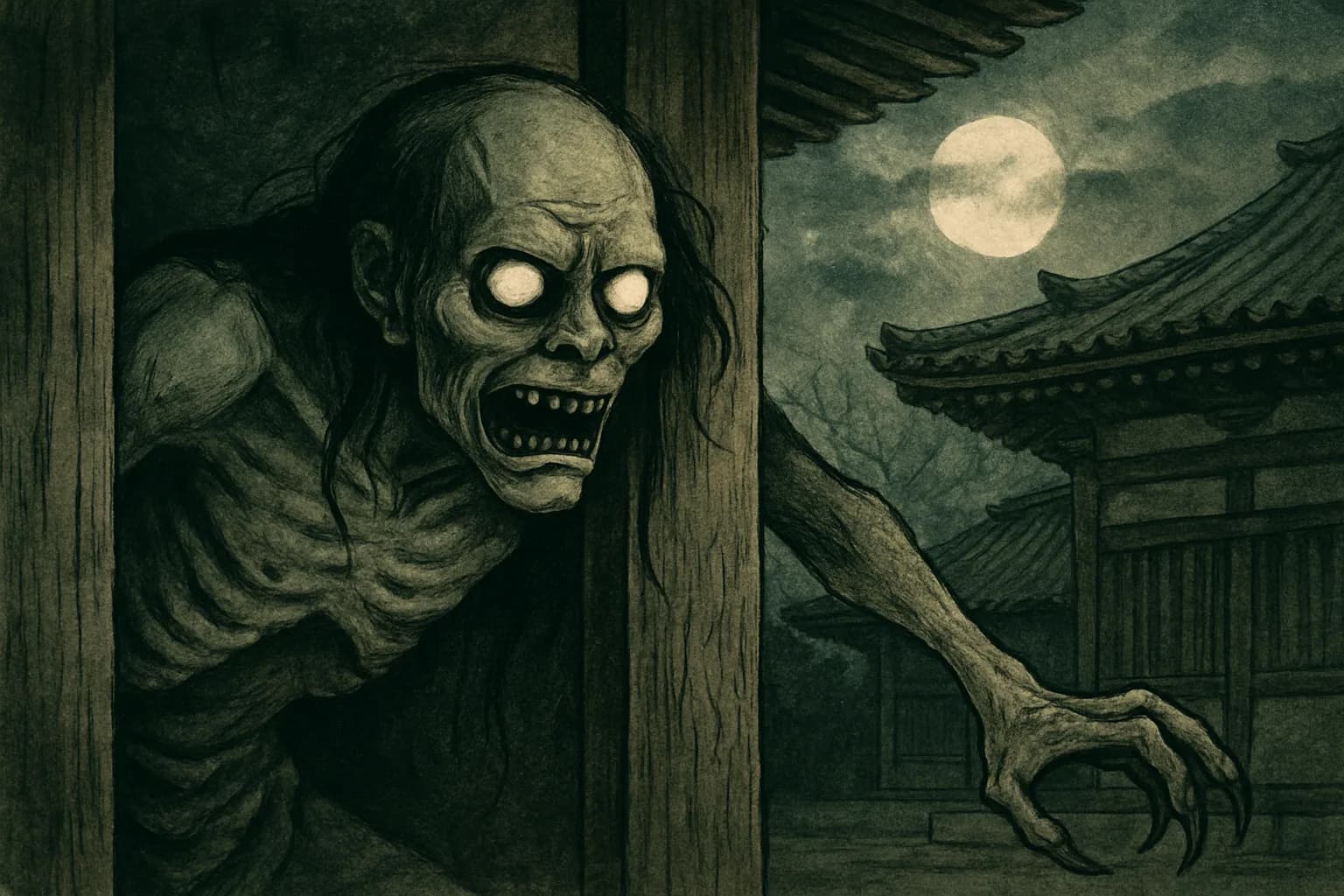
Sanme-yazura lived on Mt. Saruyama, above the Takagawa settlement in Tosayama. From there it attacked people walking to the neighboring village of Mori, now part of Tosa-chō. It killed them and ate them. The path between the two villages became the kind of road people stopped using alone.
The brother who burned the mountain
Word of the killings eventually reached Mizuno Wakasa-no-kami, a local lord of Tosayama. His younger brother, a man named Shimedayu, chose to end it himself.
Shimedayu first planted a gohei on the mountain — a wand of folded paper strips used in Shinto rites to calm a dangerous place. Then he set the whole mountain on fire.
Sanme-yazura thrashed through the flames until it burned to death. Mt. Saruyama burned along with it. Only one thing came through untouched: the gohei Shimedayu had planted before he lit the fire.
Where it comes from
The earliest written trace is folklorist Katsurai Kazuo's 1954 book Tosa no Densetsu (2) ("Legends of Tosa, vol. 2"). A Kōchi City history column, archived online in 2002, retells the tale while crediting that 1954 book, inside a passage about Tosayama village's yamanba (mountain hag) folklore. Murakami Kenji's 2000 reference work Yōkai Jiten carries the same story.
Strip away the monster and this is a story about two place names. Takagawa still has a spot called Shizume-ishi, "pacifying stone," and another called Shizume-dokoro, "pacifying place." Local memory ties both directly to the gohei that survived the fire.
That order — landmark first, legend built to explain it — is common in Japanese folklore. A dramatic story grows up around something already sitting on the land, and the landmark then stands as proof the story happened. Here, the monster explains the names. The names, still real and still on the map, keep the monster's story in circulation decades after it was first written down.
Sanme-yazura isn't alone in carrying more eyes or faces than a person should. Dodomeki is a thief whose arms sprout a hundred eyes as punishment. Menreiki is a stack of retired Noh masks that wakes after dark and works through its whole repertoire. Nothing in the record gives sanme-yazura a club or horns, so it isn't an oni by the usual markers, but it fills the same role: a monstrous threat that a human being eventually has to face down and kill. What sets it apart from all three is that nothing rounds out its shape beyond the eyes and the faces. No later artist added a body for it to wear.
Sanme-yazura today
This one hasn't traveled far from Takagawa. The record of it is exactly the sources behind this article: a 1954 folklore book, a city history column, and a yokai encyclopedia entry. It survives the plain way most strictly local yokai survive: as the reason a pacifying stone and a pacifying place, on a Kōchi hillside, are called what they're called.