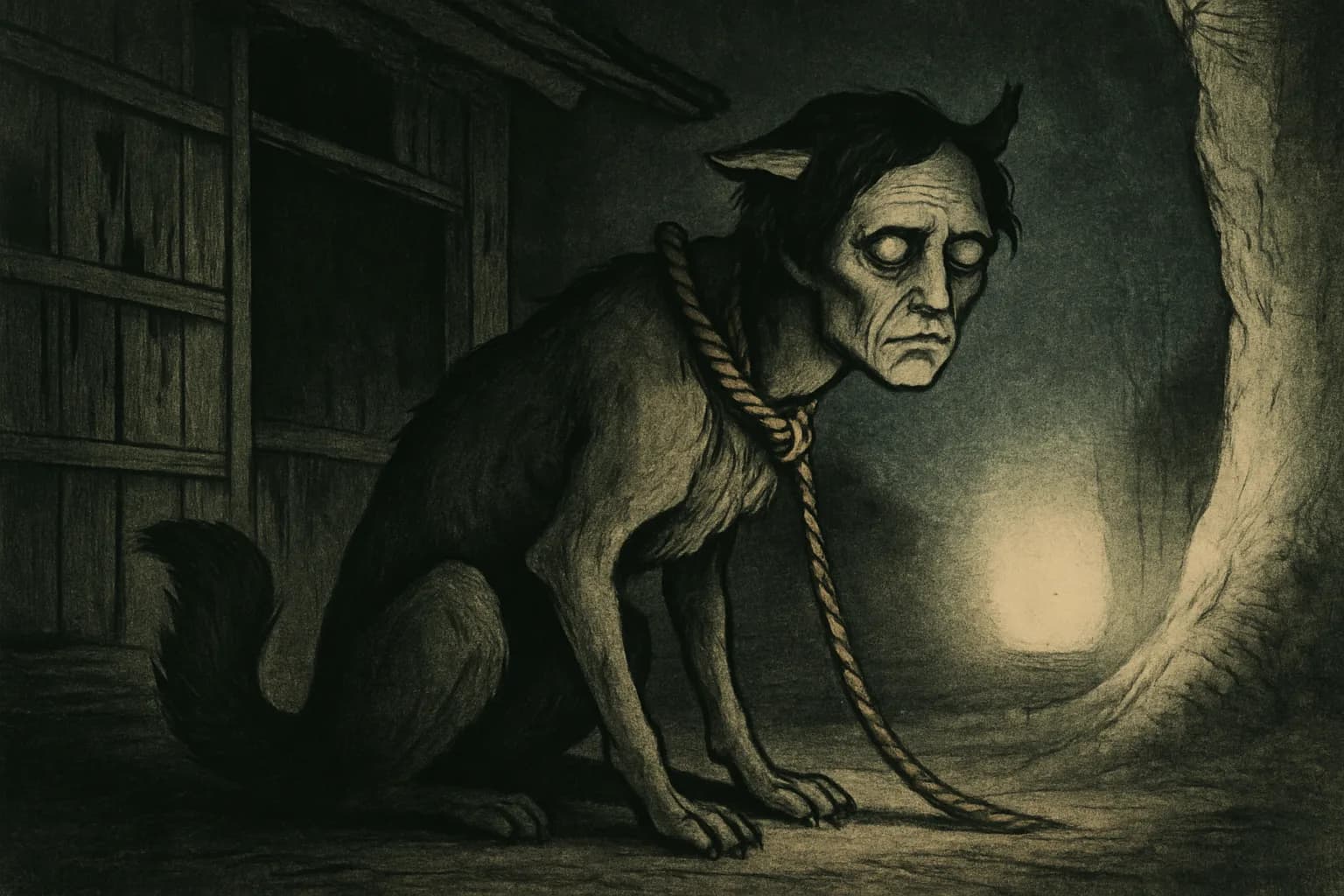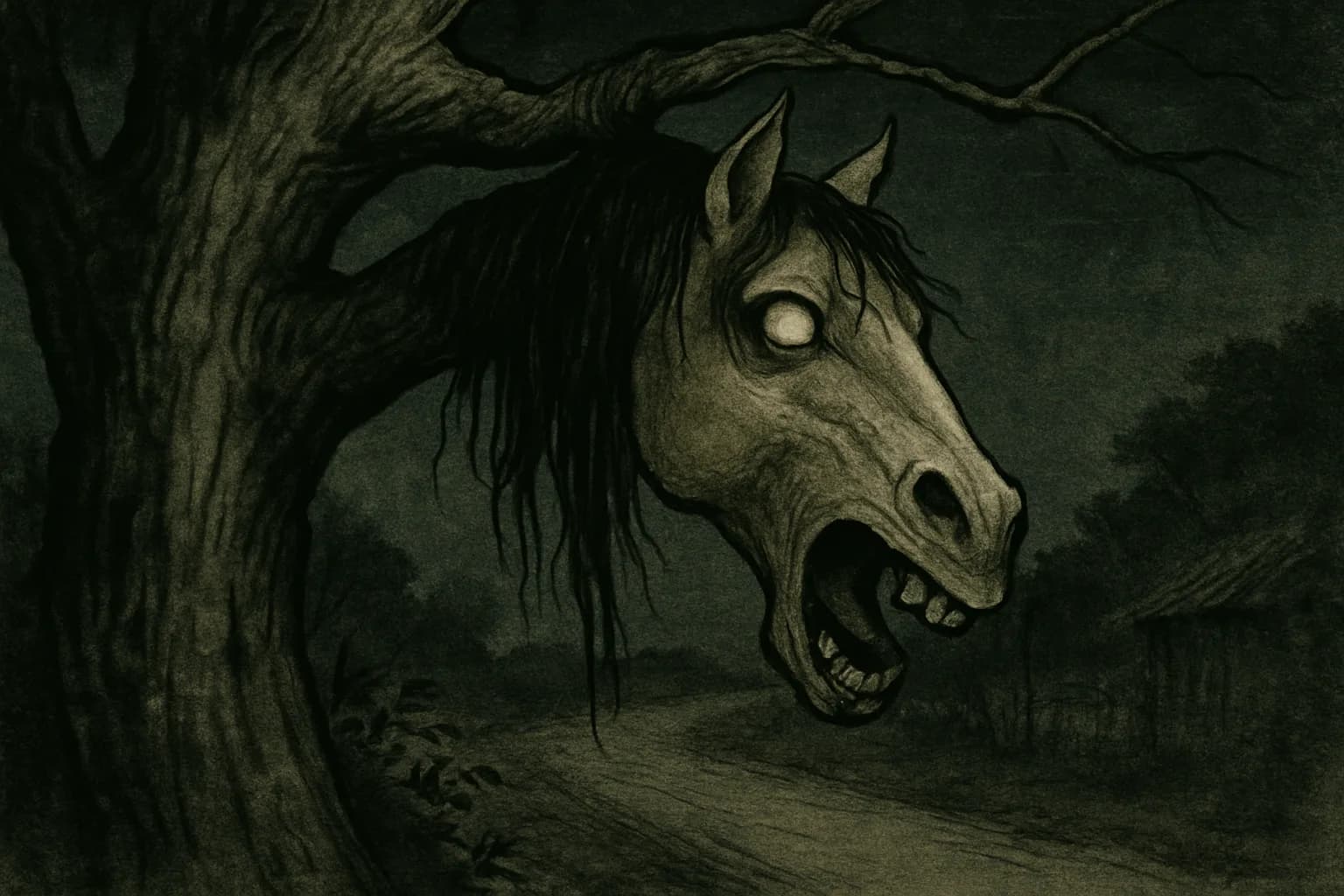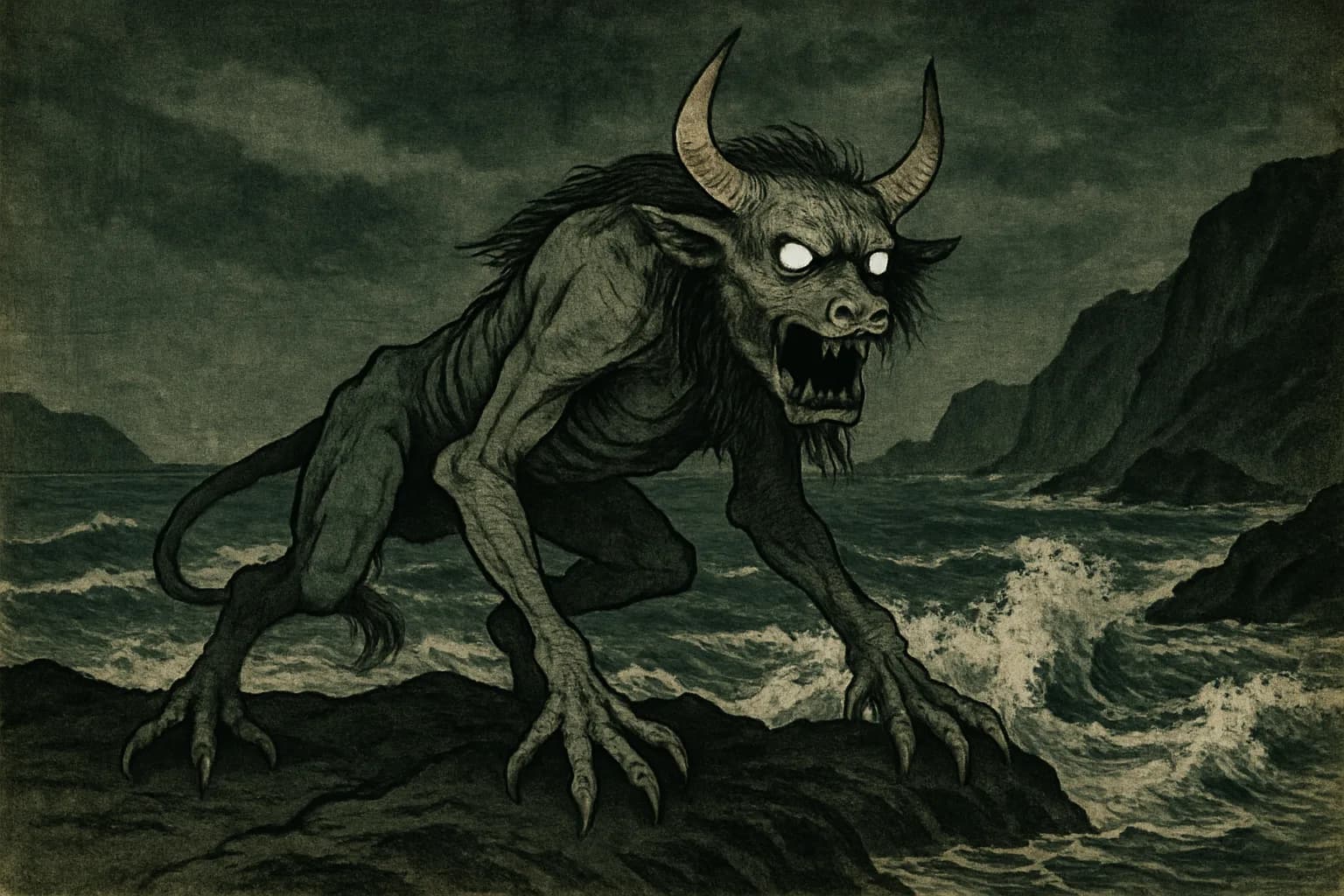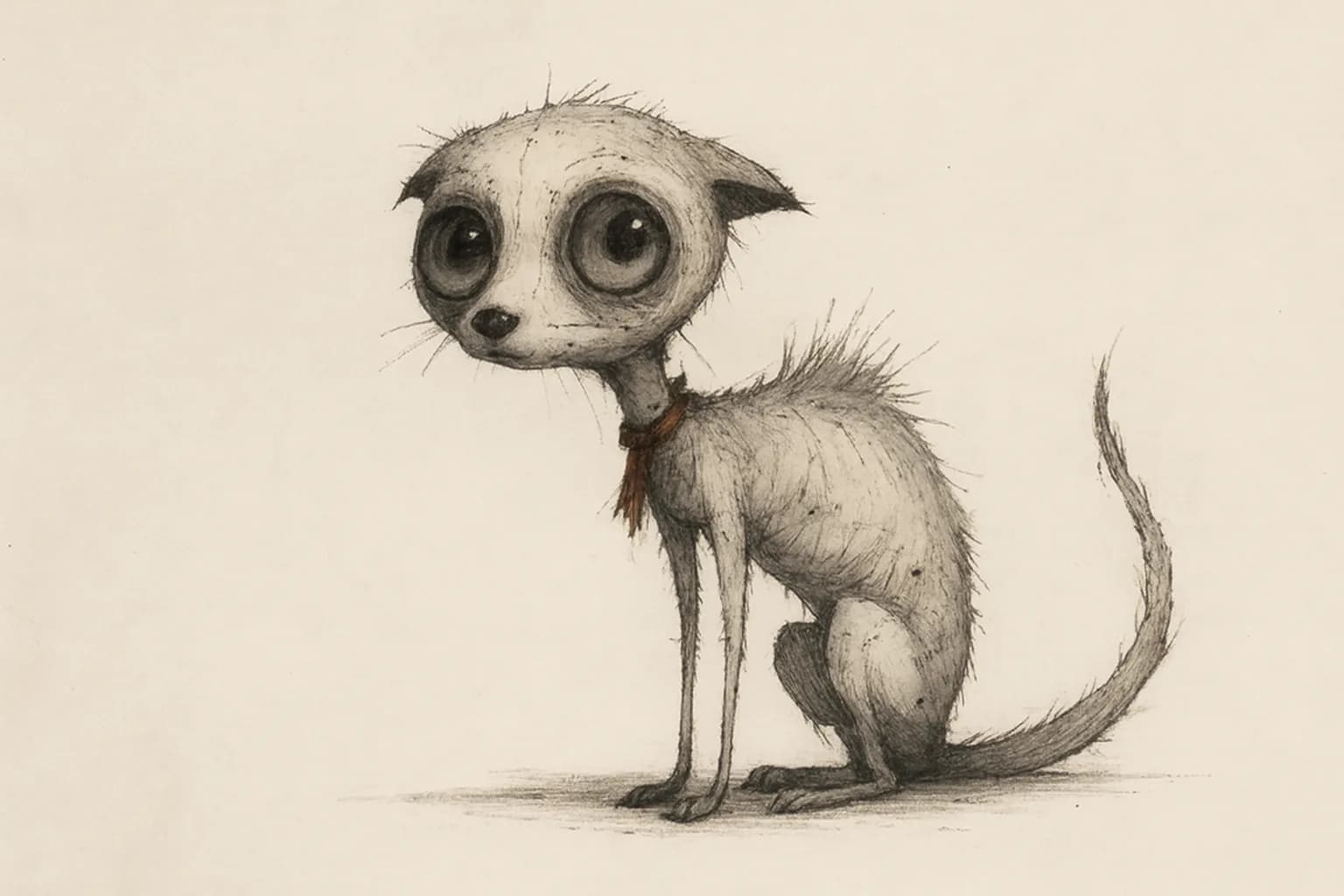
A cow found torn open at dawn needed an explanation. No wolf tracks. No dog had barked. In parts of western Japan, from at least the early 1700s, that explanation had a name: Shii (𤯝). Old books describe it as a weasel-shaped beast. It killed cattle and horses at night, then vanished before anyone got a clear look at it.
What did Shii look like?
Every account agrees on one point. Shii looked like itachi, the common Japanese weasel — slim, fast, low to the ground. That is where the agreement stops.
In Wakayama and Hiroshima, people called it yama-arashi, "bristling mountain thing." The name came from its fur. Witnesses said Shii raised its hackles before it struck, and cattle panicked at the sight. Drovers in those provinces shouted "shii, shii" to hurry their herds past places where the beast was known to wait.
A stone marker at Fukuchiyama Dam, near Nogata in Fukuoka, keeps a local version of the story alive. It gives the creature another name, Shiiraku, and says it had only one eye. The marker claims Shiiraku lived nowhere but two places: Tsukushi, the old name for northern Kyushu, and the coast of the Suo Sea, off Yamaguchi.
A cattle-killer with a temper
The natural-history text Yamato Honzō, compiled by the scholar Kaibara Ekken in 1709, places Shii in Suo and Tsukushi provinces and calls it a menace to livestock. It adds one more detail: the creature was clever as well as fast, which is why so few farmers ever managed to trap or kill one.
A later book, the Saikai Zokudan of 1758, records a rougher version of the legend from the Yoshino mountains in Nara. There, it says, a person only had to touch the animal to come away hurt — cut across the face, hands, feet, even the throat. Whether this was the same beast recorded further west, or a second creature that had picked up the same name, the old sources never settle.
Living with a beast you cannot see coming
Villages that believed in Shii built small habits around it. Herders learned the call that supposedly kept it calm. Farmers avoided moving cattle alone after dark through spots where an animal had gone missing before. None of the surviving texts describe a way to fight Shii directly — no trick, no charm, no bargain. The advice was always the same: do not be there when it comes.
Where it comes from
Shii reads as a name given to an old, ordinary problem: livestock dying in the night for no visible reason. A predator, a disease, or a simple accident could account for a single loss. A pattern of them, in the same stretch of country, asked for a story that explained the pattern, and the story arrived with teeth and fur.
The Edo-period scholar Amano Sadakage complicated the picture. In his essay Shiojiri, he wrote that the creature called shii in Chinese sources was the same thing Japan already called kamaitachi — a cut that appears on the skin with no visible cause, blamed on invisible blades of wind. If he was right, the weasel that farmers in Suo and Tsukushi feared may have borrowed its name from a very different kind of monster, one made of wind rather than muscle. The two traditions stayed separate in practice. Kamaitachi cut without touching. Shii, as the Yamato Honzō and the Fukuchiyama marker both insist, was a physical animal that bit.
Shii today
Shii never became a national figure the way kappa or kitsune did. No temple mascot wears its face, and it has not turned up in a well-known anime or game. Its clearest trace left is that stone marker above Fukuchiyama Dam, still telling visitors about a one-eyed weasel that once haunted the hills between Fukuoka and Yamaguchi. Outside the corner of Japan it was recorded in, almost no one has heard of it at all.