Cat Yokai
A house cat that learns to talk. A cat whose tail splits in two. A burning cat that steals the dead. Here are the cat yokai of Japan.
The best-known cat yokai grew from one fear: a cat that is more than a cat.
At first, that cat was wild. In 1233, the poet Fujiwara no Teika wrote in his diary that a nekomata ate several people in Nara in one night. It had a cat's eyes and a body like a large dog's.
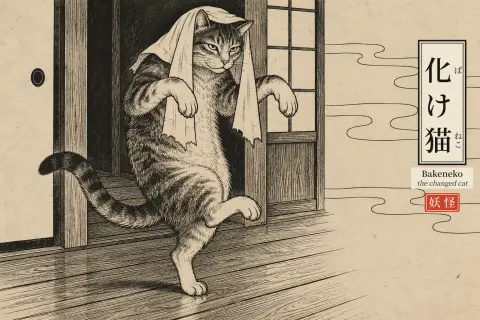
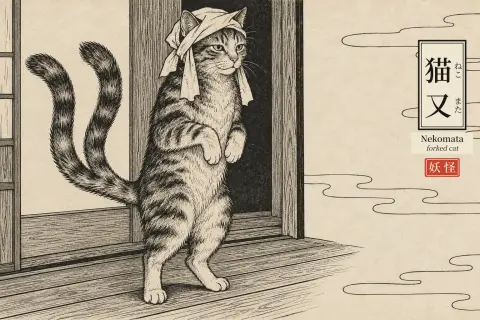
By the Edo period (1603–1868), the fear had moved into the house. Any cat that lived too long might turn. One of ten or thirteen years was already suspect. If its tail grew long, it might split in two. Then it could talk, walk on two legs and hold a grudge. Some owners chose kittens with short or kinked tails, so the tail could never split.
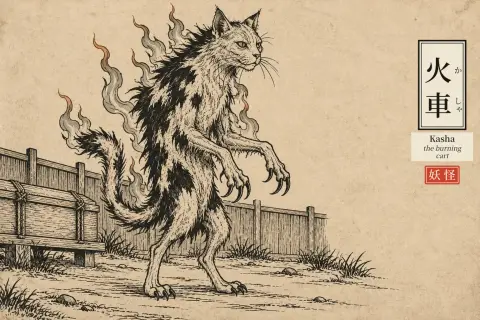
Cats were also feared around the dead. A cat that leaped over a coffin could make the body sit up. Some families shut the cat in a basket during the wake. The kasha began as a burning cart from Buddhist hell. Over time it took a cat's face.
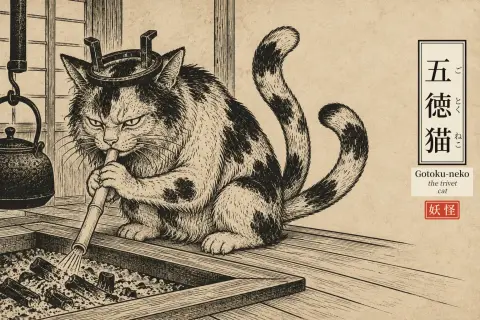
Looking for a friendly cat? Look at the stories of the lucky beckoning cat. In one, a temple cat waved a lord inside just before a storm. Dictionaries call the beckoning cat a lucky charm, not a yokai. Gotoku-neko, a cat that tends the fire, was never feared at all.
We only list a yokai here if its own page ties it to a cat. Six are cat-shaped only in some tellings, and we list them apart. Each page names the oldest source we found.
Old cats that change
A house cat lives too long. It learns to talk, then its tail splits in two.
Cats around the dead
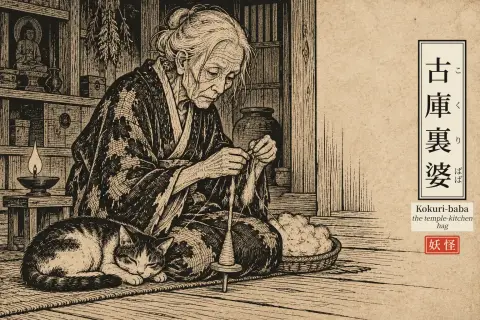
A burning cat that steals bodies at funerals, and a grave-robbing widow with a cat at her side.
A cat you need not fear
A picture-book cat with an iron trivet on its head, blowing the embers back to life.
A cat behind the story
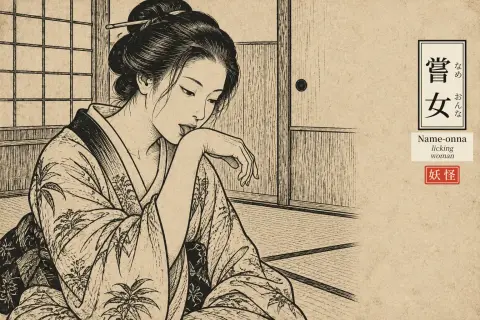
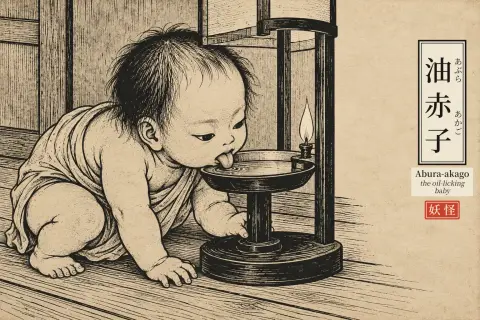
A woman with a cat's rough tongue, and a lamp-oil ghost that may have started as a real cat.
Cat-shaped in some tellings
Most tellings give them another body. One record, one village or later witnesses say cat.
Nue
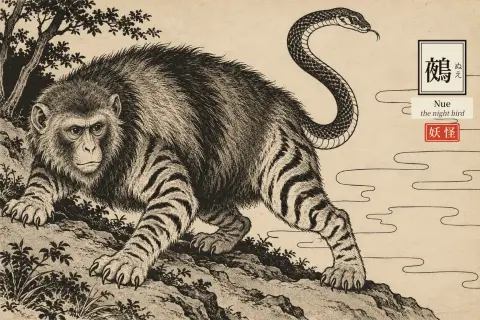
鵺A chimeric night beast: monkey's face, tiger's limbs, snake for a tail.
ominous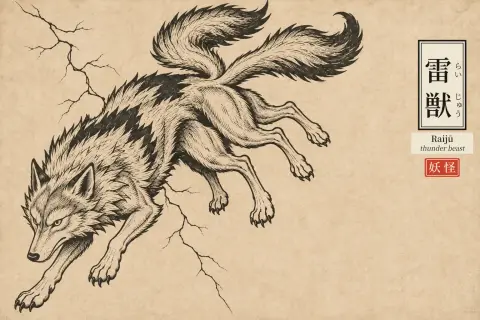
Raiju
雷獣The beast that rides the lightning down. In some tellings, it tears apart the tree it lands in.
swift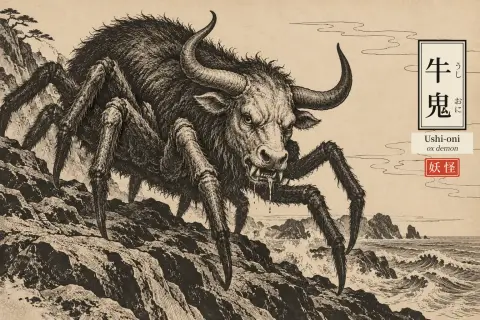
Ushi-oni
牛鬼A savage ox-headed monster that haunts coasts and preys on humans.
fierce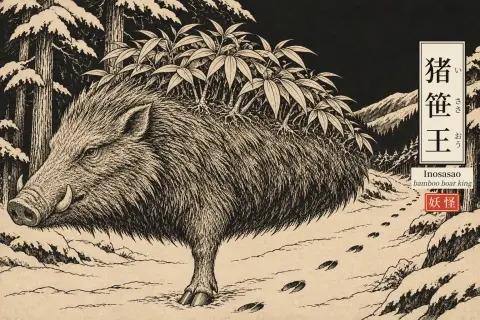
Inosasao
猪笹王A giant boar shot on Mount Obagamine came back as a one-legged ghost. It was sealed away, but on one day a year, December 20, it walks again.
vengeful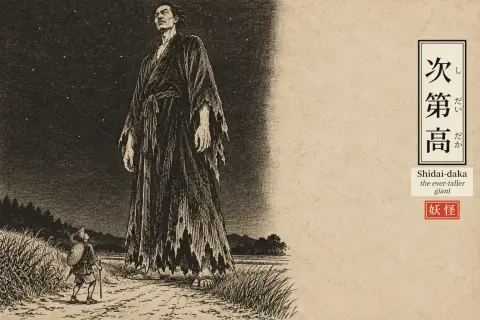
Shidai-daka
次第高A human shape standing on a road. It grows taller each time you look up at it, and shrinks when you look down.
eerie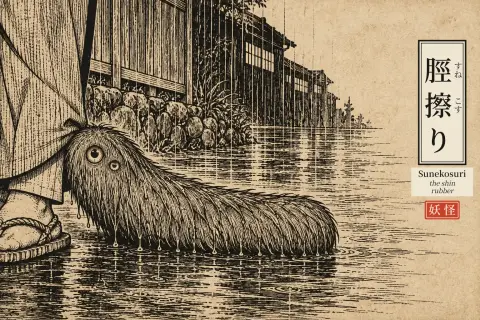
Sunekosuri
脛擦りSomething small and dog-shaped that winds between your shins as you walk a wet Okayama road at night.
harmless