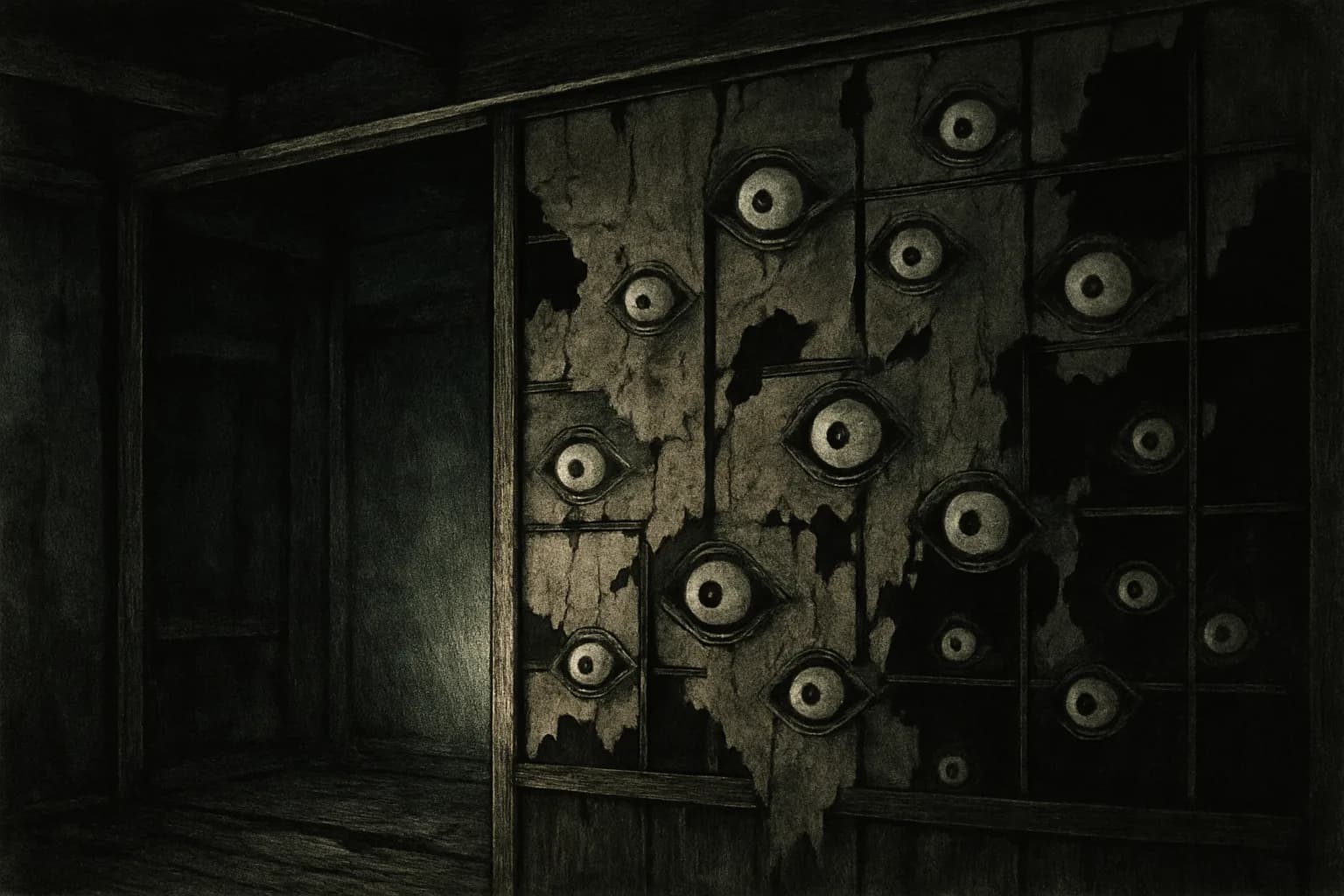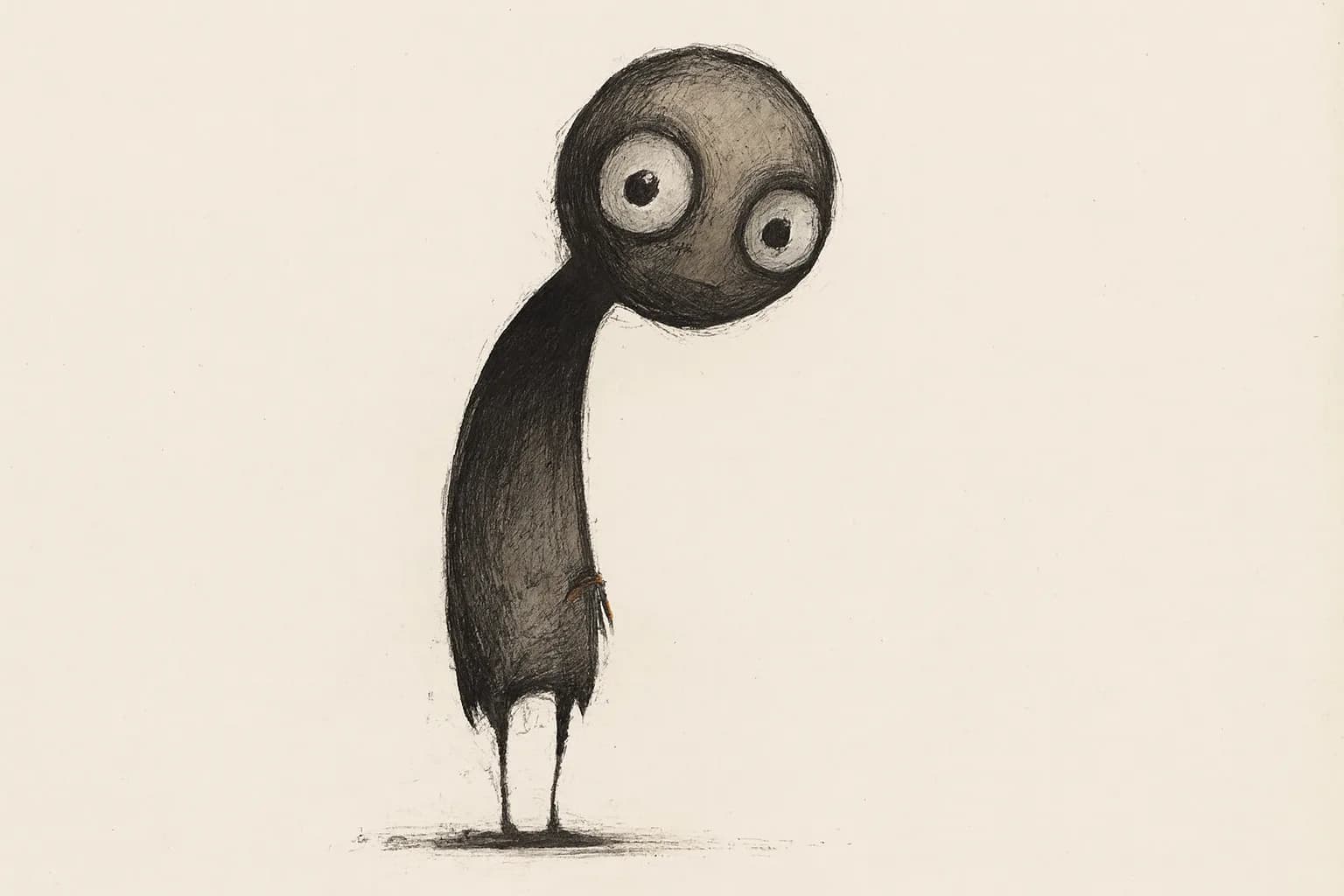
A dark shape stands at the edge of the road. It could be a post, or a tree stump, or a traveler waiting. You look up to see its head. That is when the trouble starts, because the shape grows. Look higher to keep its top in view, and it grows again. This is shidai-daka, and its name says exactly what it does: 次第 (shidai, "gradually, by degrees") and 高 (daka, "tall"). It grows tall by degrees, one look at a time.
What does it look like?
Shidai-daka has no fixed face. Village tellings describe it as a dark, mostly featureless column, sometimes with a rough human outline, sometimes not. It has no clothes, no expression, and often no clear edges at all. What every account agrees on is where it stands: a quiet stretch of road at night, a bridge, or the foot of a hill. It waits there in silence. It does nothing unless someone looks up.
Growing by degrees
The danger is not a claw or a bite. It is the climb of your own eyes. Each glance upward feeds the thing another few feet of height. Keep chasing its head and your neck bends back further and further, until you lose your footing on the dark road. Some village tellings end there, with a traveler found stunned or badly shaken at dawn. The creature does not have to chase anyone. It only has to keep you looking.
How not to lose
Chūgoku folklore hands down one clear rule for this trap: stop looking up. Drop your eyes to its feet instead of its head. Some tellings go further and say to look it over from the ground up, slowly, the reverse of the glance it wants from you. Starved of an upward stare, the growth stalls, and the shape is said to shrink back down or simply vanish. The whole encounter turns on where your eyes land, not on any weapon or charm.
Kin across Japan
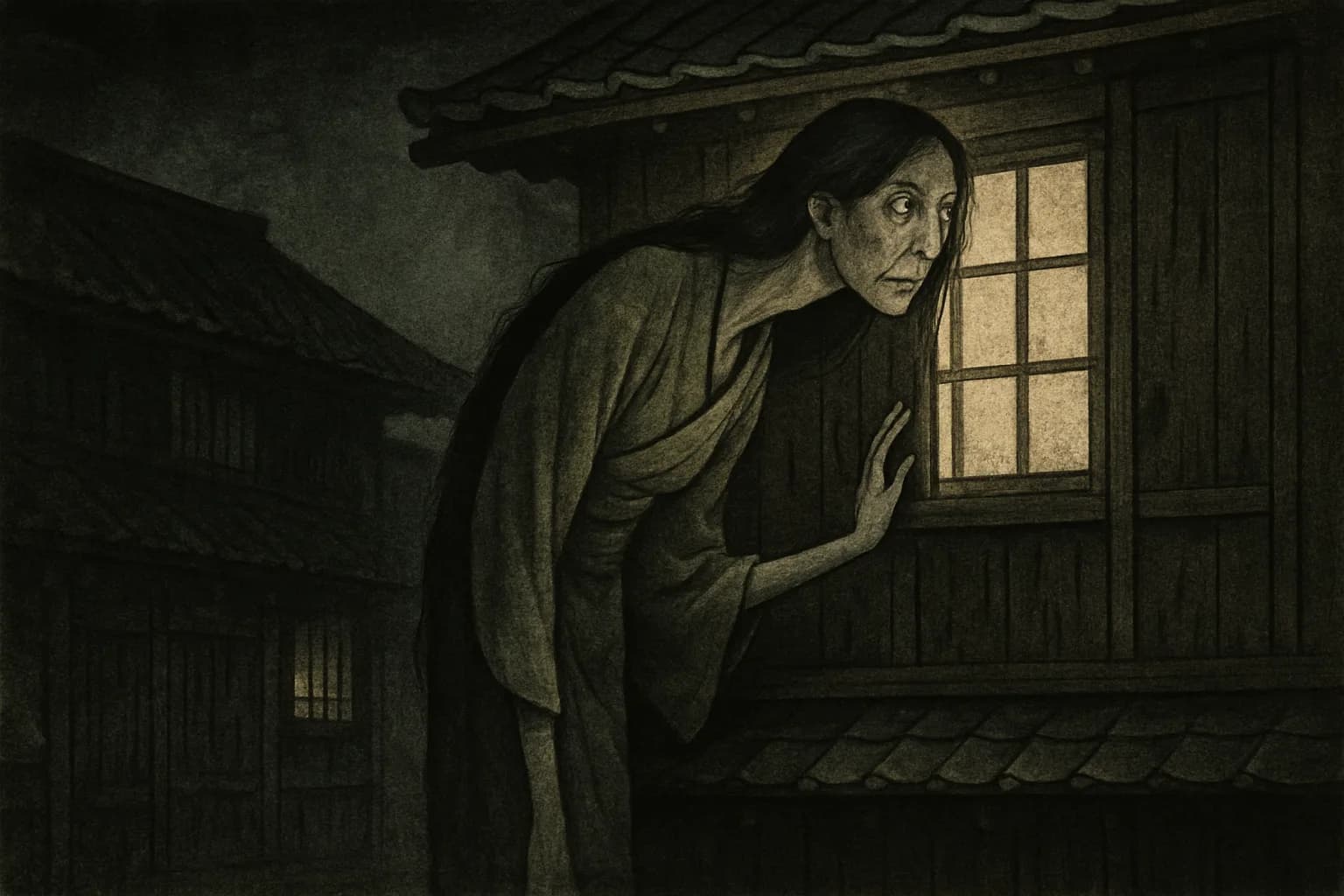
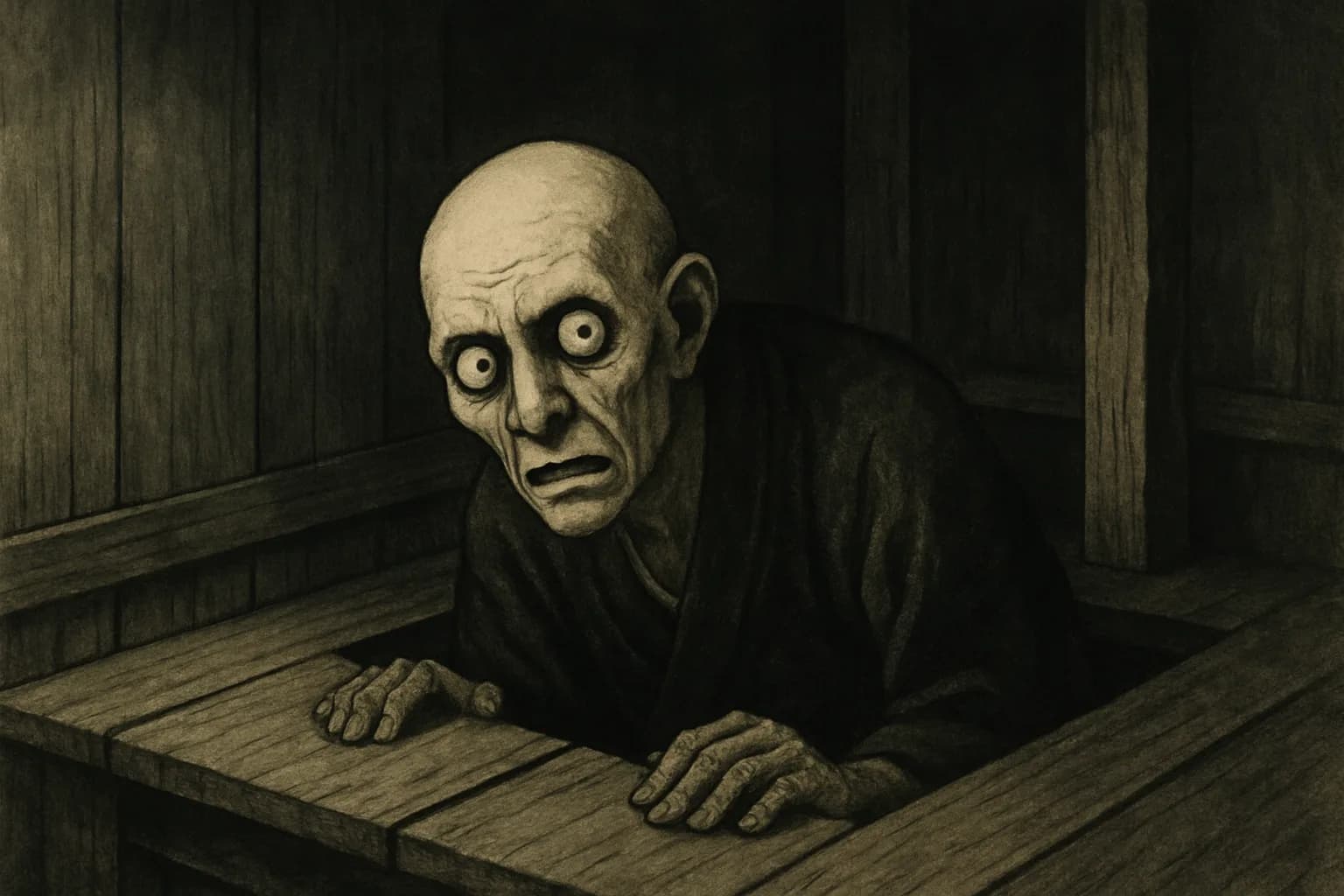
Shidai-daka belongs to a much larger family. Nearly every region of Japan has its own name for a shape that grows the taller you crane your neck to see it. The best documented is mikoshi-nyūdō (見越入道), a bald, robed figure met on roads nationwide, recorded in Toriyama Sekien's 1776 print collection Gazu Hyakki Yagyō. Village tales elsewhere call the same trick taka-nyūdō, taka-bōzu, or nobiagari, "the thing that stretches up." Shidai-daka is the Chūgoku region's own entry in that list — same warning about a night road, its own local name. A separate cousin, taka-onna (高女), plays a version of the trick as a stretching woman peering into upstairs windows, rather than a roadside ambush.
Where it comes from
No single text or storyteller is credited with shidai-daka. It survives in regional folk belief, grouped by folklorists with the wider mikoshi-nyūdō tradition rather than traced to one written source. Scholars who study this whole family of "growing" yokai point to something simple: a dark hillside at night gives your eyes almost nothing to measure distance by. An ordinary shape, stared at too long in the dark, can seem to swell. The story takes that trick of strained eyes and gives it a name, a location, and a rule for getting free of it. Chūgoku, the western end of Honshu, kept its own version of that rule and its own word for the shape that triggers it.
Shidai-daka today
Shidai-daka has stayed mostly inside folklore collections and yokai reference books, filed as a regional relative of better-known roadside monks. It has not picked up the wider audience that mikoshi-nyūdō found. What has carried across every telling, from village to village, is the one piece of practical advice: whatever is standing in the dark ahead of you, do not keep looking at its head.