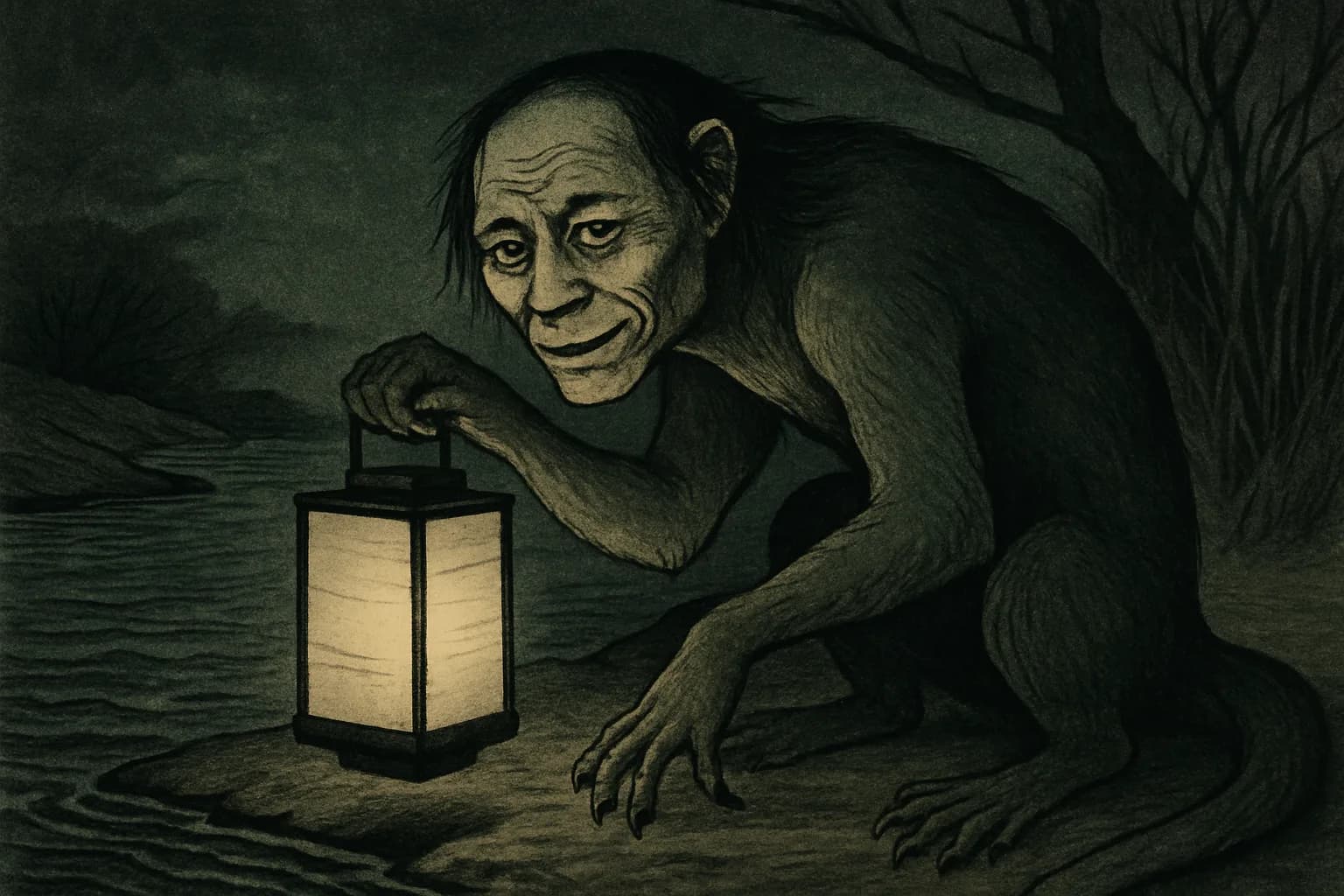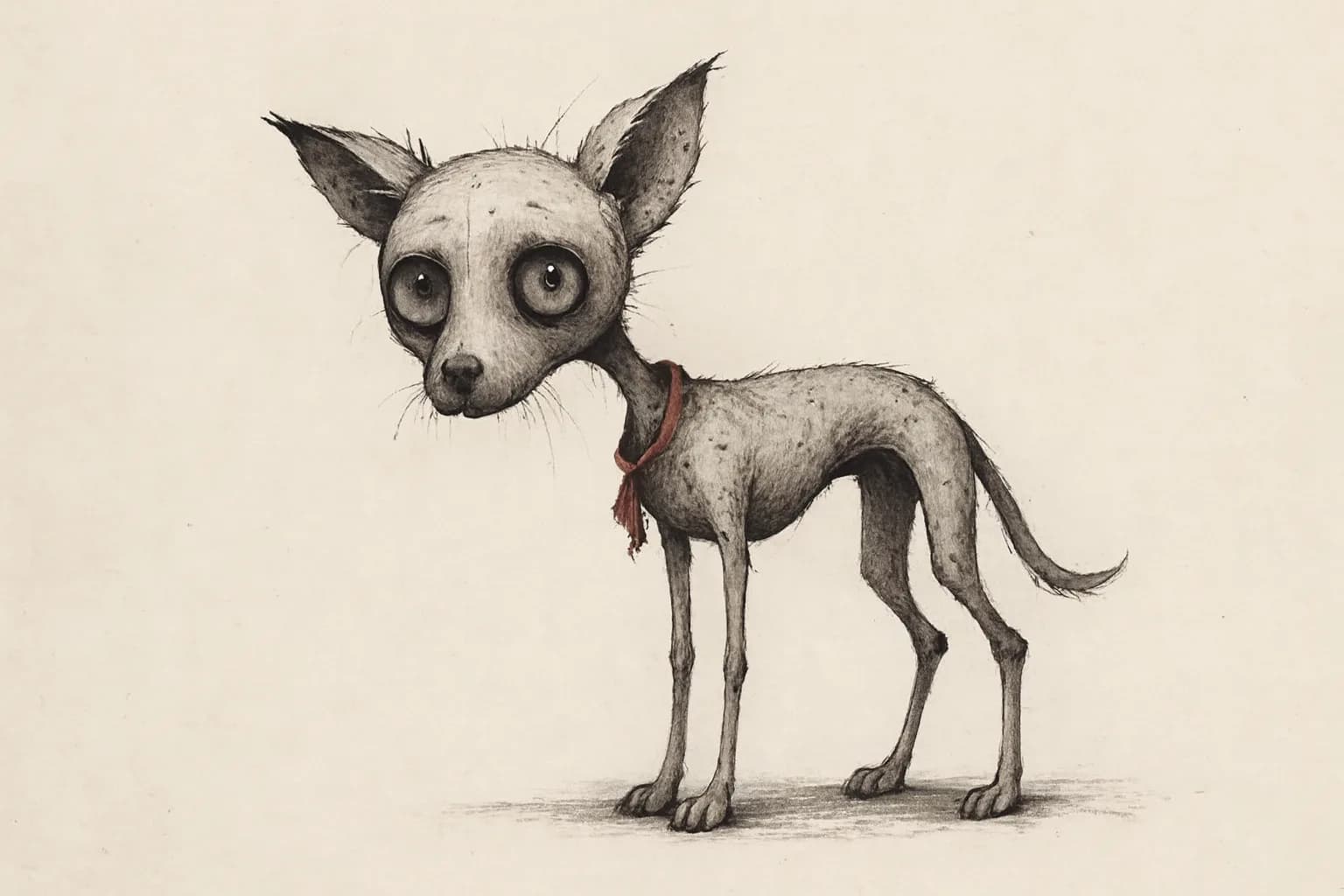
Walk a back road in Okayama on a rainy night and something might brush your shin. It feels warm, and soft, like fur. You look down and see nothing there. This is sunekosuri, 脛擦り — the shin-rubber. It has no interest in hurting anyone. It just wants to stay underfoot, winding between your legs, until you nearly trip.
What does it look like?
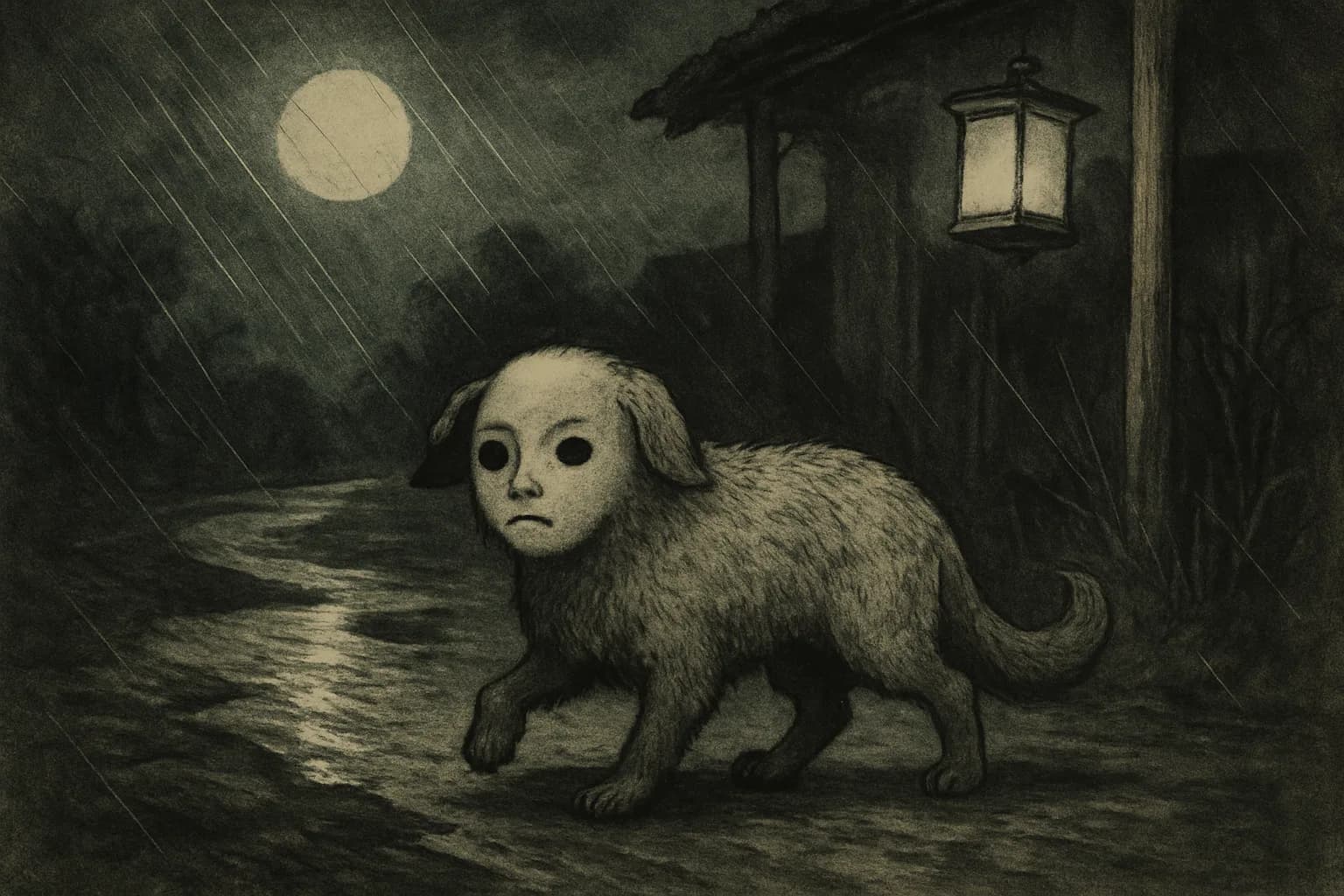
Almost nobody claims to have seen one clearly, so no single picture of it survives. Most accounts describe something small, about the size of a dog or a cat. Its fur is felt more than seen, since every story happens in rain and dark. Some tellings give it round, watchful eyes. Others leave it as pure sensation, a shape with no real face at all. What every version agrees on is the feeling underfoot: something solid, circling your ankles again and again, on a road with no one else in sight.
A nuisance, not a danger
Sunekosuri belongs to a whole class of yokai that folklorists rank as mischievous rather than menacing. It does not drag anyone into a river. It does not steal a soul or curse a house. It only makes walking hard. Keep moving through the tangle at your feet, and old accounts say it eventually lets go on its own. There is no chant for it, no gift to offer, no trick to play back. The one real danger is ordinary: a traveler who stumbles on a dark, wet road can fall hard on stone or slide into a ditch. The yokai's mischief and a real hazard of night travel sit right on top of each other.
Why always the rain?
Every sunekosuri story takes place on a rainy night. Okayama's old back roads were unlit and often unpaved before electric light reached the countryside. Rain turns dry dirt to mud. It blurs shapes at your feet and muffles your own footsteps. A stray dog, loose brush, or just an uneven patch of wet ground could easily brush a walker's leg in the dark. Giving that sensation a name and a shape turned an unnerving, unexplained feeling into a story you could tell — and laugh about — the next morning.
Where it comes from
Sunekosuri is rooted in Bitchū, the old province that now makes up western Okayama. Unlike many well-known yokai, no single Edo-period book or artist is credited with inventing it. It survives instead as local oral folklore, the kind that regional folklorists collected village by village across the Chūgoku region. Scholars read it, like many small roadside yokai, as a shared answer to something a whole community had separately felt: a shape underfoot on a wet road, with nobody else around to explain it. Betobeto-san, the footsteps that follow a lone walker in Nara, and okuri-inu, a dog that trails travelers on mountain paths nationwide, answer the same fear in other provinces, each under its own local rules. Some Chūgoku tellings hand similar mischief to the kawauso, the shapeshifting river otter of the region, though villagers kept the otter and the shin-rubber as two separate creatures.
Sunekosuri today
Sunekosuri never picked up the fame of the kappa or the tengu. It has stayed a local Okayama curiosity, the sort of yokai that turns up in prefecture folklore guides and regional yokai walks rather than national media. That is typical for a creature this small and this local — the almanac exists partly to give provincial yokai like this one the same careful treatment as the famous ones. Ask someone in rural Okayama about walking home on a wet night, and the shin-rubber is still part of the answer.