Fox Yokai
A fox that grows more tails in later stories. A fox wife who leaves her son a poem. A fox small enough to ride in a bamboo tube. Here are the fox yokai of Japan.
In Japanese folklore, the fox has many faces. It is the messenger of Inari, the god of rice. It is a trickster that takes human shape. And some foxes worked for people, or lived hidden inside a family.
The best-known fox, Tamamo-no-Mae, has nine tails. In her medieval telling, she had only two. In Nasu, the stone said to hold her spirit split in two in 2022.
The fox itself
A fox that gains tails and wisdom with age, and the messenger of the rice god.
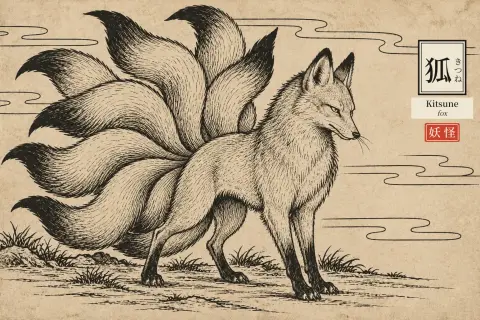
The nine-tailed fox
A fox in a court lady's shape, and the stone that holds her spirit.
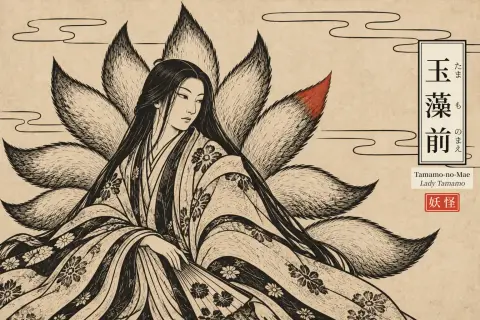
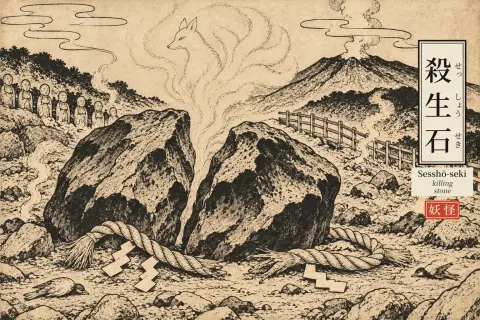
Foxes in human shape
A fox wife who leaves a poem on the paper door, and a fox who goes after men who are already married or engaged.
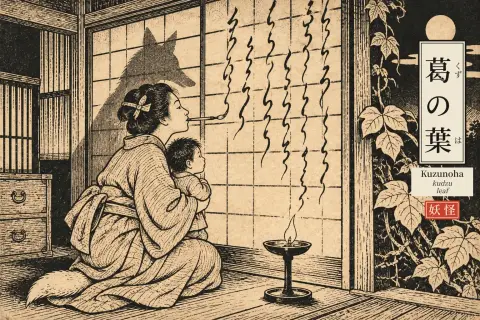
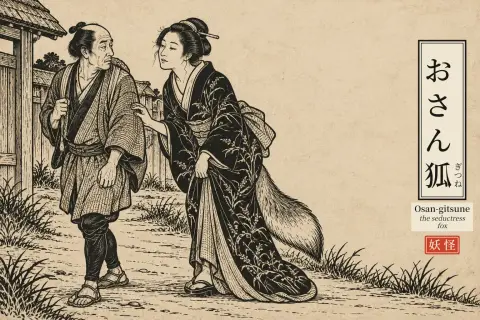
Foxes that work for people
A castle's courier, a fox in a bamboo tube, and foxes some families were said to keep.
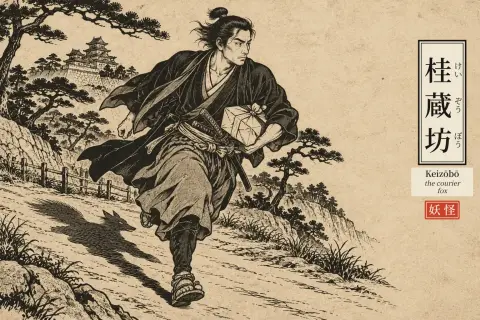
Keizōbō
桂蔵坊A fox that served Tottori castle as a courier, and ran the road faster than any man.
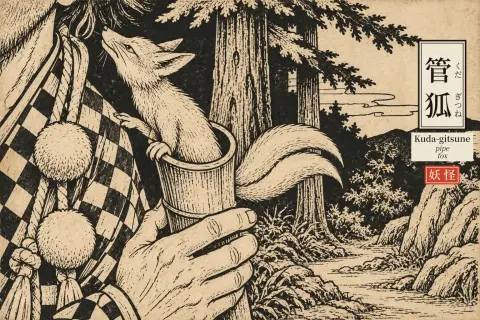
Pipe Fox
管狐A fox small enough to ride in a bamboo tube, kept by mountain ascetics and fortune-tellers to whisper secrets or carry curses.
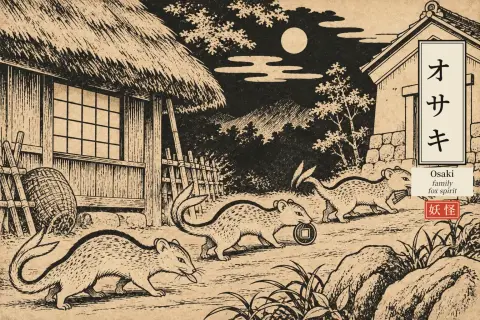
Osaki
オサキA small fox-like spirit of the Kantō mountains, said to live with certain families and carry goods wherever it pleased.
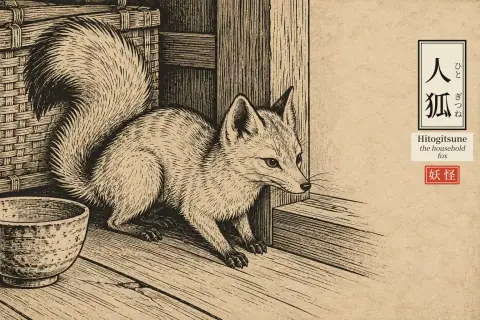
Person-Fox
人狐Not a fox that haunts a house but one a household is said to keep, passed down the family line.
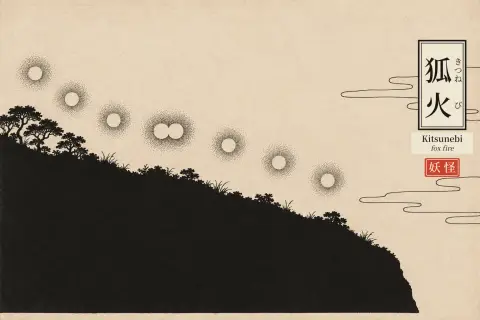
Fox fire
Lights in the night, blamed on foxes.
More about Japanese fox yokai
Stone foxes guard Inari shrines. In later stories, a fox grows stronger with age. As it gets older, it may grow more tails, up to nine. Tamamo-no-Mae lived at court as a beautiful lady, until a diviner exposed her.
Not every fox is wild. Some lived with people. One fox wife raised a son before she was found out. A fox in Tottori carried the castle's letters to Edo (old Tokyo) and back. Mountain ascetics kept a small fox in a bamboo tube, or so many tellings say. Some families were said to keep foxes too. Their neighbors would not marry into those houses.
Then there is fox fire. Lights seen at night were blamed on foxes. In the Edo period, foxes from all over the Kantō region were said to gather under one tree at Ōji, now in northern Tokyo, on New Year's Eve, each with its own small flame.
We only list a yokai here if its own page makes it a fox, or ties it to one. Each page names the oldest source we found.