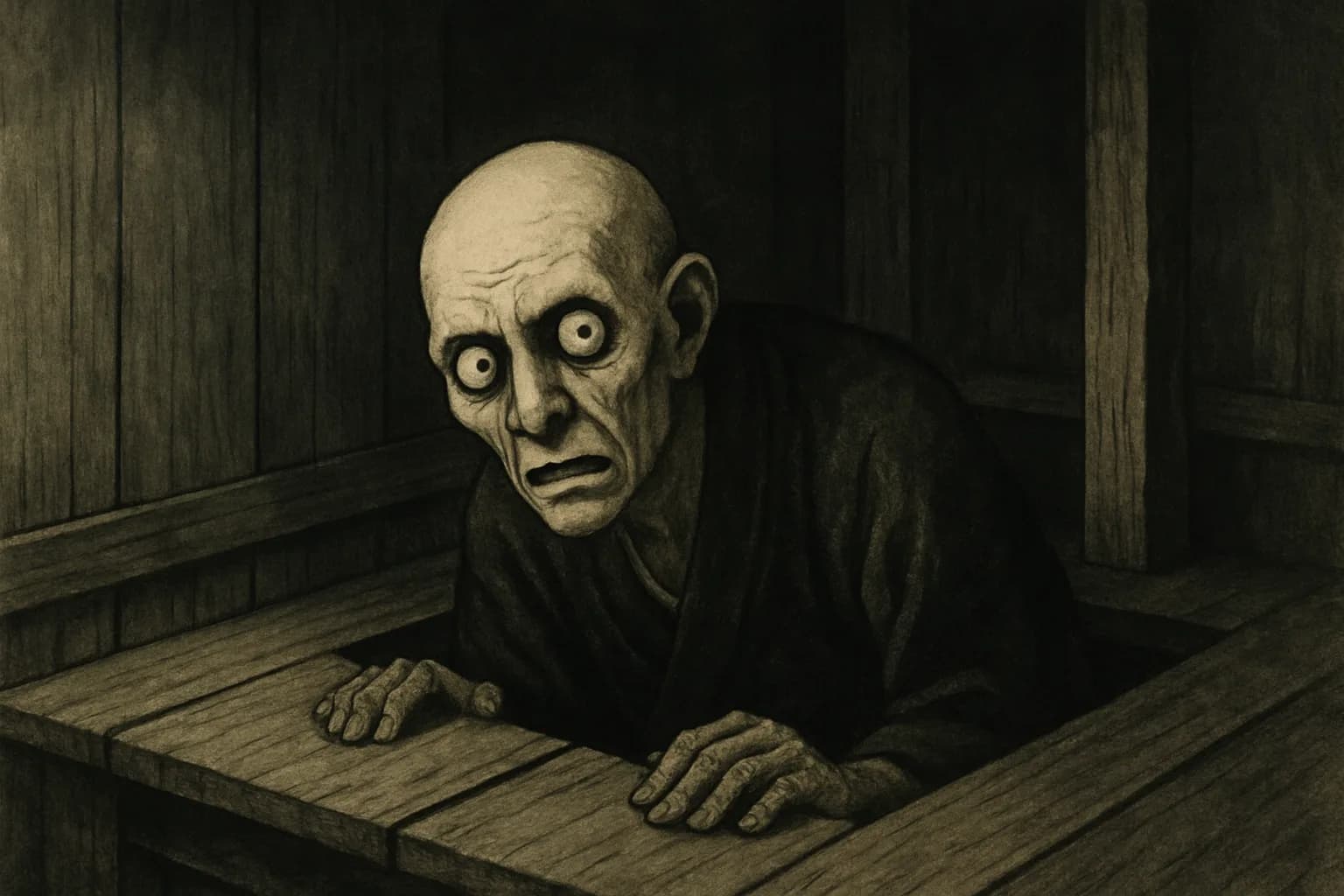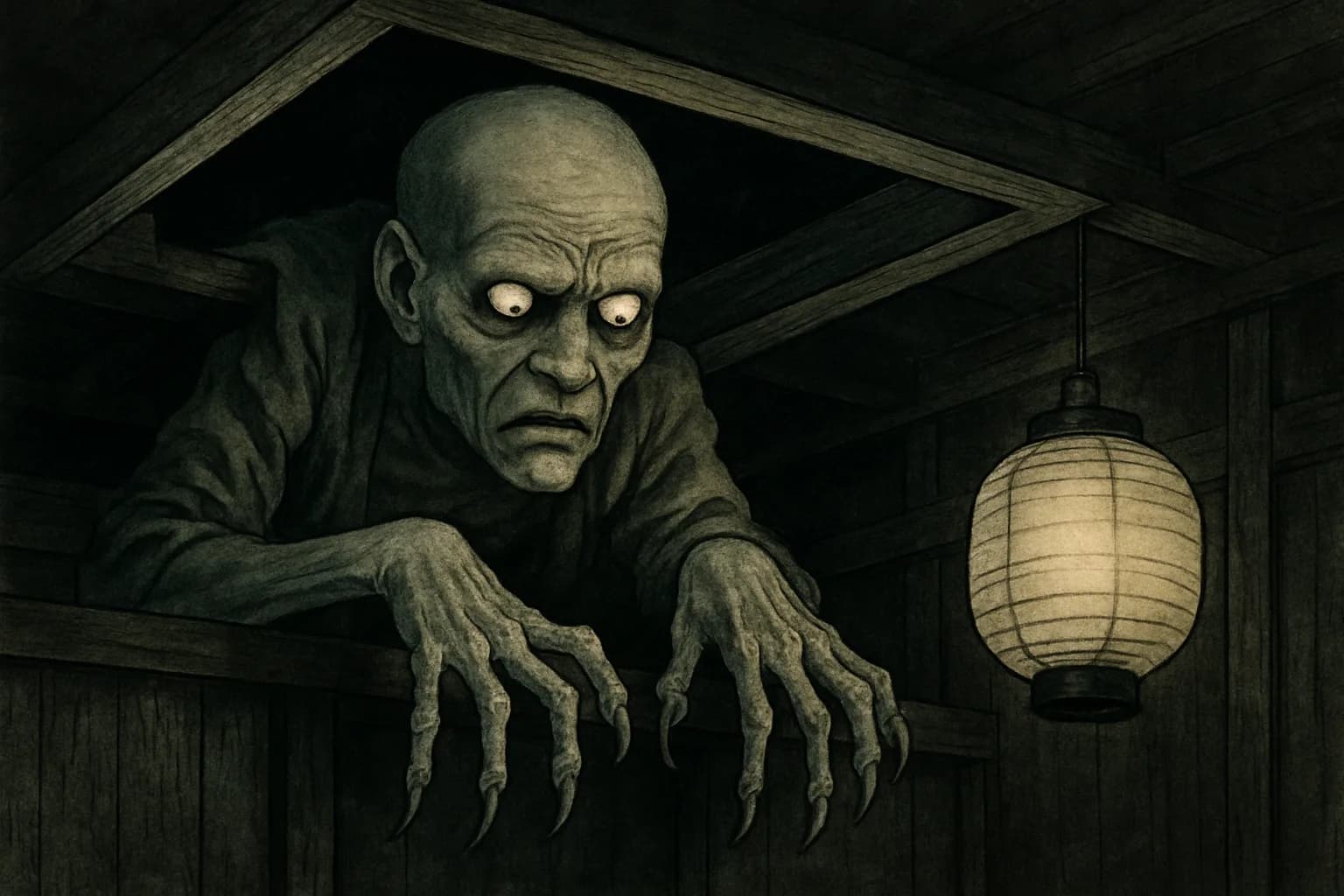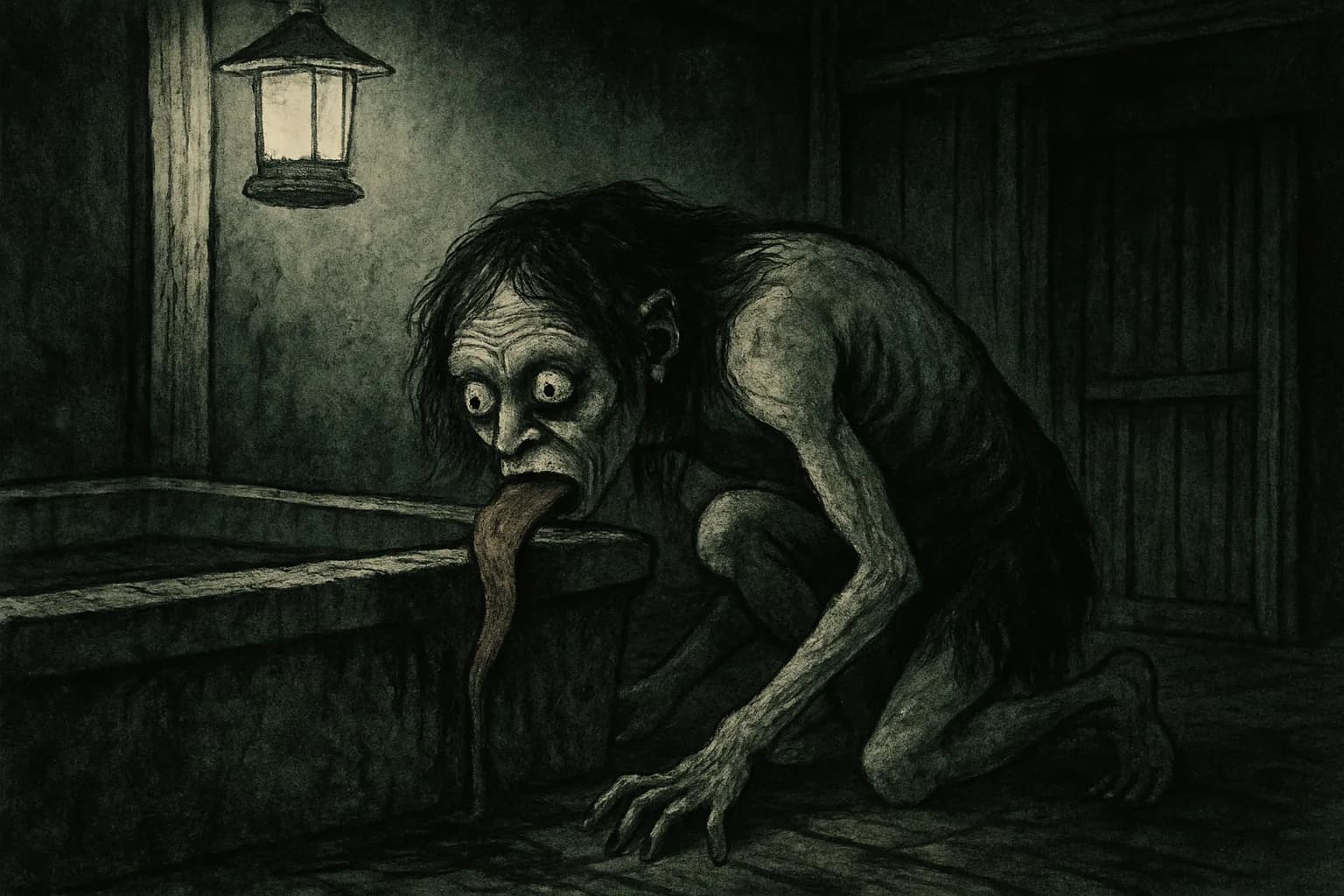
Toriyama Sekien didn't only draw monsters pulled from village fear — some of his yokai were built to needle a specific kind of person he'd actually met. Ōzatō, "the giant zatō," is one of the clearest cases: a towering, tattered blind minstrel who prowls Edo's back streets on stormy nights, and whose entire menace turns out to be a punchline about exactly where he's headed.
What does it look like?
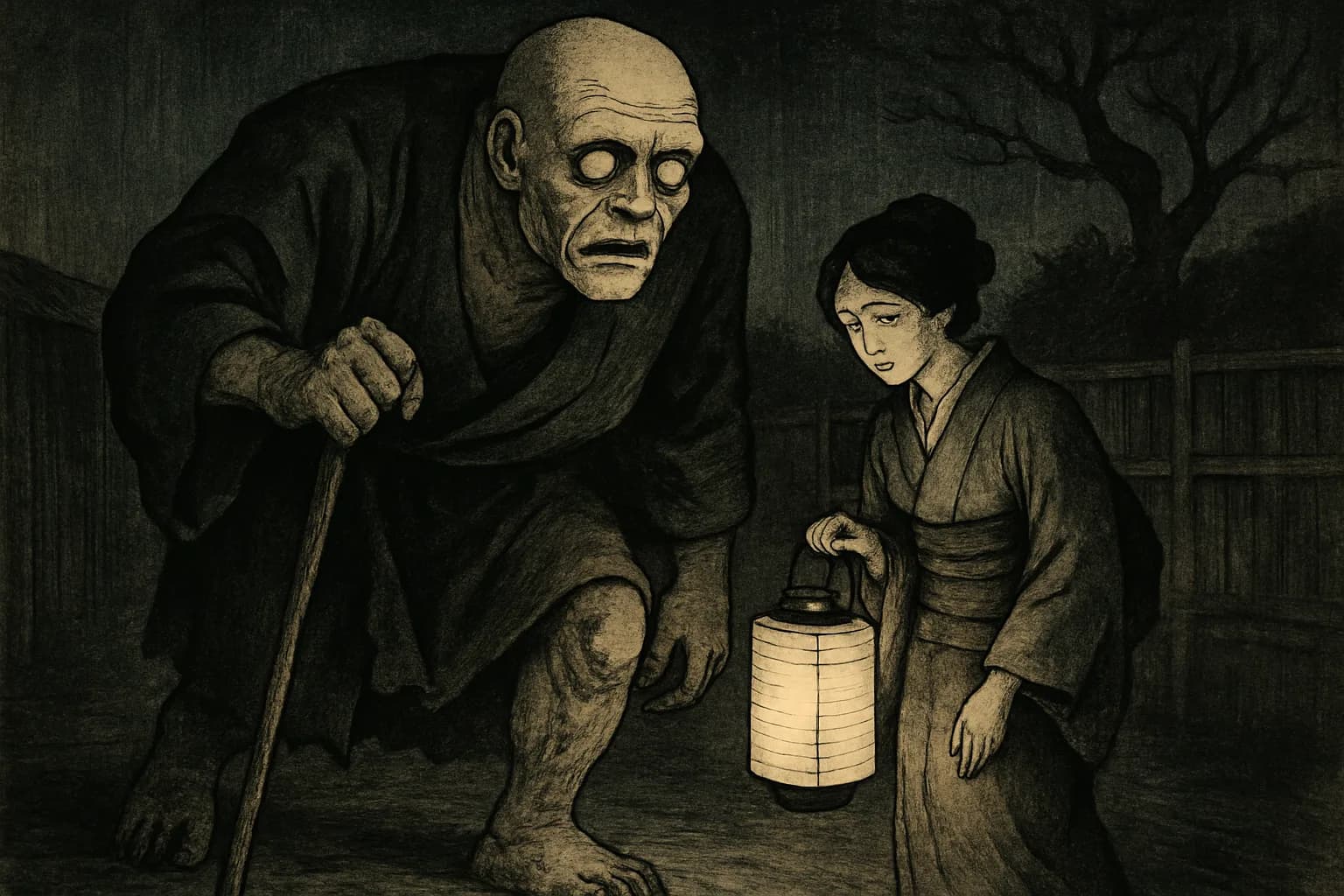
Sekien drew Ōzatō in Konjaku Hyakki Shūi (1781), the third of his four picture-book bestiaries, as an oversized version of an ordinary zatō: a blind man in a threadbare hakama, feet in wooden geta, a staff in one hand and, more often than not, a shamisen or biwa slung over his shoulder. Nothing about the costume is supernatural — it's the exact silhouette any Edo-period passerby would recognize on sight. The only monstrous thing about him is his scale, looming far larger than any real zatō, and the streets he chooses to walk.
A licensed guild turned into a monster
To get the joke, it helps to know what a zatō actually was. Under the shogunate, blind men belonged to a formal, government-sanctioned guild holding a legal monopoly on certain trades: biwa and shamisen performance, anma massage, and moneylending. The arrangement was meant as a kind of safety net for a group with few other paths to a livelihood, but the lending side of the trade gave some zatō a reputation as relentless creditors. Sekien, by his own account, held a low opinion of this kind of zatō, and Ōzatō is the shape that opinion took: swell an ordinary tradesman into something huge and unnerving, and set him loose exactly where his real-world counterpart spent his earnings.
The same answer, every time
Ōzatō haunts the main thoroughfares and the edges of Edo's licensed red-light district, and he only comes out in foul weather — wind and rain, the kind of night that clears a street of witnesses. Stop him and ask where he's going, and Sekien's caption gives him one unwavering line: "Always to the brothel, to play my shamisen." It isn't a threat and it isn't a riddle. It's a giant, sightless figure cheerfully confessing to the exact vice Sekien was mocking, night after identical night, as if the habit were the whole of his existence.
One of Sekien's family of giant blind men
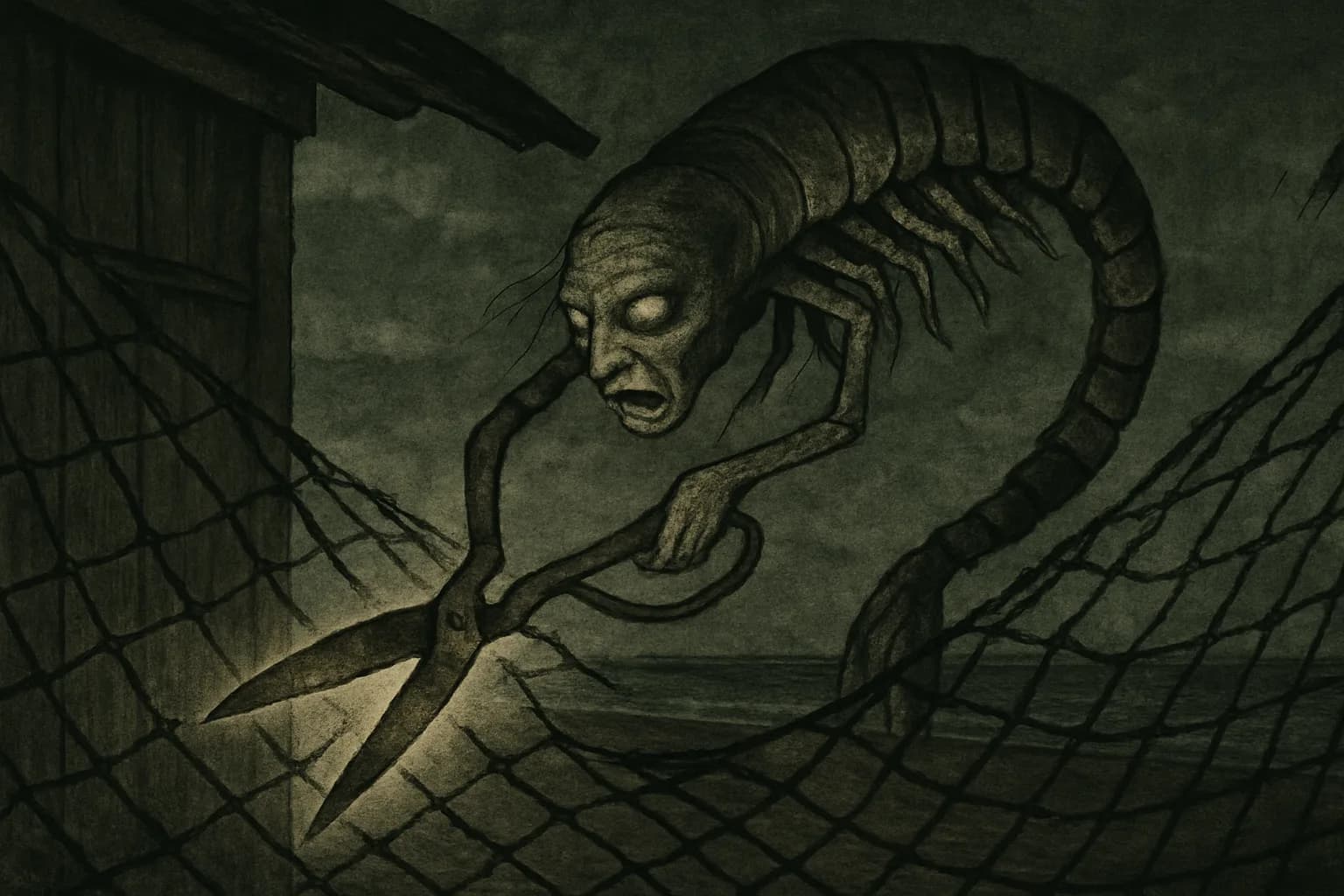
Ōzatō wasn't a one-off idea. Five years earlier, in Gazu Hyakki Yagyō, Sekien had already drawn Umizato, "the sea zatō" — the same blind wanderer scaled up to wade through open ocean, unable to see the boats he might capsize. Between the two, Sekien built a small, consistent bit: take the familiar shape of a blind Edo tradesman, make him gigantic, and put him somewhere his blindness turns into a hazard for everyone nearby — an ocean he can't navigate, a red-light district he can't stay out of. The joke changes setting but not its template.
Where it comes from
Ōzatō has no older folk pedigree to trace back to. Like a number of Sekien's creations, he appears to be original to the picture books rather than a monster villagers were already telling stories about before Sekien drew him. That doesn't make him a lesser yokai — it makes him a rare case where the satire sits close enough to the surface to read directly off the page. Sekien wasn't recording a fear the way earlier compilers recorded ghost stories; he was using the yokai-encyclopedia format itself to file a complaint about a profession he thought had drifted into corruption, trusting readers to recognize both the target and the joke.
Ozato today
Ōzatō never built a life outside Sekien's books the way kappa or tengu did — no mascot, no festival custom, no proverb. He survives almost entirely as a page in reproductions of Konjaku Hyakki Shūi and in English-language surveys of Sekien's four yokai picture books, where his caption still lands the same way it did in 1781: a giant monster with only one thing on his mind, and no shame at all about saying so.