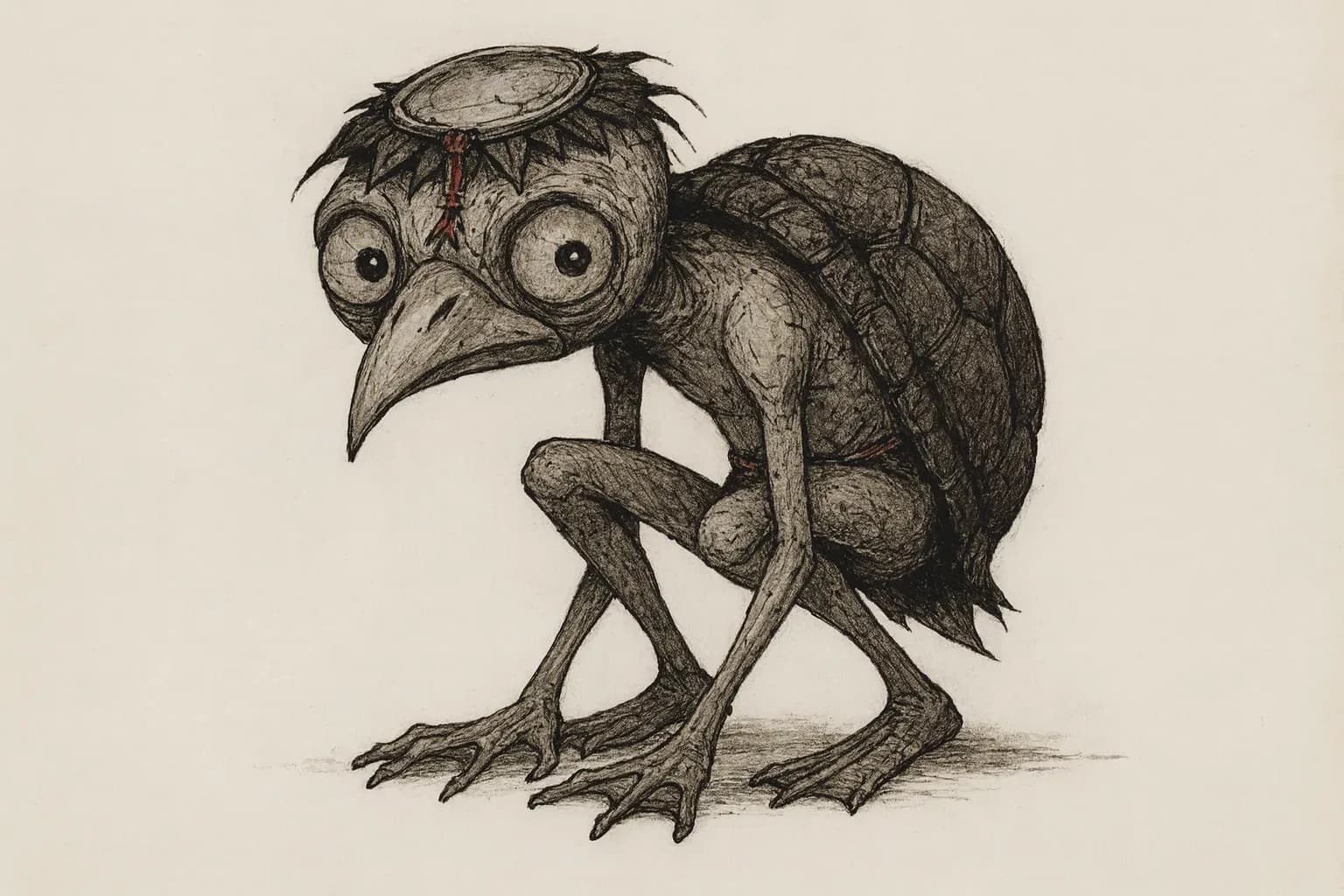
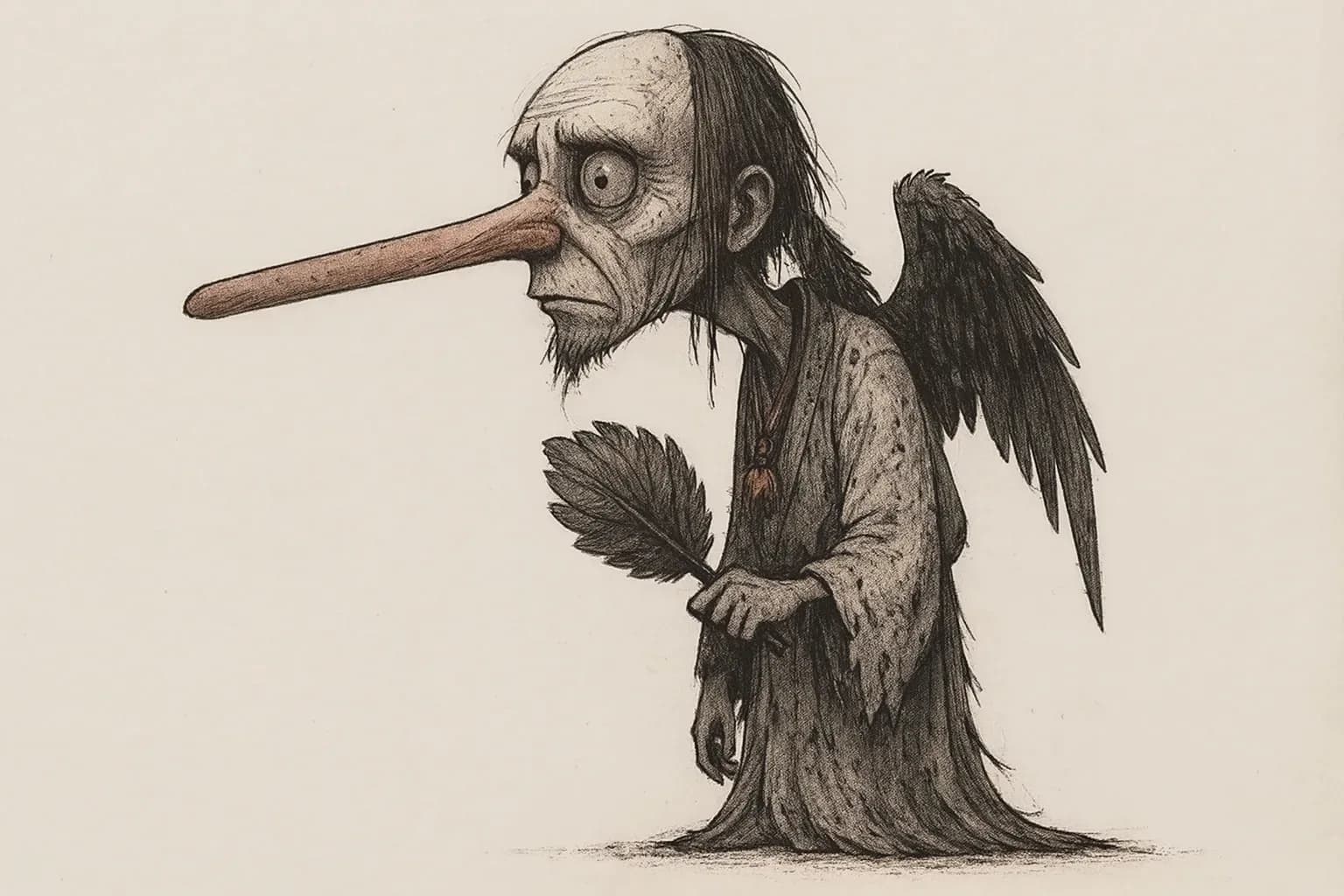
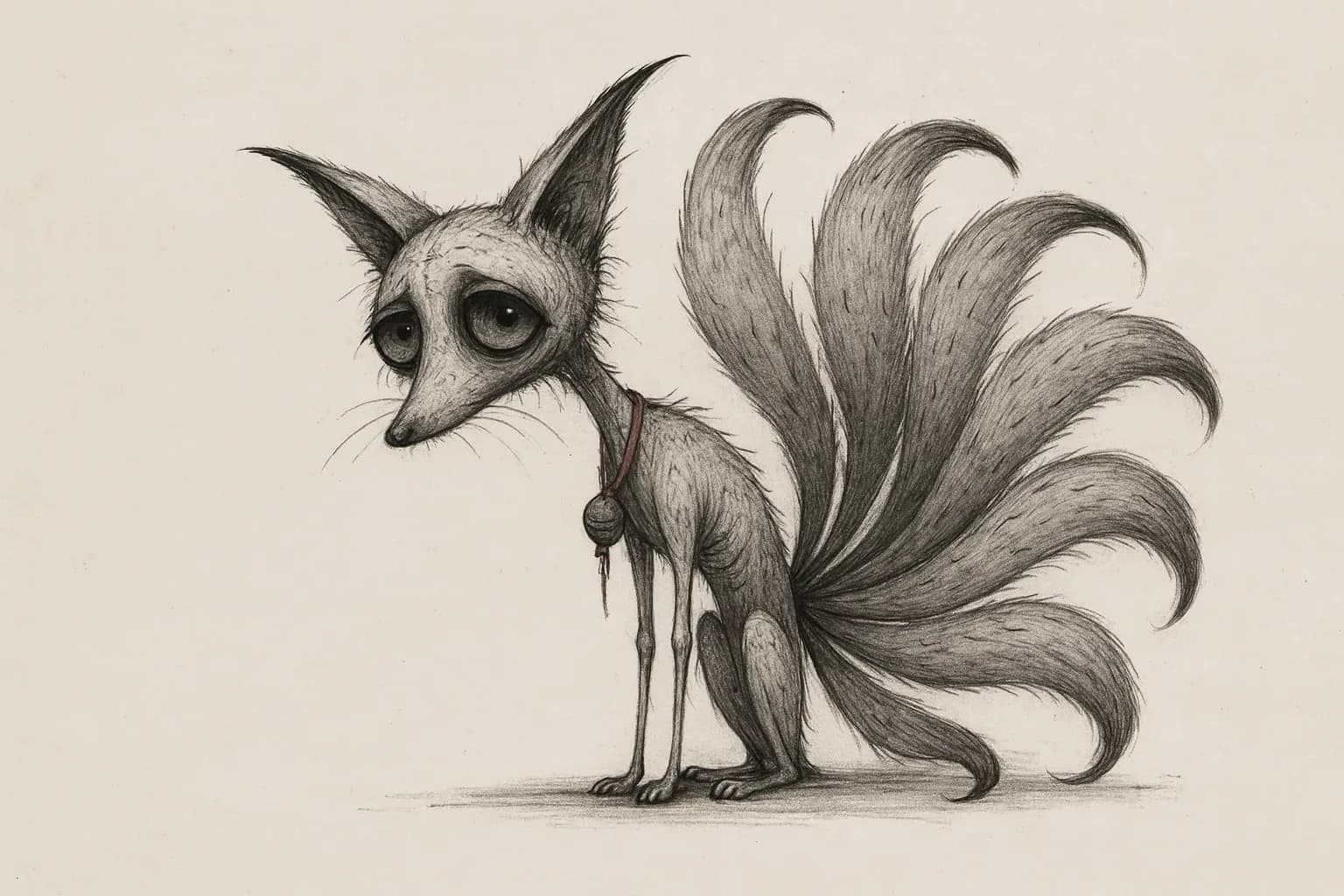
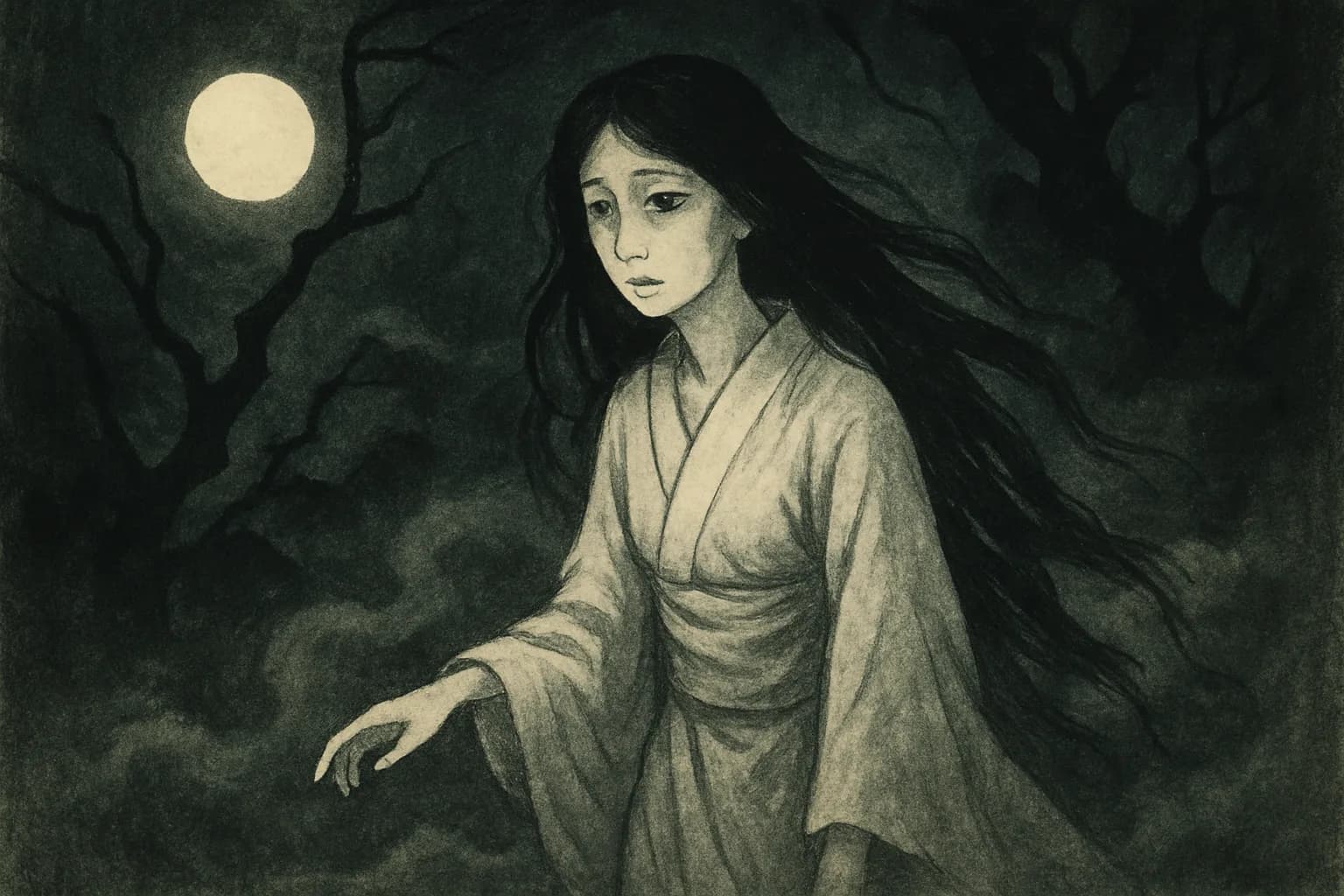
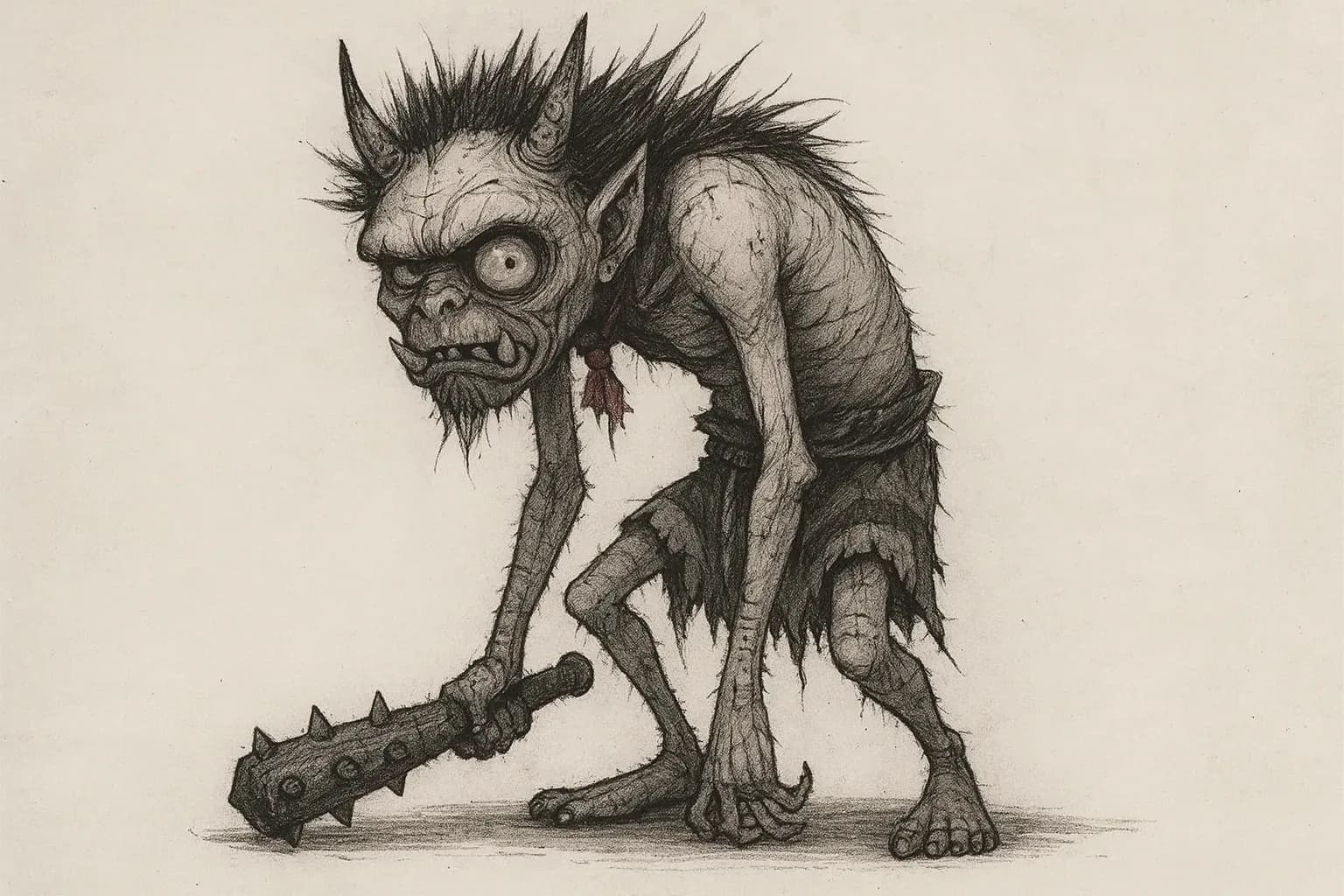
Every English translation of yokai (妖怪) is wrong in a different direction. "Monster" makes them all hostile, which most are not. "Spirit" makes them all bodiless, which most are not either. "Demon" imports a Christian idea of evil that the Japanese word never carried, and "goblin" makes them small and comic when a good number are neither.
The category has no English equivalent because English never needed one. Japanese did.
Start with the two characters
The word is built from two kanji, and unusually for a loanword, the characters say almost the whole thing.
| Kanji | Reading here | What it carries |
|---|---|---|
| 妖 | yō | bewitching, alluring — and, in its older sense, calamitous. Something whose attractiveness is itself the danger |
| 怪 | kai | mysterious, suspicious, strange. The root of ayashimu, to find something odd, to doubt what you are seeing |
Put together they do not mean "monster." They mean something closer to a bewitching strangeness — and the emphasis sits on the response, not on the thing. A yokai is defined by the fact that somebody could not account for it.
This is why the category holds creatures that have nothing physically in common. What a nine-tailed fox, a self-animating paper lantern, and a sound in the woods with no source share is not a body plan. It is the moment of ayashii — that's odd — that produced the name.
What actually counts
The honest answer is that the boundary is disputed, and has been for as long as anyone has written about it. But the range is much wider than the English word "monster" suggests.
- Animals that grew into something more. A fox or a cat that lives long enough acquires tails, speech, and transformation.
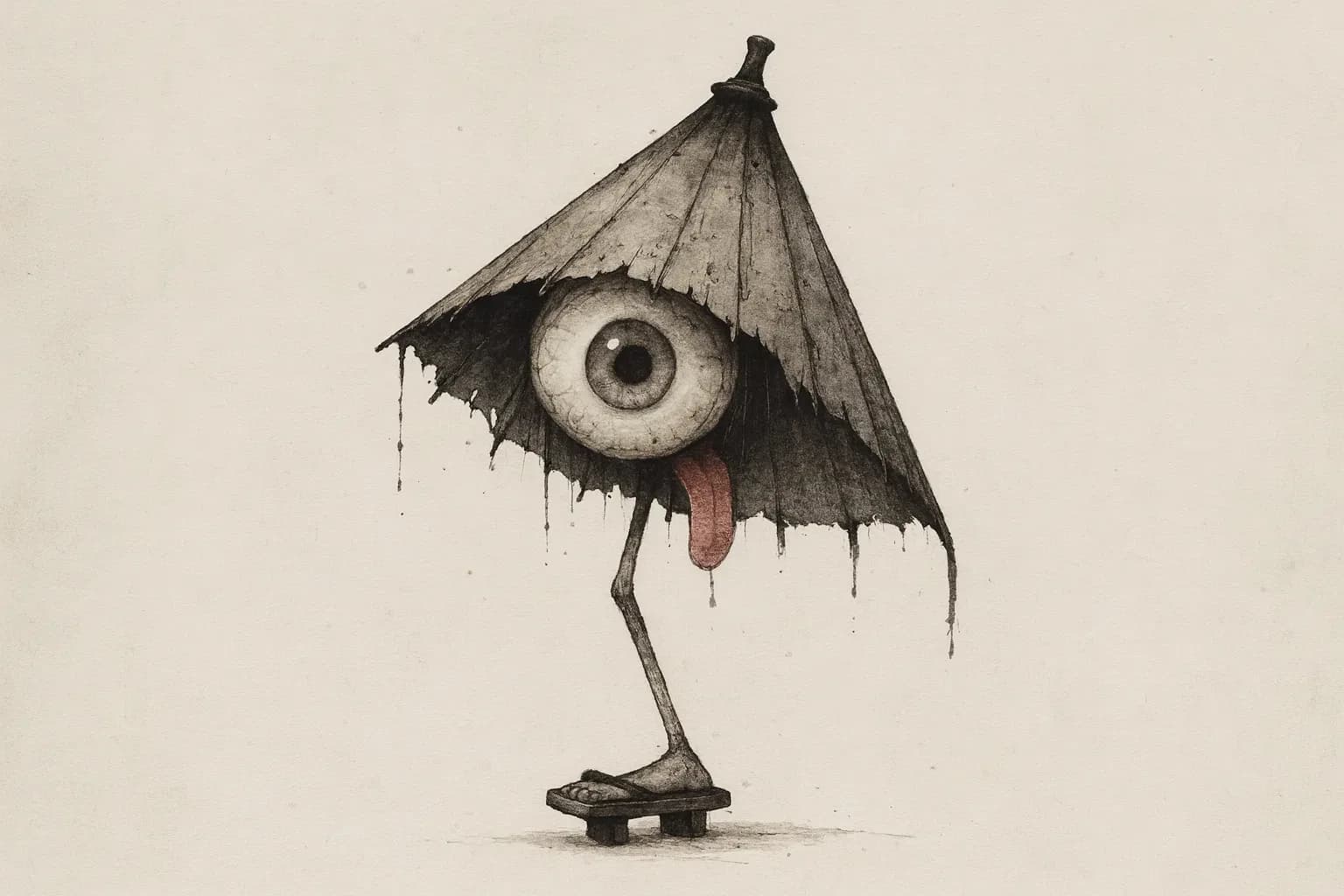
- Objects that woke up. Tools that reach a hundred years of age become tsukumogami — an umbrella with one eye, a possessed tea kettle, a sandal that resents being worn out.
- Humans who changed. A woman whose neck stretches at night, a man whose pride turns him into a mountain demon.
- Places and weather. A wall that appears in the road, a slope where you always fall, a snowstorm that arrives with a woman in it.
- Sounds and events with no visible cause. Some of the oldest entries are nothing but a noise — beans being washed at a riverbank with nobody there.
That last group is the one that tells you what the category actually is. A creature with no body, no face, and no intent still gets a name, a drawing, and a place in the catalogue, because the thing being named is the unexplained event, not a monster.
Yokai, yurei, and kami
Three words that English tends to flatten into "spirit," and the distinctions matter.
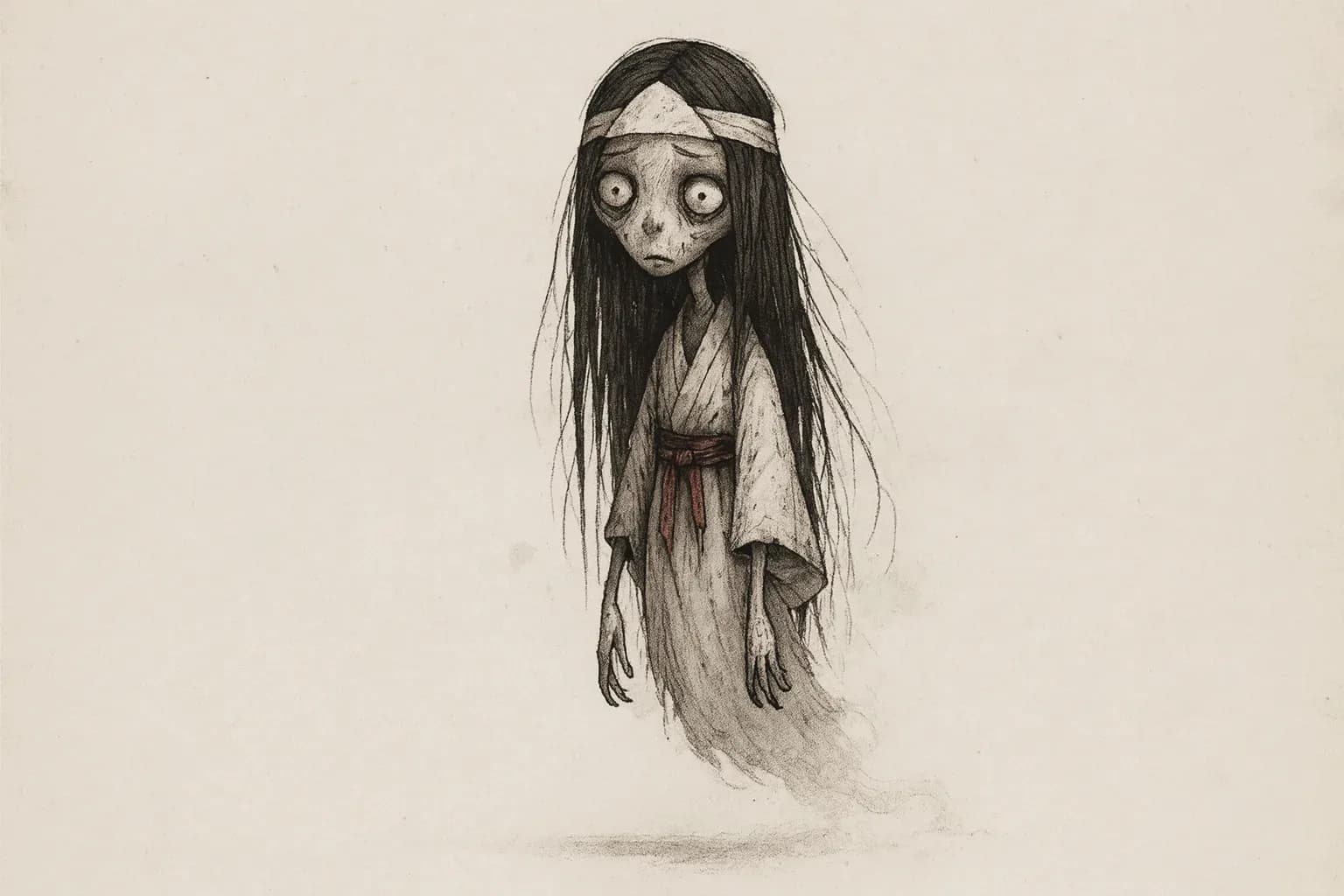
A yurei (幽霊) is a ghost: a specific dead person, with a name, unfinished business, and a reason to be here. A kami (神) is a god or a venerated presence, enshrined and worshipped. A yokai is neither — it was never a particular human being, and it receives no worship.
The lines blur in practice. A wronged woman becomes a yurei, and if enough people fear her for long enough she can end up enshrined as a kami. The same creature can be a local deity in one village and a nuisance in the next. Japanese folklore is comfortable with this in a way that tidy categories are not. We have a whole guide on the yokai / yurei line and where it stops working.
Why there are so many
Most of the creatures on this site can be traced to a specific window: the Edo period, and especially to the artist Toriyama Sekien, whose illustrated catalogues began with Gazu Hyakki Yagyō in 1776.
Sekien did two things at once. He compiled — collecting oral tales, regional beliefs and older paintings into a single indexed format. And he invented, filling out his volumes with creatures that appear to have no source earlier than his own brush. Both kinds sit side by side on the same pages, with the same dry captions, which is why "this yokai is ancient" and "this yokai is from 1781" are both often true of things people assume are equally old.
A century and a half later, the folklorist Yanagita Kunio went the other way, collecting from living villagers what had survived orally rather than in print. Between a print catalogue and a field survey, Japan ended up with a documented supernatural bestiary of a size few cultures can match.
Yokai, yōkai, or youkai? And what is the plural?
All three spellings are the same word. Japanese writes it 妖怪; the second syllable holds a long o, which romanisation handles in three competing ways — yōkai with a macron, youkai spelling the long vowel out, and yokai dropping the mark entirely. Academic writing prefers the macron. This site uses the plain spelling in ordinary prose because that is what English readers type, and keeps the macron where a source is being named exactly.
The plural is yokai. Japanese does not mark plurals on nouns, so one yokai and a hundred yokai are written the same way, and "yokais" is not a form the word has. The same applies to every creature name here: one tengu, three tengu.
Said aloud it is roughly yoh-kigh — two beats, the first held slightly longer, the second rhyming with "eye."
The kanji are the shortcut
One reason this site breaks down the characters in every entry: yokai names tend to be literal. Learn one creature and you often get two pieces of vocabulary for free.
Yuki-onna is 雪 (snow) and 女 (woman) — a snow woman. Kasa-obake is 傘 (umbrella) plus obake, a thing that changed. Kuchisake-onna is 口 (mouth), 裂け (split), 女 (woman), which is both her name and the whole story.
The creature is the mnemonic. Almost nothing else in beginner Japanese attaches a character to an image this strongly, which is why so many people arrive here for a monster and leave having accidentally learned to read something.
The useful way to think about them
A yokai is an explanation with a face.
A child drowns in a river with a treacherous current, and the river gets a creature that pulls people under. Tools break at the point where they have been used too long, and the hundredth year gets a name. A traveller loses the path on a mountain he has walked all his life, and a fox is blamed.
Read that way the catalogue stops being a monster manual and becomes something closer to a record of what Japanese villages found frightening, and how they made it speakable. The creatures are strange. What they are attached to — currents, cold, night roads, old age, being watched, wearing something out — is not strange at all.
That is why the entries on this site always say where a creature came from, which source it first appears in, and what it was for. The picture is the hook. The reason it exists is the point.