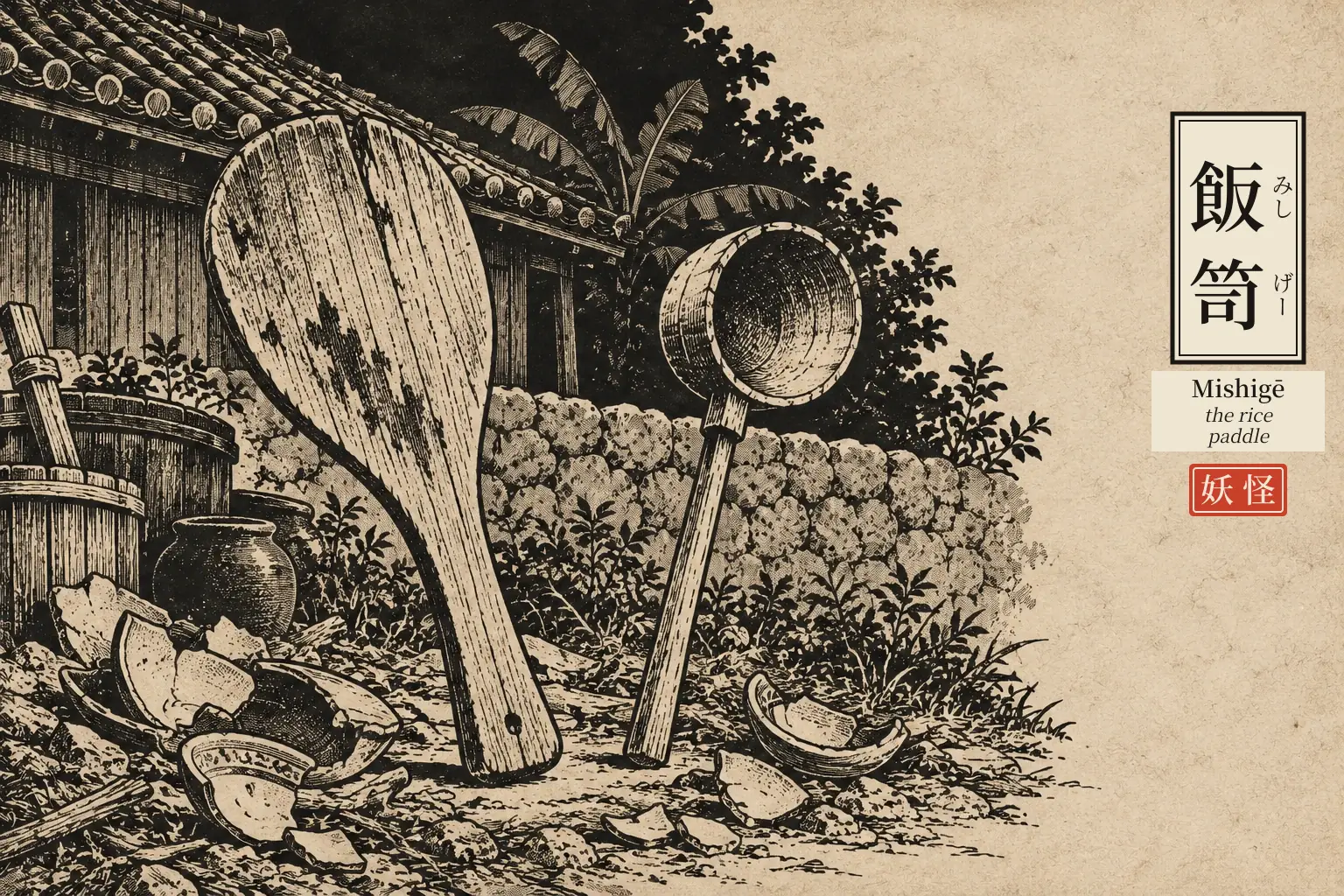
On Okinawa, an old rice paddle is never just rubbish. Throw one out, folklore warns, and it may get up and walk off on its own. The mishigē (飯笥) is exactly that: a worn-out shamoji, a flat paddle for scooping rice, that wakes into a mischievous spirit once its working life is over. Its name splits into 飯 (mishi, cooked rice) and 笥 (gē, a vessel) — the rice scoop itself, given a second life after its first one ends.
What does it look like?
There is no face here, no limbs, no monster shape to speak of. A mishigē looks exactly like what it always was: an ordinary shamoji, aged from years of scooping rice. It has a companion creature, the nabigē, an old ladle that turns the same way after long use. Mishigē and nabigē are two halves of the same kitchen, both unwilling to stay still once they are set out with the trash.
Pranks from the rubbish heap
At night, a mishigē gets up on its own. It makes noise and plays tricks on anyone nearby. Discarded mishigē and nabigē are said to gather together after dark, once their households have thrown them out. Music can be heard drifting from the rubbish heap where they meet to dance. Because of this, people said an old mishigē or nabigē should not be thrown away.
Three nights with the mishigē
Most of what survives about the mishigē comes down to short, strange anecdotes. The yokai writer Murakami Kenji collected them in his 2000 Yōkai Jiten (妖怪事典, "Yokai Dictionary").
In one, a man heard music one night and stepped outside to look. He found a crowd of young men and women playing in the town square. Drawn in by the noise, he covered his face with a cloth and joined them. They drank and danced together until dawn broke. When the group finally left, the man fell asleep right where he stood. He woke to find mishigē and other dishes scattered all around him. The dancers had been discarded dishes all along.
In another, a farmer found a cow crouched in the road late at night. He led the animal home and put it in his cowshed. He fed it, and it ate well. By morning, though, the cow itself was gone. In its place sat only a pile of feed, with a single mishigē placed on top.
In a third story, something knocked at a house's door after dark. When the family went to answer, no one stood outside waiting. Only a single mishigē lay fallen there.
Where it comes from
The mishigē belongs to a class Okinawans call majimun — the Okinawan word for this broad class of yokai, of which mishigē is just one kind. Written out in full, it is sometimes called Mishigē-majimun. Majimun are the Ryukyu counterpart to the mainland's yokai, named and gathered under their own, separate tradition.
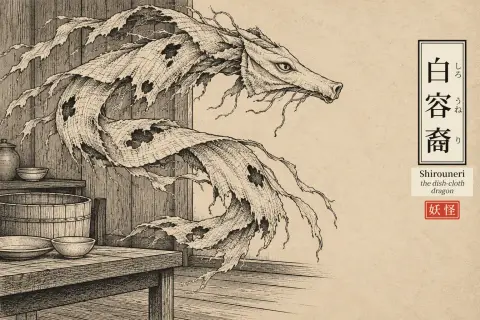
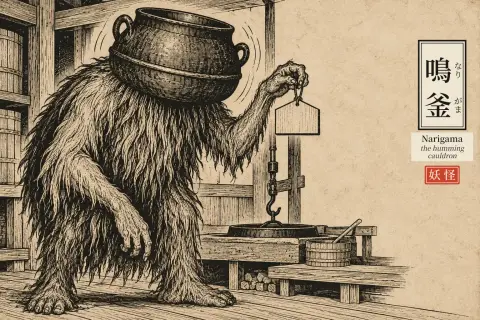
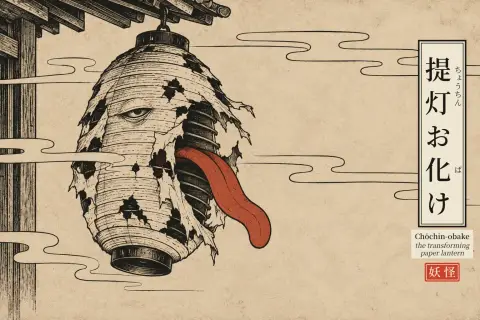
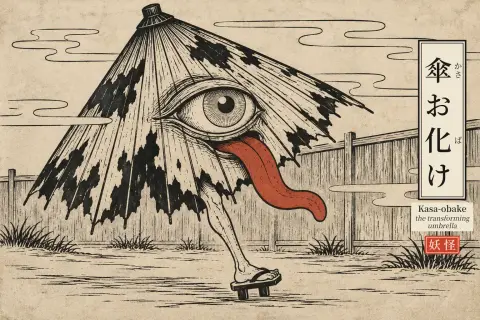
The mainland has its own old rule for objects like this. A Muromachi-period scroll, the Tsukumogami-ki, claims that a tool gains a spirit after a hundred years of use, then takes revenge on the households that threw it out. Mainland kitchen tsukumogami such as the jar spirit kameosa, the kitchen cloth shirouneri, and the oracle cauldron narigama trace back centuries through named Edo-period prints and scrolls.
The mishigē has no such print. No Edo-era woodblock or picture scroll names it directly. Its record instead comes from two modern folklore compilations: Kusano Takumi's 1997 Gensō Dōbutsu Jiten (幻想動物事典, "Encyclopedia of Fantasy Creatures") and Murakami's Yōkai Jiten. Kusano classes the mishigē as a tsukumogami, an everyday object that gains a spirit through long use.
A rice paddle serves a house for years. Thrown out, it gets up instead.
Go deeper
Books worth owning if this world pulls you in.
- The Book of Yokai →Michael Dylan FosterThe most readable scholarly introduction to yokai — where they come from, what they mean, and the major creatures.
- Japandemonium Illustrated: The Yokai Encyclopedias of Toriyama Sekien →trans. Hiroko Yoda & Matt AltThe complete Edo-period bestiaries that so many of these entries trace back to, in full English translation.
Some links are affiliate links; if you buy through them we may earn a small commission at no extra cost to you.