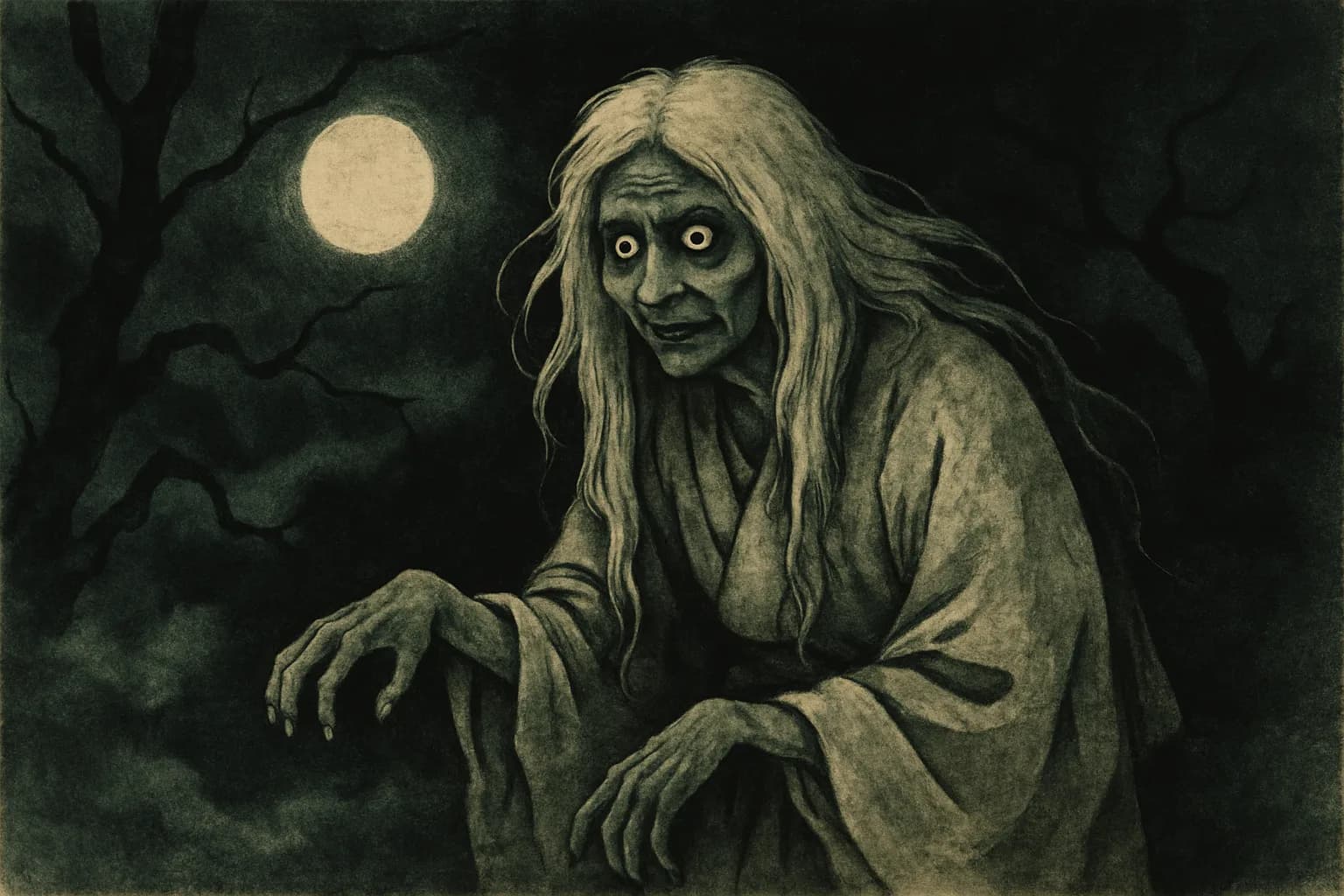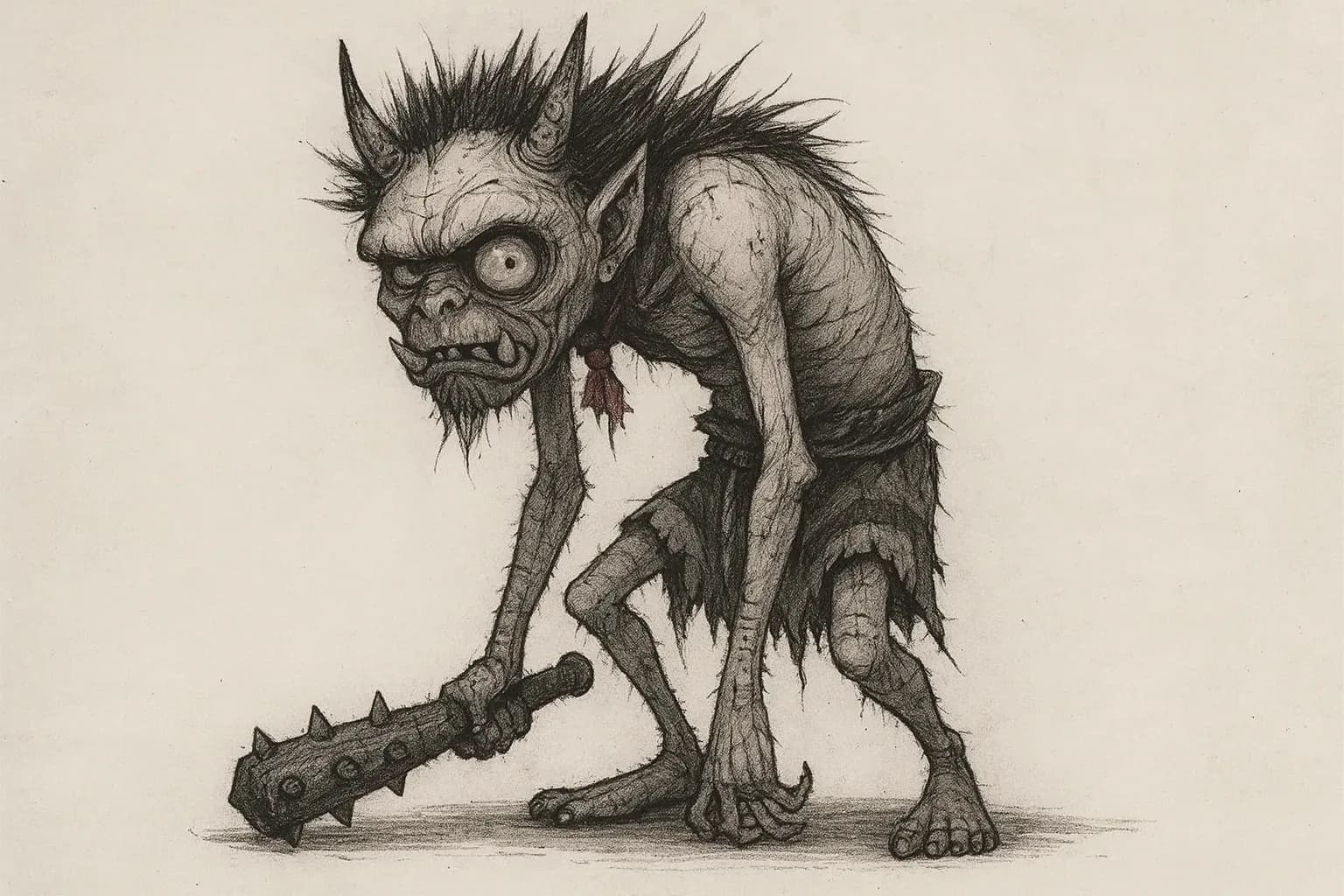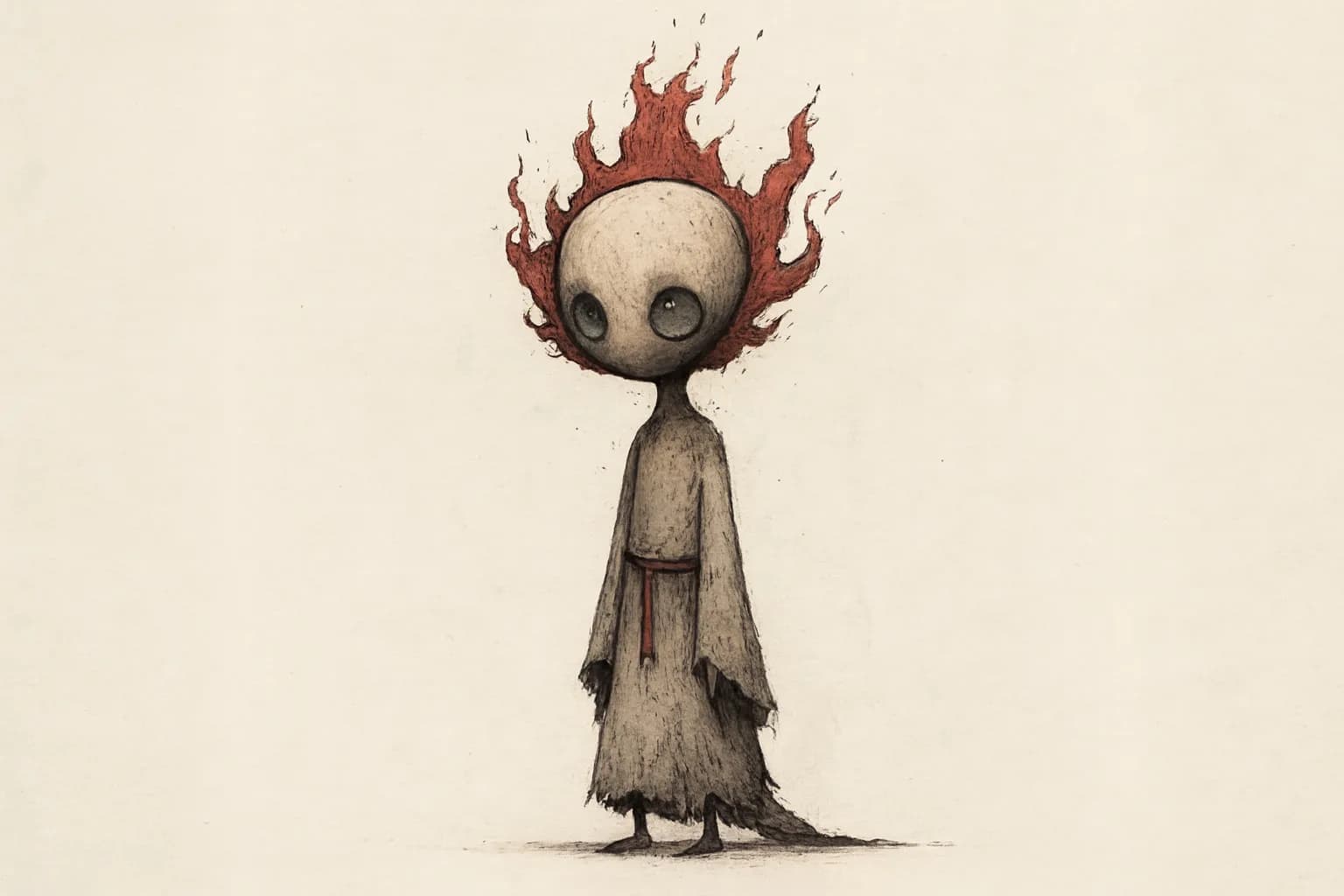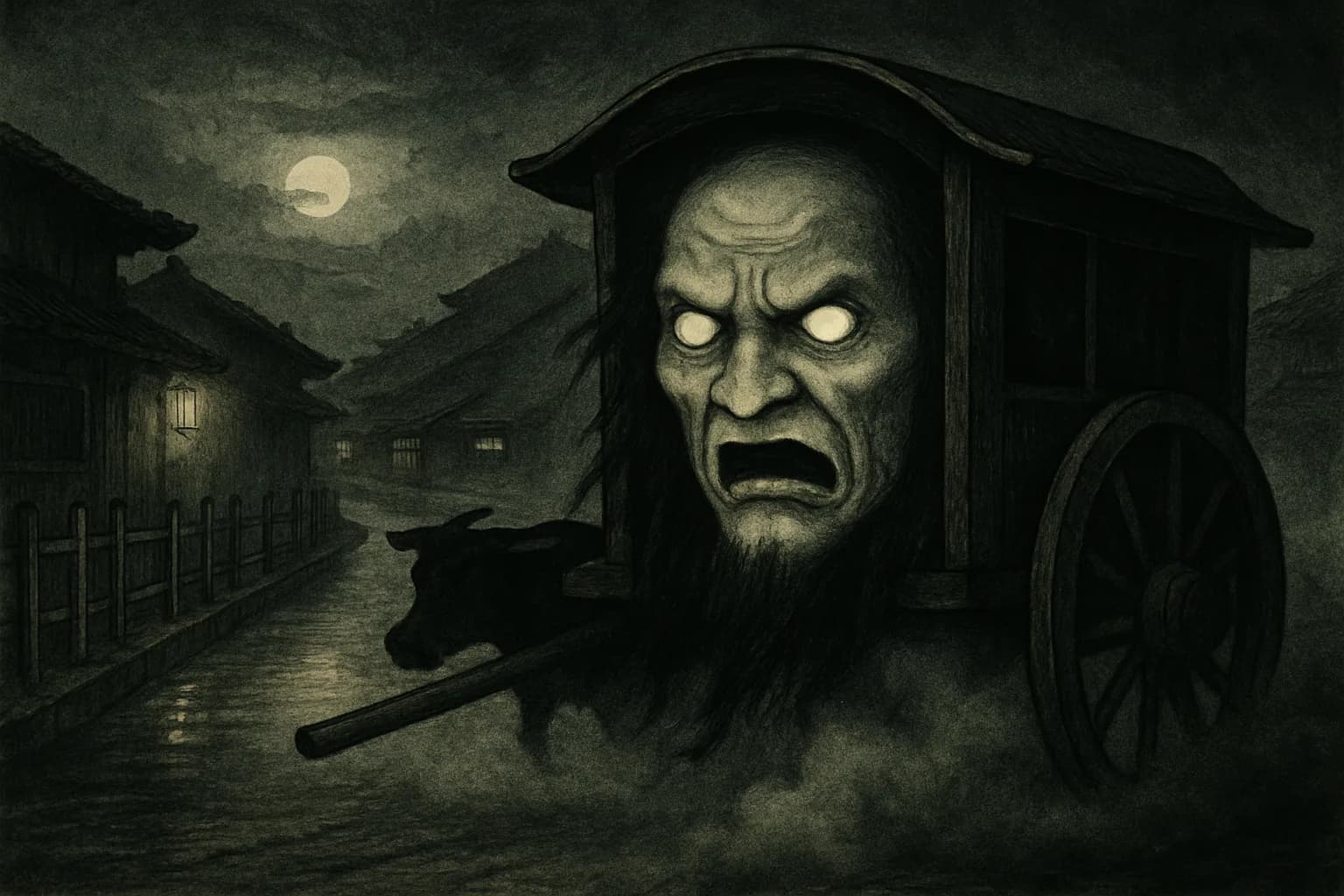
Old Tosa is now Kōchi Prefecture, on the island of Shikoku. The old province kept a short list of its worst monsters. Local tradition counted three. One was Warai-onna, the Laughing Woman who still haunts the slopes above Yamakita. Another was Akagashira, the Red Head. Of the three, Akagashira is the one that time has worn down the hardest. Its name is almost the whole record.
A name, a color, and little else
赤頭 breaks into two plain parts: 赤 (aka, "red") and 頭 (gashira, "head"). That is not a nickname standing in for a fuller description. In the surviving folk accounts, it is close to the entire description. No old print shows Akagashira's build or its size. None records what it was said to do to the people who met it. The name carries the one detail that stuck: a head, and the color red.
This puts Akagashira in strange company. Most yokai that reach us today come with at least a habit. A trick, a weakness, a place to avoid at a certain hour. Akagashira comes with a color, and little more.
One of Tosa's three great monsters
Grouping a region's scariest figures into a set of three has deep roots in Japan. The custom shows up everywhere, from famous mountain views to festival floats, under the label san-dai — "the three great." Old Tosa applied the same habit to its monsters. Akagashira held one of the three seats.
Being named in that set is itself a kind of evidence. It means villagers in Tosa took Akagashira seriously. Seriously enough to rank it beside Warai-onna, whose laugh on the 1st, 9th, and 17th night is one of the better-documented hauntings in the region. A monster that nobody feared would not have made the list. But the list itself is nearly all that is left of it. Warai-onna survives in a dedicated picture book. Akagashira has no equivalent record laying out a story, a rule, or a warning.
Shōgase in the old record
The one piece of geography attached to Akagashira is a place name: Shōgase, within old Tosa province. Local yokai across Japan are often tied this way to a single named spot. That is the opposite pattern from a figure like the kappa, blamed for drownings in rivers nationwide. A name fixed to one location suggests a specific scare in a specific place. A community kept retelling it long after the event behind it was forgotten.
Nothing beyond the place name survives to say what happened at Shōgase. Nothing explains why the monster there came to be known by the color of its head rather than by any deed. That gap is common in regional yokai lore. A frightening sighting gets a name and a location. The story that first explained it does not always get written down in time.
Where it comes from
Akagashira is Tosa folk belief, not a figure drawn by a named Edo-period artist. There is no Toriyama Sekien print of it to compare against, and no dated scroll. Nothing like the illustrated catalogues that preserved kappa and tengu for later generations in exact detail. What preserved Akagashira instead was its membership in the "three great monsters" grouping, a piece of local classification that outlived the story it was built to summarize.
The color itself is suggestive. Red is the color most associated in Japanese tradition with the oni, the demon of folk tale and festival mask. A red head would have marked Akagashira as something in that same frightening register, even without any oni traits attached to it directly. A single striking color does a lot of work in oral tradition. It is memorable, easy to repeat, and durable in a way that longer descriptions are not. Long after any story about Akagashira's behavior faded, the color was still there to repeat.
Akagashira today
Akagashira has not crossed into anime, games, or any wider audience. It stays inside regional compendiums of Kōchi and Shikoku folklore. There it is usually listed next to Warai-onna, as one half of the local pair modern collectors still bother to name. Warai-onna kept her three nights and her warning. Akagashira kept only the two words that make up its name — a reminder that a place among a region's "great monsters" was never a guarantee of being remembered for more than that.