Tattoos are not against the law in Japan. Anyone can get one, and anyone can walk down the street with one.
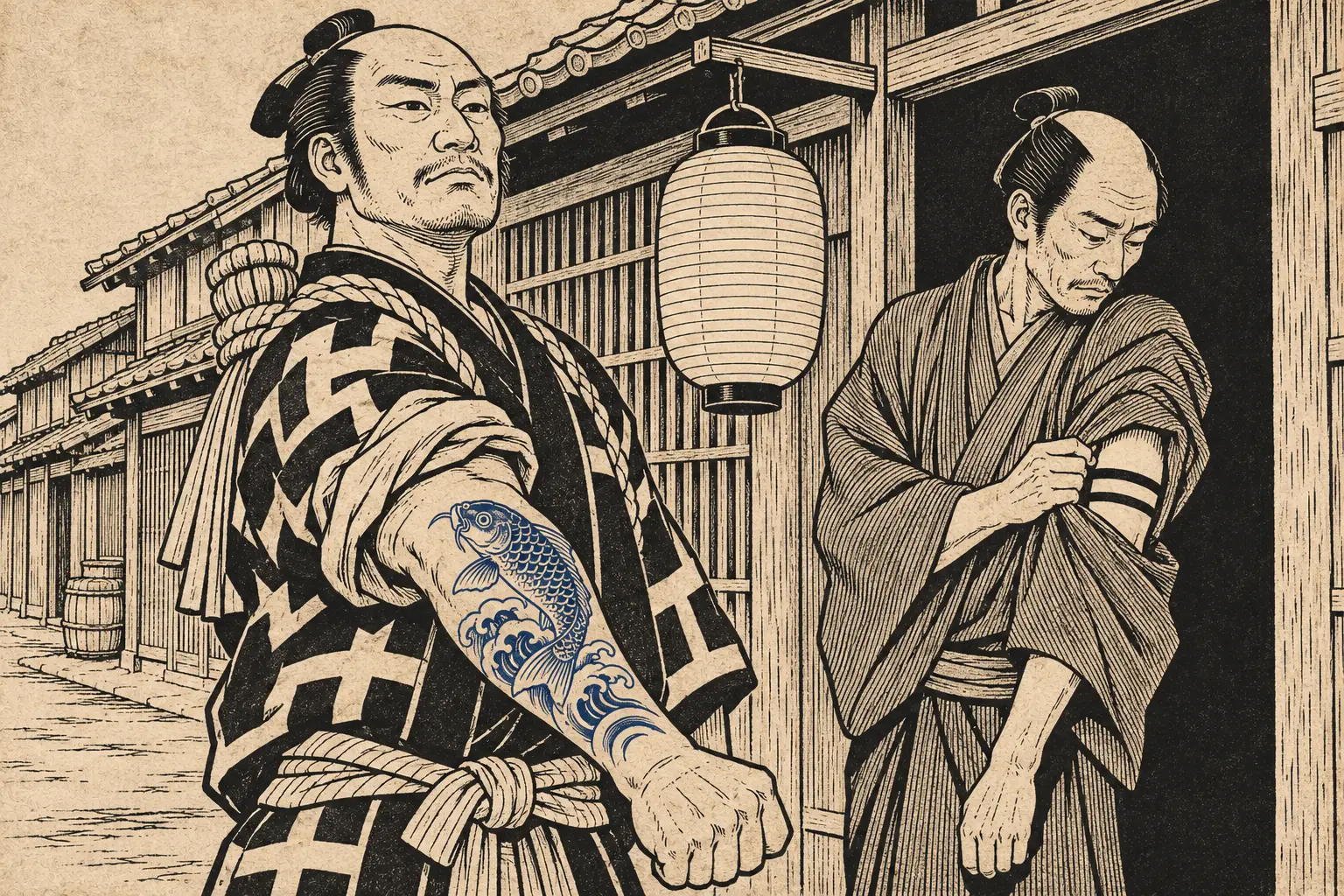
So why do so many hot springs turn tattooed people away? The short answer is history. For about 150 years, a tattoo in Japan could mean one of two very different things. It could be a mark the government inked into a thief's arm. Or it could be a picture a fireman wore with pride. The crime side won, and today's signs grew from it.
One more twist. In 1872, Japan banned tattoos partly because of how foreigners saw them. Today, many Japanese accept a foreigner's tattoo as part of their culture.
| Year | What happened |
|---|---|
| 1720 | Tattooing becomes an official punishment for crimes |
| from about 1827 | Hero prints by Utagawa Kuniyoshi help make picture tattoos fashionable |
| 1871–1899 | Tattoos of the Ainu and of Okinawan women are banned |
| 1872 | Tokyo bans tattooing your body |
| 1908 | A national rule fines anyone who tattoos themselves or others |
| 1948 | That rule is abolished. Tattoos become legal again |
| 2015 | About 56% of hotels and inns in a survey refuse tattooed bathers |
| 2020 | Japan's Supreme Court rules a tattoo artist does not need a medical licence |
One ink, three words: a crime or a picture
Japanese has more than one word for "tattoo."
- Irezumi (入れ墨). The characters mean "put in" (入れ) and "ink" (墨). This is the plain word, and it is also the word for the punishment mark.
- Horimono (彫り物). The characters mean "carve" (彫り) and "thing" (物). This is a picture, carved into the skin like a woodblock.
- Shisei (刺青), also read irezumi. The characters mean "pierce" (刺) and "blue" (青), for the indigo ink.
In the Edo period, people kept these apart. A reference work on Edo life says it plainly. A colored picture was called shisei (刺青), not irezumi (入墨). One was a record of a crime. The other was decoration.
1720: when a tattoo was a criminal record
In 1720, the government of the shogun wrote tattooing into law as a punishment. It replaced older, crueler punishments. Before, some criminals lost their noses or ears. Now a thief could get ink instead.
The mark was simple. Often it was two straight lines around the arm, each about 9 mm wide. The shape and the place changed from region to region. In some areas, the mark went on the forehead. A trained eye could tell where a person had been caught.
Edo's firemen wore their tattoos with pride
Now for the other side. At the same time, many people in Edo (old Tokyo) loved picture tattoos.
Edo was built of wood, and fires were common. The town firefighters were often construction workers called tobi. They pulled down buildings to stop the flames. People saw them as heroes.
Many of these men wore large tattoos. The pictures showed at their sleeves when they worked. Their code had three words: gaman (endurance), yūki (courage) and date (style). Edo people had a word for that look: iki, roughly "cool and stylish."
Woodblock prints fed this fashion too. From about 1827, the artist Utagawa Kuniyoshi made a famous series of heroes from a Chinese adventure story, Water Margin. Many of his heroes are covered in bold blue tattoos. Today 74 of these prints are known. The series is said to have made full-body tattoos popular. But no one can measure how much one series caused.
For 76 years, tattooing was against the law
In 1868, a new government began to change Japan fast.
In 1872, Tokyo passed a rule against small public offences. Article 11 punished anyone who tattooed their body. Other prefectures passed similar rules.
Why then? Foreign visitors were arriving, and the government feared tattoos made Japan look "backward," writes the anthropologist Yamamoto Yoshimi.
The bans also reached two peoples with their own tattoo traditions:
- The Ainu of the north. Ainu women tattooed the area around the mouth. The tattoo showed adulthood and was believed to protect the wearer. The government banned it in 1871. Many women refused to stop. They believed they could not marry, or enter the afterlife, without it.
- Okinawa in the south. Women there wore hajichi, tattoos on the backs of the hands. A ban in 1899 made both the wearers and the artists punishable. The custom faded away.
In 1908, a national rule repeated the ban. The text says it plainly: anyone who tattoos their own body or another person's body. The punishment was less than 30 days in detention, or a fine.
That rule ended on 2 May 1948, when a new Minor Offences Act took its place. From then on, tattoos were legal again. But the ban had lasted 76 years. Generations grew up knowing tattoos as something hidden and against the law.
The ban ended, but the gangster image stayed
Tattoos were legal again, but the old image did not go away. Today, the reason people give most often is the yakuza, Japan's organized crime groups. To many Japanese people, especially older ones, a large tattoo looks like a gang tattoo.
Why did that link win over the proud fireman? Films helped. In the 1960s and 1970s, yakuza films showed heroes with full-back tattoos. Then, in 1992, a new law pushed gangs out of public life. One common account says new bath houses put up "No tattoos" signs, because that was safer to write than "No gangsters." In a bath, everyone is naked, so a tattoo cannot hide. Most tattooed visitors have nothing to do with gangs. But a bath cannot tell at a glance.
Most hotels that refuse do it by choice, not by law
In 2015, the Japan Tourism Agency asked hotels and inns across Japan about tattooed guests. 581 of them answered.
| What the hotels said | Share |
|---|---|
| We refuse bathers with tattoos | about 56% |
| We do not refuse them | about 31% |
| We allow them with conditions, such as covering the tattoo | about 13% |
Most hotels that refused said it was their own decision, for reasons of public manners and hygiene. And 78% said they had never had trouble with a tattooed bather.
In March 2016, the agency wrote to Japan's four main hotel and inn associations. The letter was about foreign visitors. One line stands out: refusing someone a bath only because they have a tattoo is "not appropriate." The letter gave ideas instead. Guests could cover small tattoos with a sticker. Hotels could offer a private bath, or quieter hours.
So the rule is not a law. It is each bath's own choice.
The courts are moving too
The law has moved, slowly. In 2020, Japan's Supreme Court decided a case about a tattoo artist in Osaka. Prosecutors had said tattooing was medical work, so artists needed a doctor's licence. The court disagreed. Tattooing is not a medical act, so an artist does not need to be a doctor.
Hidden at the office, slowly seen in town: one Japanese view
The editor of this site is Japanese and has tattoos. Here is how it has felt, in the editor's own words. This is one person's view, not a survey.
"I got my first tattoo about 20 years ago. Back then, almost no one around me had one.
In the last ten years or so, that has changed a lot. I think foreign visitors and foreign culture are part of the reason. Tattoos are slowly becoming normal.
Work is another story. At an ordinary Japanese company, a salaryman with a visible tattoo is still almost unthinkable. Some office workers do have tattoos, but they hide them and never tell the company. Jobs in construction, civil engineering and trucking are more open to them. Even there, workers are expected to cover up when they work with people from other trades. That is seen as good manners.
A few months ago, I went to a young relative's school concert in the countryside. It was in the school gym. The guitar coach helping the band had a tattoo on his hand. I was surprised. A teacher employed by a public school would still find it hard, I think. Even so, people are getting used to it, little by little.
Foreign visitors are a different case. I think most Japanese people see a foreigner's tattoo as part of that person's culture. To reject it would be to reject the culture, so people treat it with respect. Baths and pools are the exception. There, the rules are the same for everyone."
If you have a tattoo and plan to visit Japan
- Check before you go. Each hot spring and public bath sets its own rule.
- Small tattoos can often be covered with a skin-colored sticker.
- Book a private bath. Many inns have a bath you can reserve just for your group.
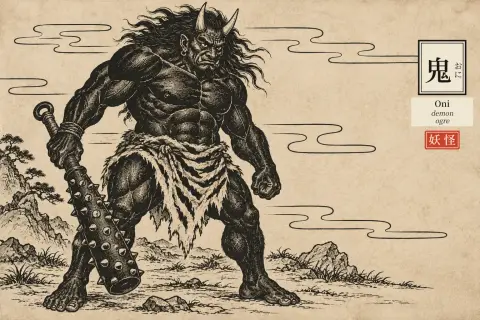
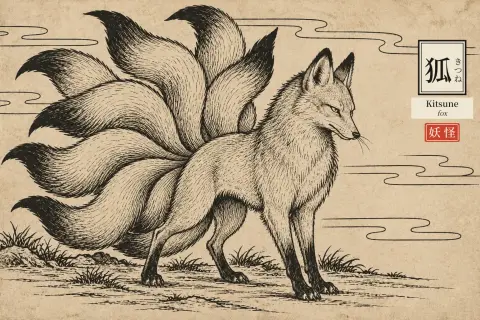
- Know what your design means here. Every common design has a story in Japan. Read ours on the oni mask, the hannya mask, the kitsune and the Japanese dragon, or see Raijin, the thunder god.
The ink is the same ink it was in 1720. What changed, and is still changing, is what Japan decides it means.