Almost every Japanese New Year custom is a way to welcome one visitor. It is the toshigami, the god of the year. Families clean for it, decorate for it, and feed it. On the second night of the year, they ask it for a good dream.
A few old monsters crowd around it: angry old tools, masked visitors, and a beast that eats bad dreams.
Some of these customs are newer than they look. Radio first carried the 108 bells live in 1927.
Who is the toshigami?
The toshigami (年神) is a god that comes to each house at New Year. People also call it Shōgatsu-sama, "Mr. New Year." Dictionaries say it was a god of the rice crop. In many places it was also seen as the spirit of the family's ancestors.
It comes from far away, for a short visit. Every decoration tells it: "This house is ready."
December 13: clean out the soot
The year-end cleaning is called susuharai (煤払い), "sweeping the soot." Today most families clean around the end of December.
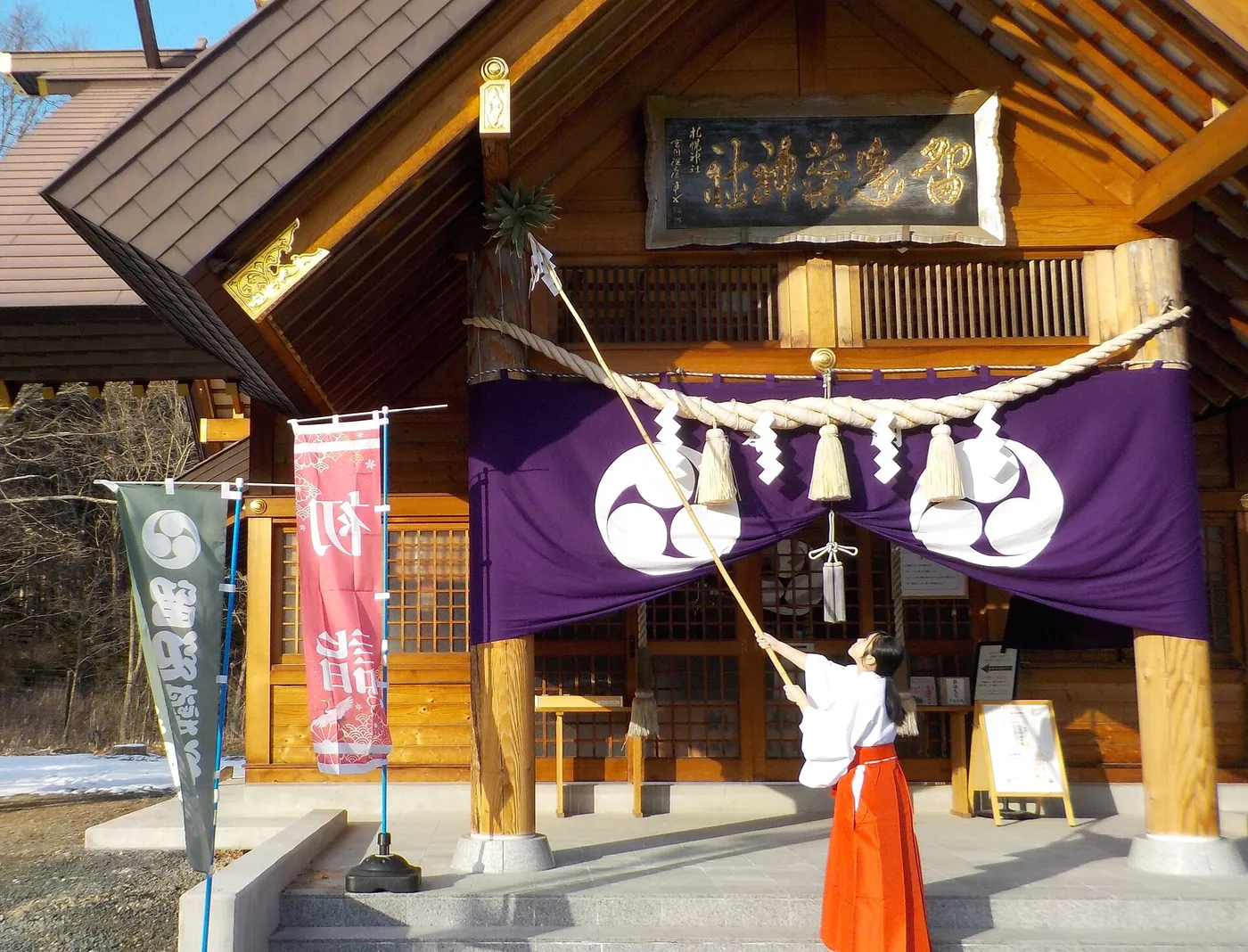 Photo: 田頭寛, CC0. Year-end soot sweeping at Rubeshibe Shrine, December 2024.
The old date was December 13. Common people copied the cleaning day of Edo Castle. The day was the start of the year god's festival. It swept out the bad luck of the whole year.
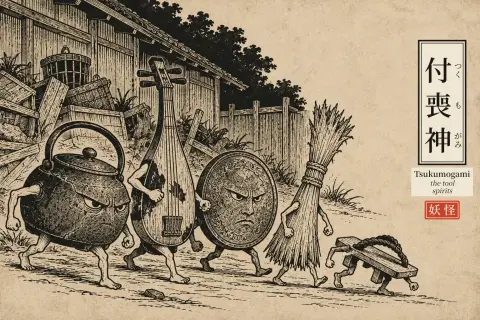
Old tools did not always go quietly. In the scroll Tsukumogami-ki, families throw out their old tools at the year-end cleaning. The tools come to life as tsukumogami and take revenge. More in where the tsukumogami 100-year rule comes from.
Late December: the pine and the rice cake
Kadomatsu, a seat for the god
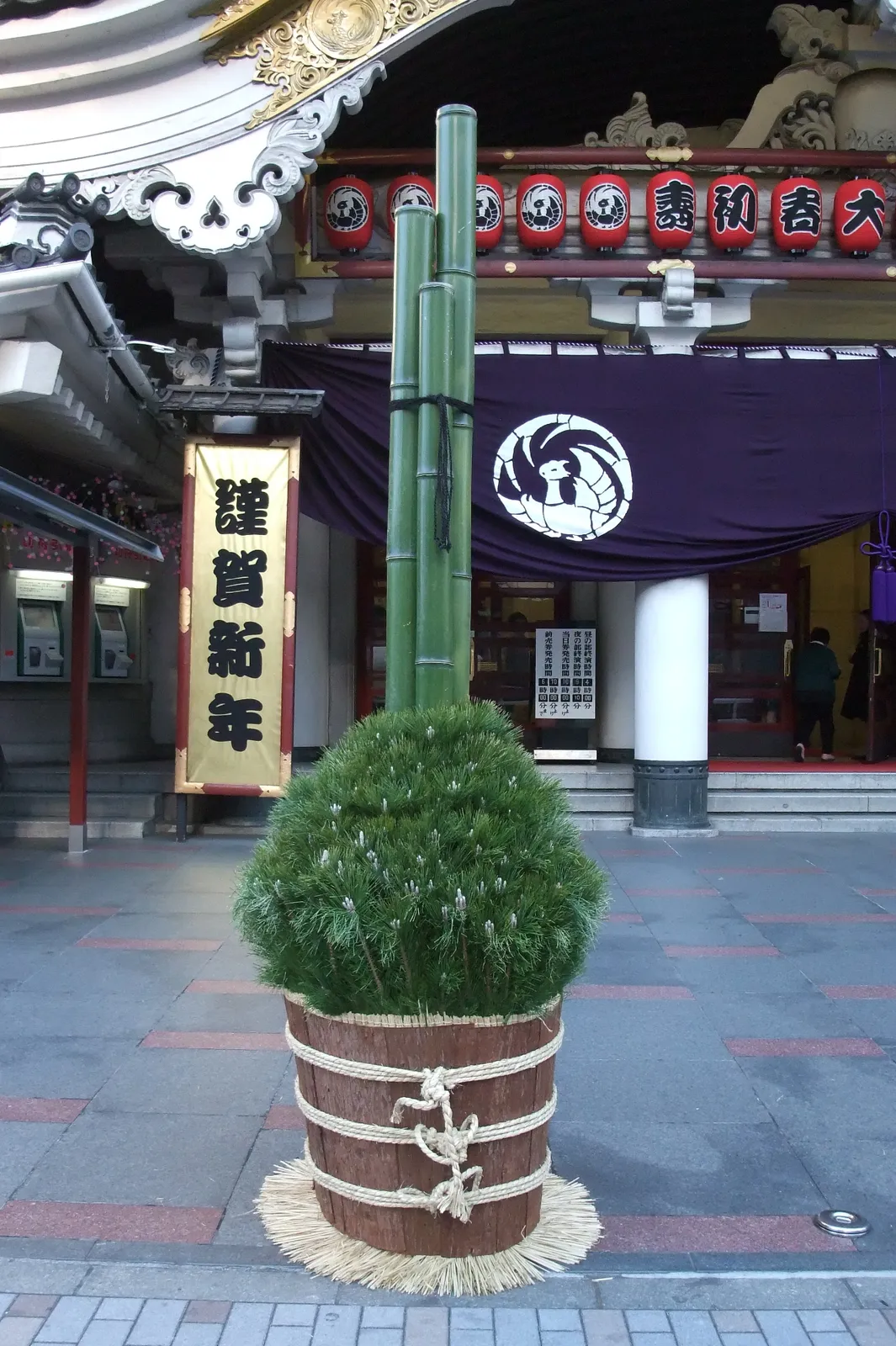 Photo: Tak1701d, public domain. A kadomatsu at the Kabuki-za theater, Tokyo, January 2010.
The kadomatsu (門松), "gate pine," stands by the front door. Since the Middle Ages, bamboo has often been added to it. It was a yorishiro, a place where the god comes down and stays.
Kagami mochi, food for the god
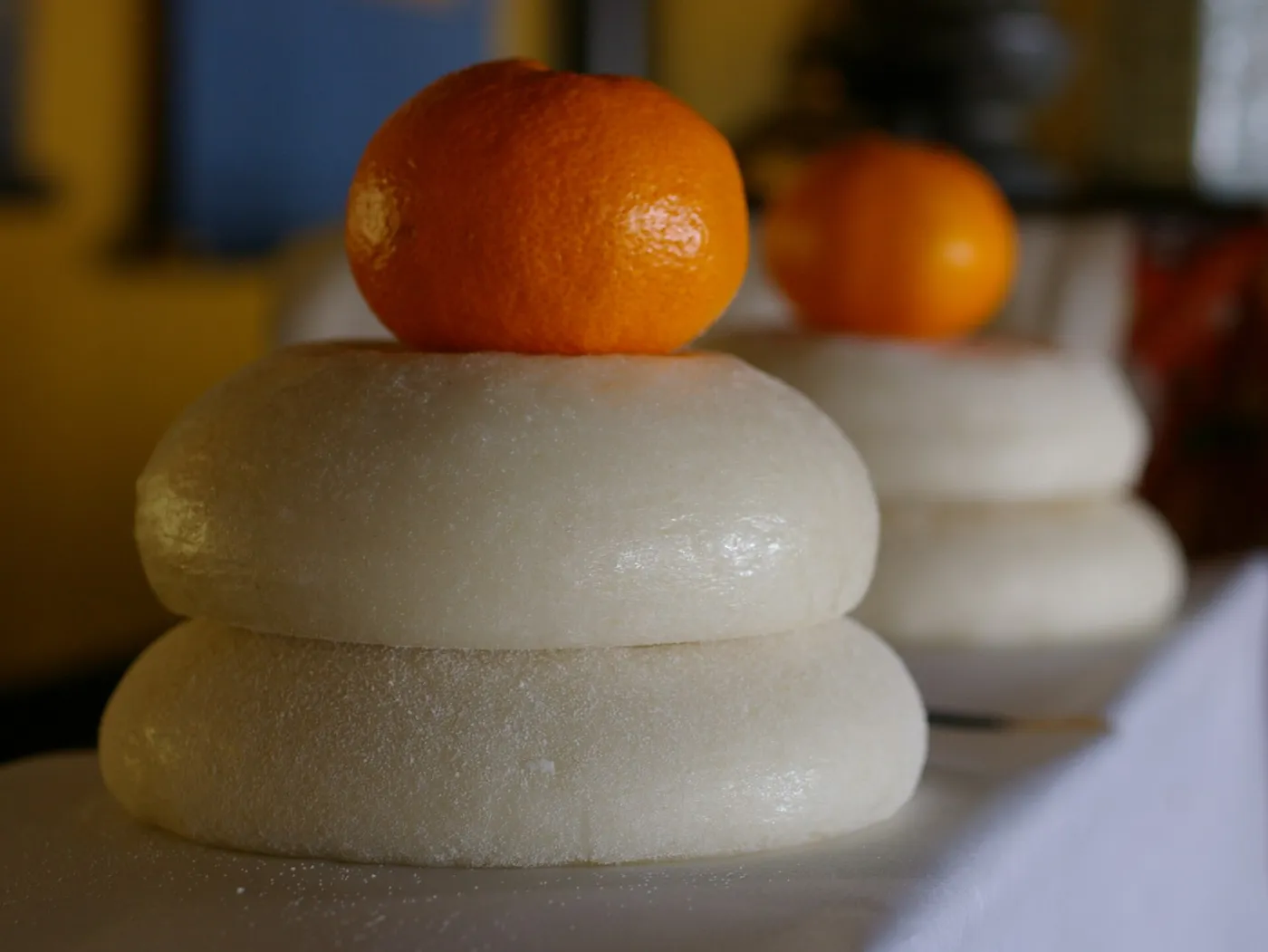 Photo: tamakisono, CC BY 2.0. Kagami mochi with a small orange on top.
The kagami mochi (鏡餅) is two round rice cakes, one on top of the other. A small orange often sits on top. The name means "mirror rice cake," after old round metal mirrors.
It is food offered to the year god. After New Year, families break it up and eat it.
December 31: bells, and the namahage
The last night of the year is Ōmisoka (大晦日). In old Japan, a new day began at sunset, not at midnight. So this night already belonged to the new year. Many families stayed up all night, waiting for the god.
The 108 bells
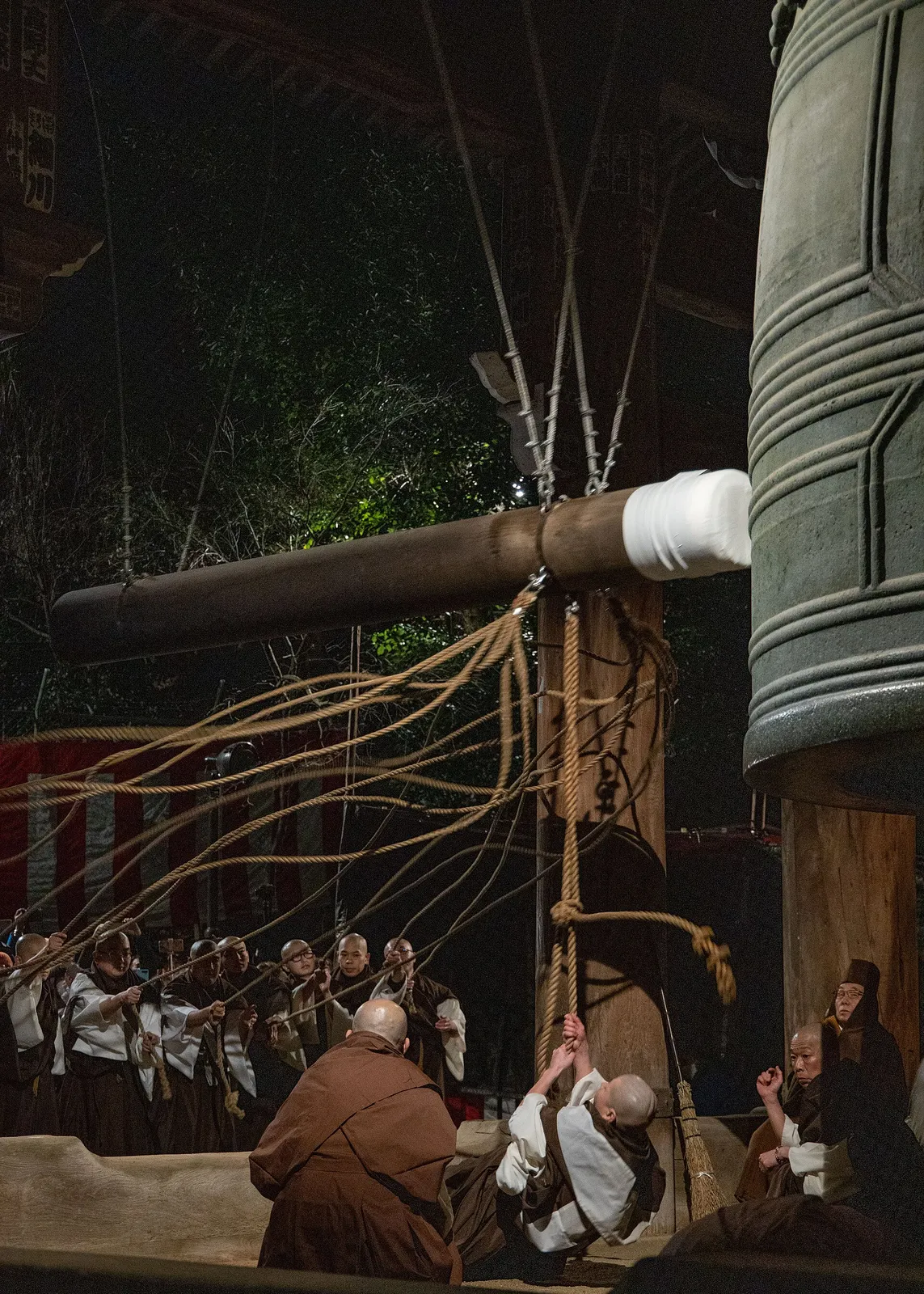 Photo: Leung Ming Ho (MHLeung), CC BY-SA 4.0. Monks ring the great bell of Chion-in, Kyoto, on New Year's Eve 2019.
Near midnight, Buddhist temples ring their big bells 108 times. This is joya no kane (除夜の鐘). Many temples ring 107 times in the old year and the last one after midnight.
Why 108? The best-known answer says humans have 108 bonnō, desires that cause suffering. Each ring sends one away. Another says 12 months plus 24 seasons plus 72 smaller seasons make 108. Nobody knows which is right.
The custom came from Zen temples in Song China. A historian, Hirayama Noboru, says radio spread it. Radio first carried the bells live in 1927, from Kan'ei-ji in Tokyo.
Masked gods at the door
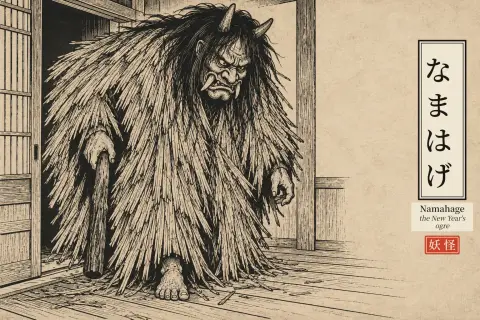
On the Oga Peninsula in Akita, the namahage come on this night. They wear straw coats and wild masks. They stamp into houses and roar at lazy children. The family gives them food and sake.
Visits like these are part of the toshigami story. Here, the New Year visitor comes in person. Compare them with Europe's winter monster in namahage vs Krampus.
January 1: the first shrine visit, and the gift
Hatsumōde
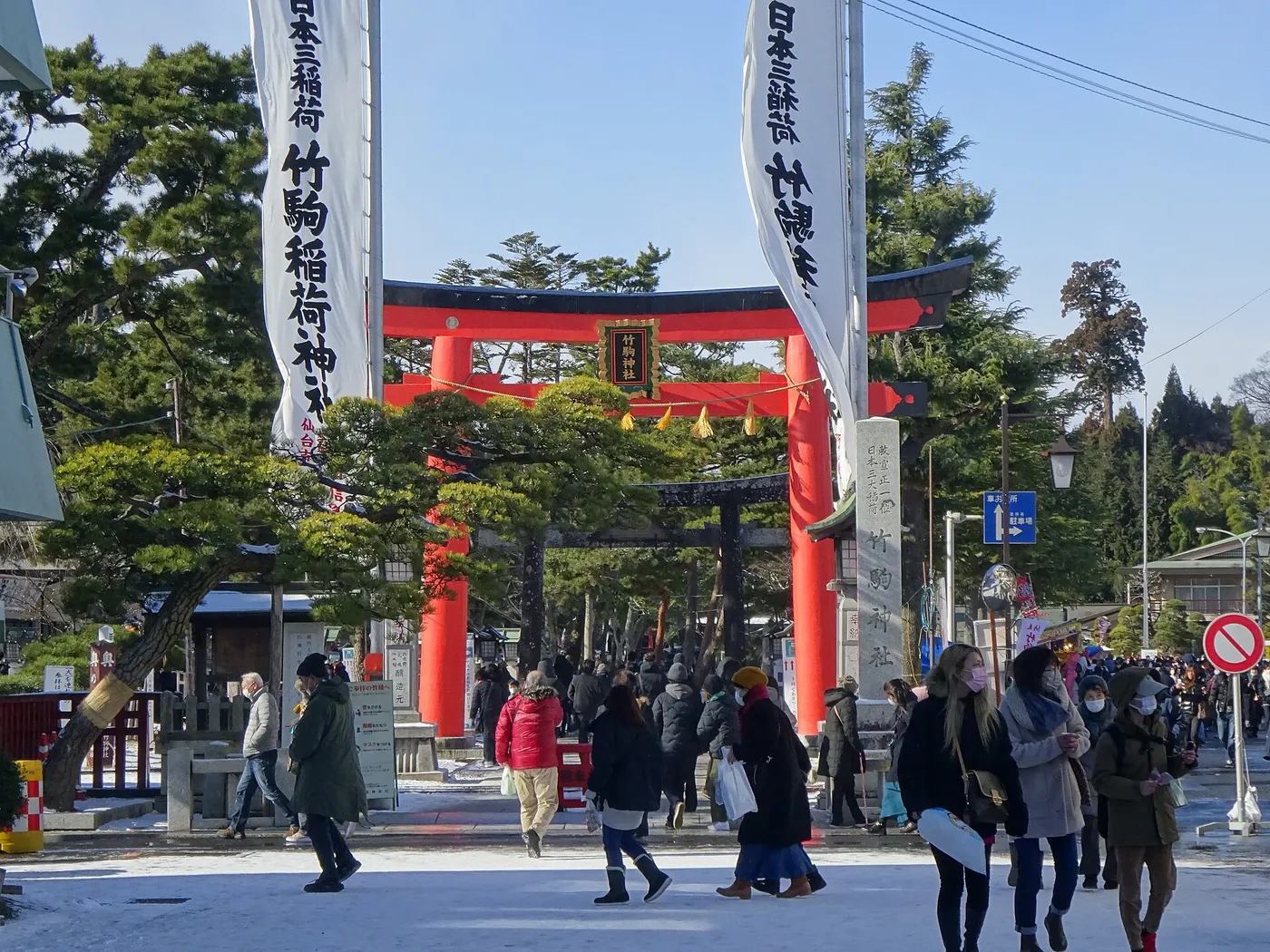 Photo: 七厩拓, CC BY-SA 4.0. Hatsumōde at Takekoma Shrine on January 1, 2022.
Hatsumōde (初詣) is the first visit of the year to a shrine or temple. Long ago, the head of the house spent New Year's Eve at the local shrine.
The big crowds at famous shrines are newer. They grew with the railways in the late 1800s. Hirayama found the word hatsumōde in a newspaper from 1885. Shrines and temples sell charms, lucky arrows and daruma dolls.
Otoshidama, the year god's gift
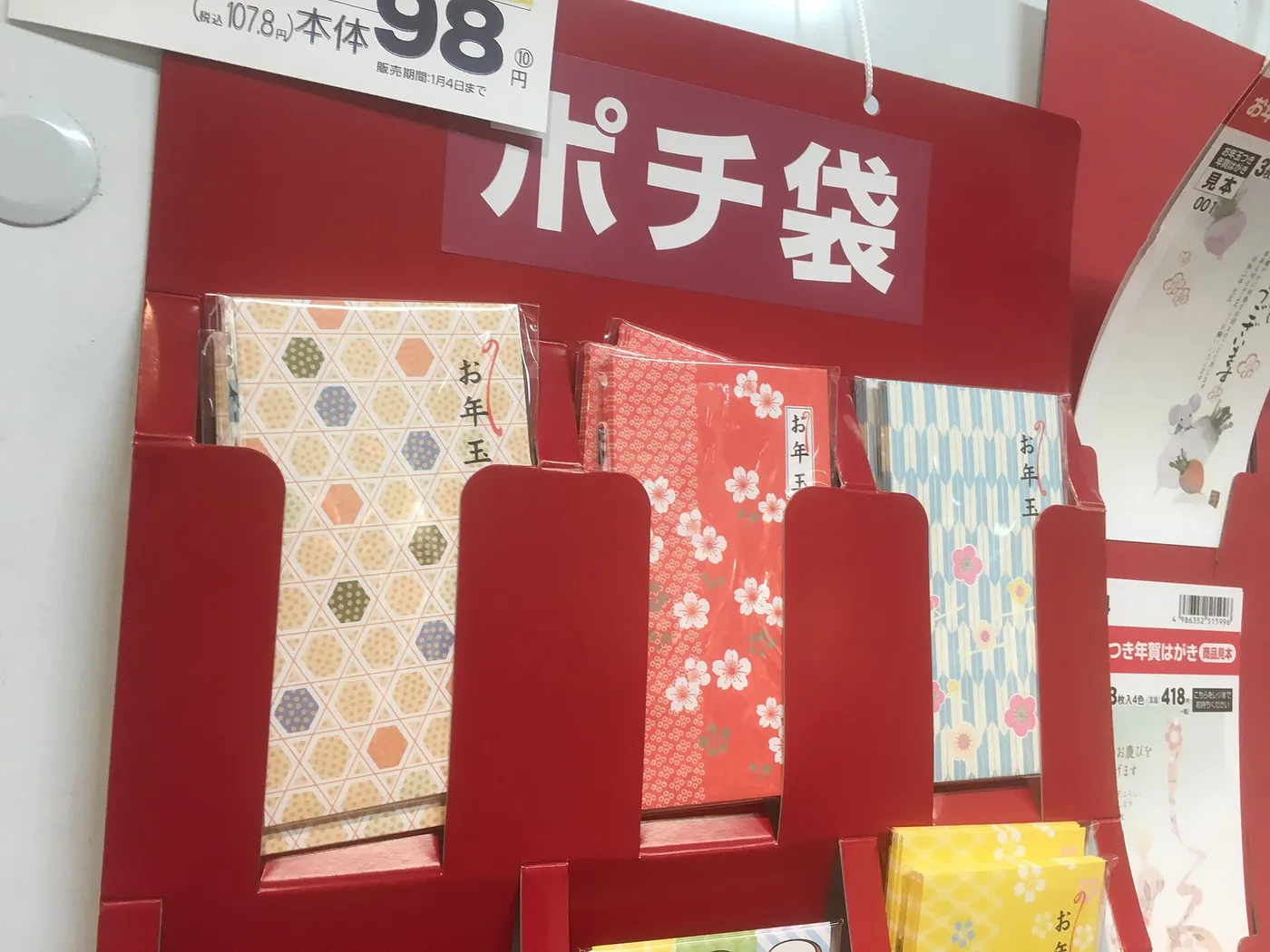 Photo: Nesnad, CC BY 4.0. Otoshidama envelopes for sale in Tokyo, December 2019.
Children get otoshidama (お年玉), money in a small envelope. Long ago, the word meant any New Year gift.
The common explanation links it to the year god. Folklorists think the gift was first a rice cake from the god. On Koshikijima in Kagoshima, a masked god called Toshidon still visits at New Year. He gives each child a round rice cake. That cake is called toshidama. Giving cash to children became normal only in modern times.
January 2: the first dream
Hatsuyume (初夢) is the first dream of the year. It is a sign for the year ahead. Most say it is the dream on the night of January 2. Some say January 1. In 2027, January 2 is a Saturday night.
Why the 2nd? Many say it is because the 2nd was the first working day. Much earlier, in the 12th century, the poet Saigyō put the first dream on Setsubun night.
Fuji, hawk, eggplant
The luckiest first dream has a saying: Ichi Fuji, ni taka, san nasubi. "First Mount Fuji, second a hawk, third an eggplant." It comes from the Edo period (1603–1868).
Why those three? Even Edo writers did not agree. The best-supported idea says they were famous things of Suruga, the land around Mount Fuji. Another links them to the shogun Tokugawa Ieyasu. A third is a pun: nasu, eggplant, sounds like "to achieve."
The treasure ship under the pillow
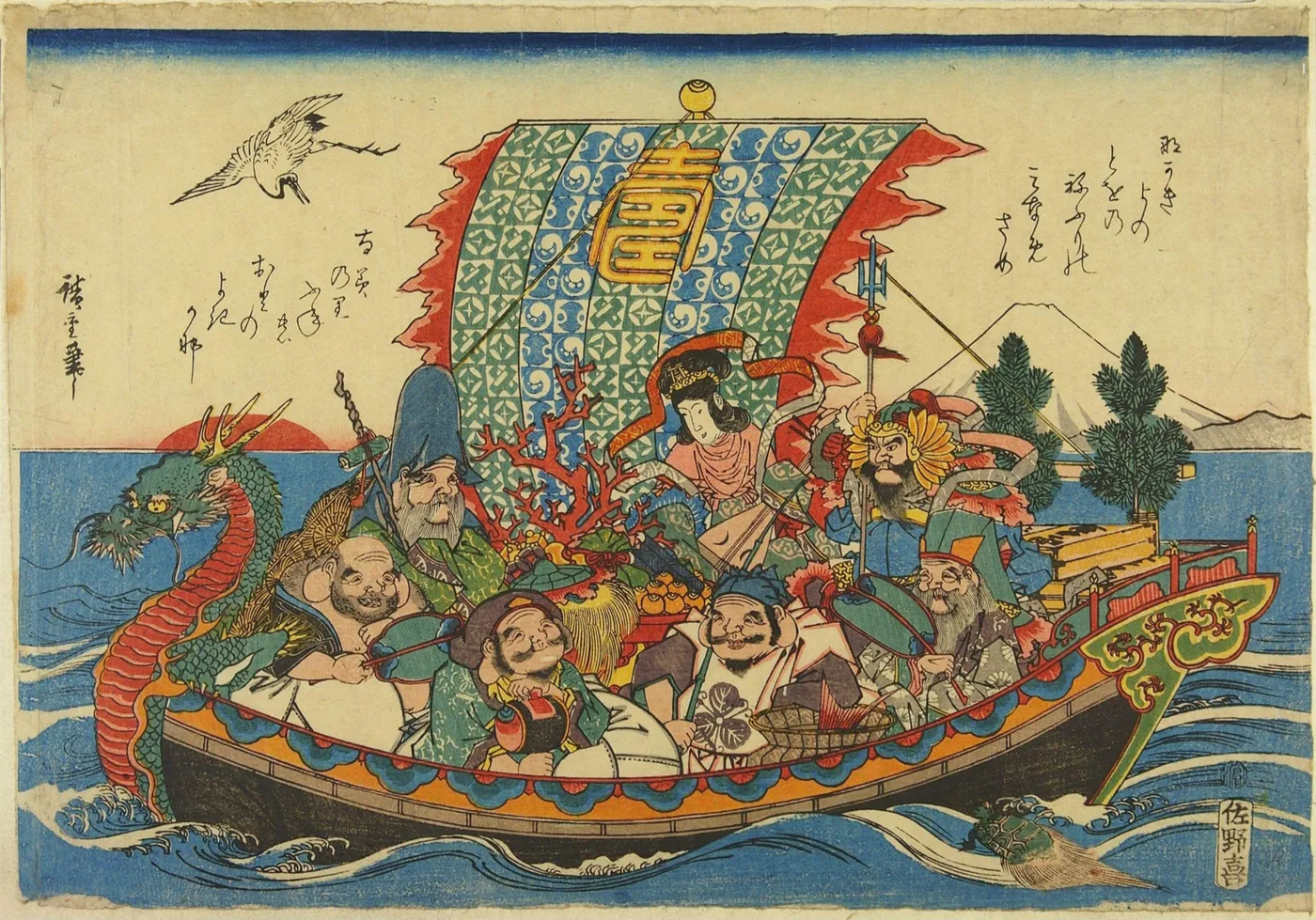 Photo: Utagawa Hiroshige, via the V&A, public domain. A takarabune print from about 1840. The V&A says the sail bears ju, the character for long life.
To get a good first dream, people slept on a picture. It is a takarabune (宝船), a "treasure ship." This custom already existed in the Muromachi period (1336–1573).
On the ship are rice bales, gold and treasure. In the Edo period, the Seven Lucky Gods climbed aboard. A short poem goes next to the ship. Written in kana, without voicing marks, it reads the same forward and backward:
Nagaki yo no / tō no nefuri no / mina mezame / naminori fune no / oto no yoki kana
Roughly: "In the long night, everyone wakes from deep sleep. How good is the sound of the ship on the waves!"
The baku on the sail
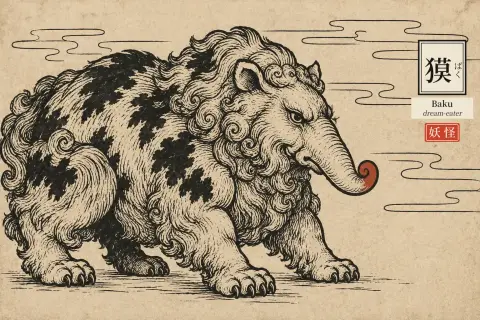
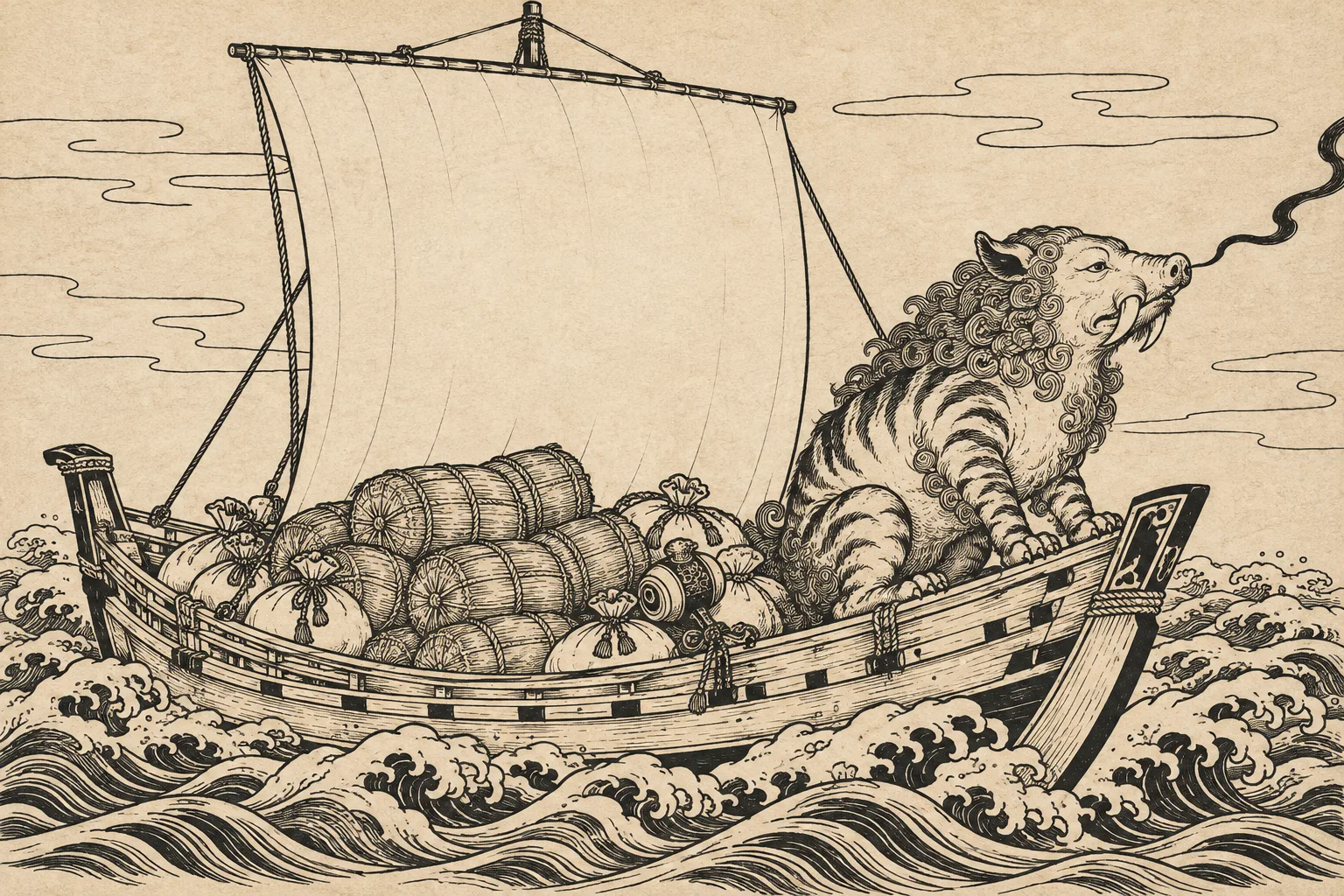
Some ships had one character on the sail: 獏, baku. The baku is a beast that eats bad dreams. The imperial court gave out ship pictures with this character. They went to princes and court nobles.
So the ship did two jobs. It carried luck in, and the baku ate any nightmare. A comic poem from 1784 even begs: "I saw Fuji, a hawk and an eggplant. Don't feed this dream to the baku!"
If the dream was bad anyway, people floated the picture down a river the next morning. That was the ship's first job: to carry the old year's bad luck away.
Sellers in the street
In Edo, sellers walked the streets calling "Otakara! Otakara!", "Treasure! Treasure!" The writer Kitagawa Morisada said they sold mostly on the evenings of January 1 and 2. He bought one himself in 1851.
The Seven Lucky Gods on the ship
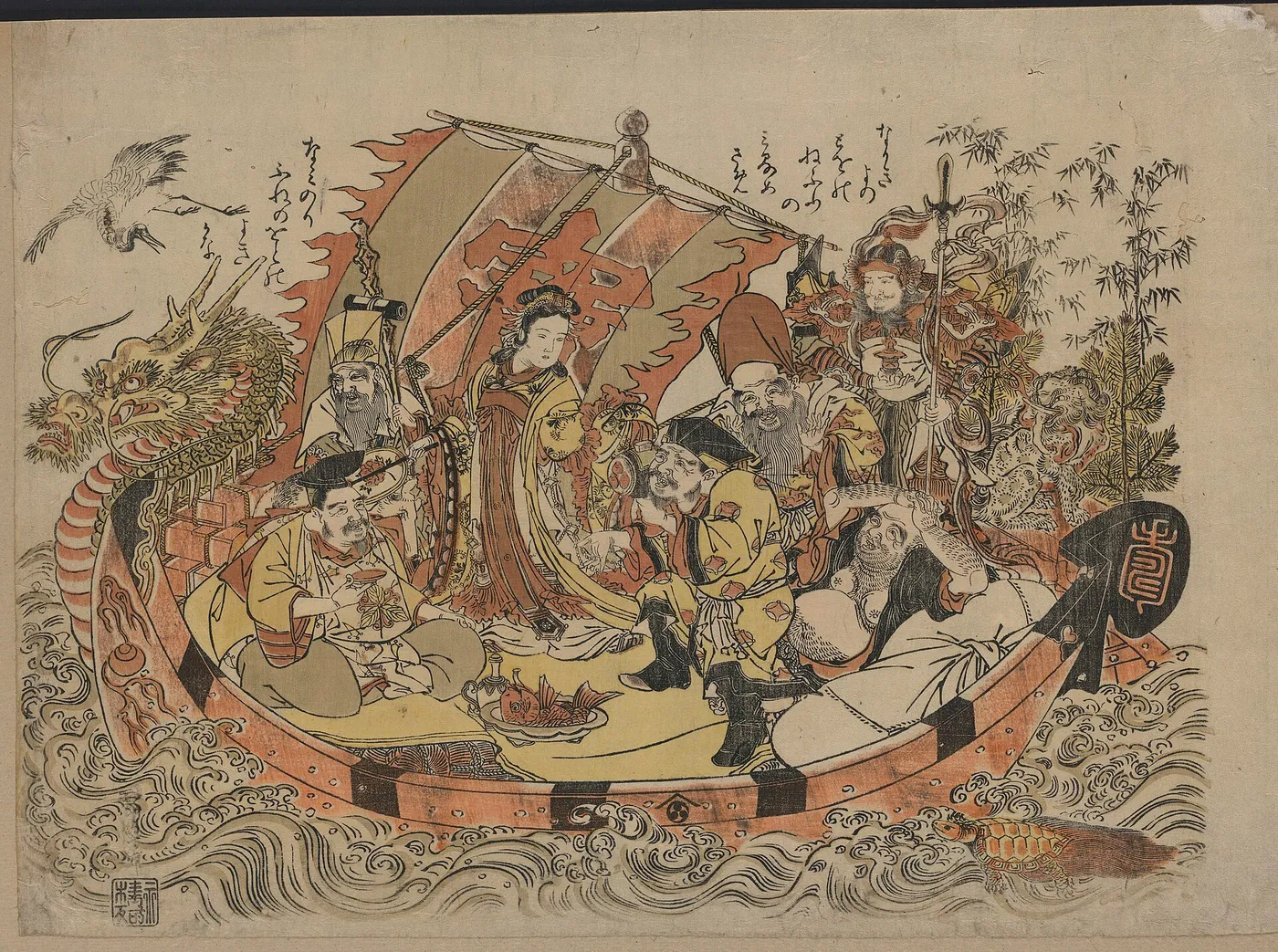 Photo: Kitao Shigemasa, via the Library of Congress, public domain. The Seven Lucky Gods on their treasure ship, a print from 1772.
The Shichifukujin (七福神) come from India, China and Japan. The group already existed in the early 1400s. In 1420, people in Kyoto paraded dressed as the seven.
Only one of the seven, Ebisu, comes from Japan.
- Ebisu. A god of the sea and its fish, and later of trade.
- Daikokuten. An Indian god who guards Buddhism. In Japan he became a god of the kitchen and of farming.
- Bishamonten. One of the Four Heavenly Kings. He guards the north.
- Benzaiten. An Indian water goddess of music, speech and wisdom.
- Fukurokuju and Jurōjin. Two Chinese Daoist gods, both called the spirit of the southern star. Some lists count them as one.
- Hotei. Based on a real Chinese Zen monk named Qici, from the early 900s.
Try it this year
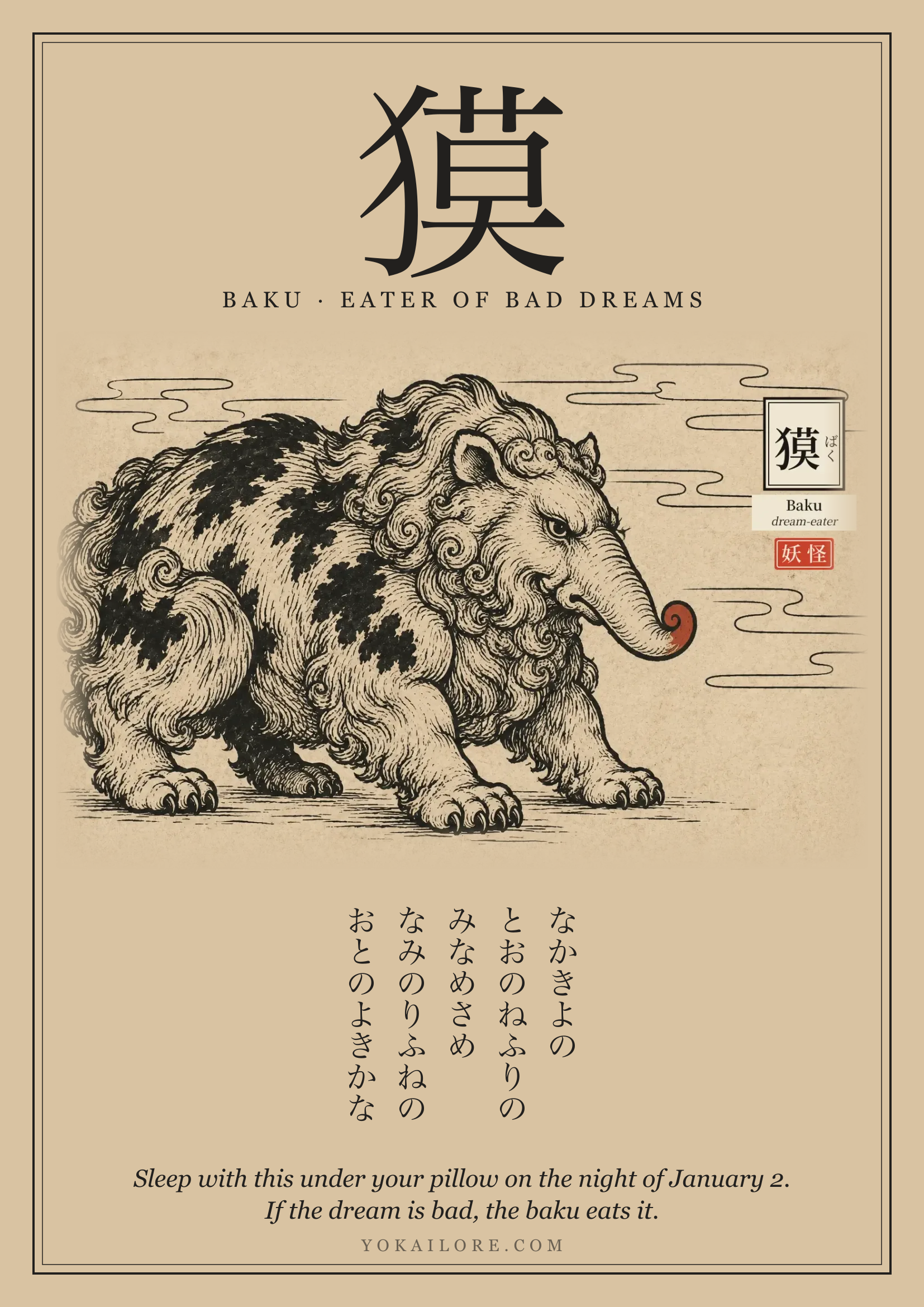
You can sleep on a baku picture this New Year. Print our picture (A4, free). It has 獏 at the top, as on the old court sails. Our baku sits below it, with the New Year poem.
Put it under your pillow on the night of January 2. A dream of Mount Fuji, a hawk or an eggplant means good luck. If the dream is bad, the old custom was to float the picture down a river the next morning.
Photos and old prints are from Wikimedia Commons. Credits link to each file.