A red pop-up appears on your screen. It is not selling anything. It only asks one question, over and over, until the question is finished.
This is the Red Room. In Japanese it is Akai Heya, which means red room. The legend began on the Japanese internet, sometime in the late 1990s. By 2004 it was tied to a real killing, and the story has not faded since.
The Question That Never Finishes
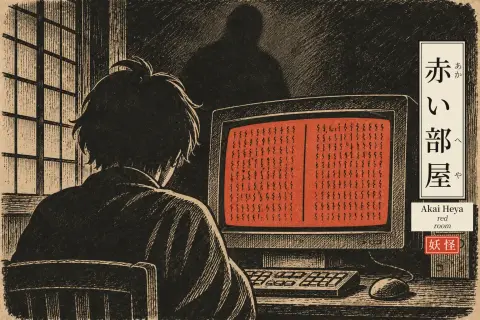
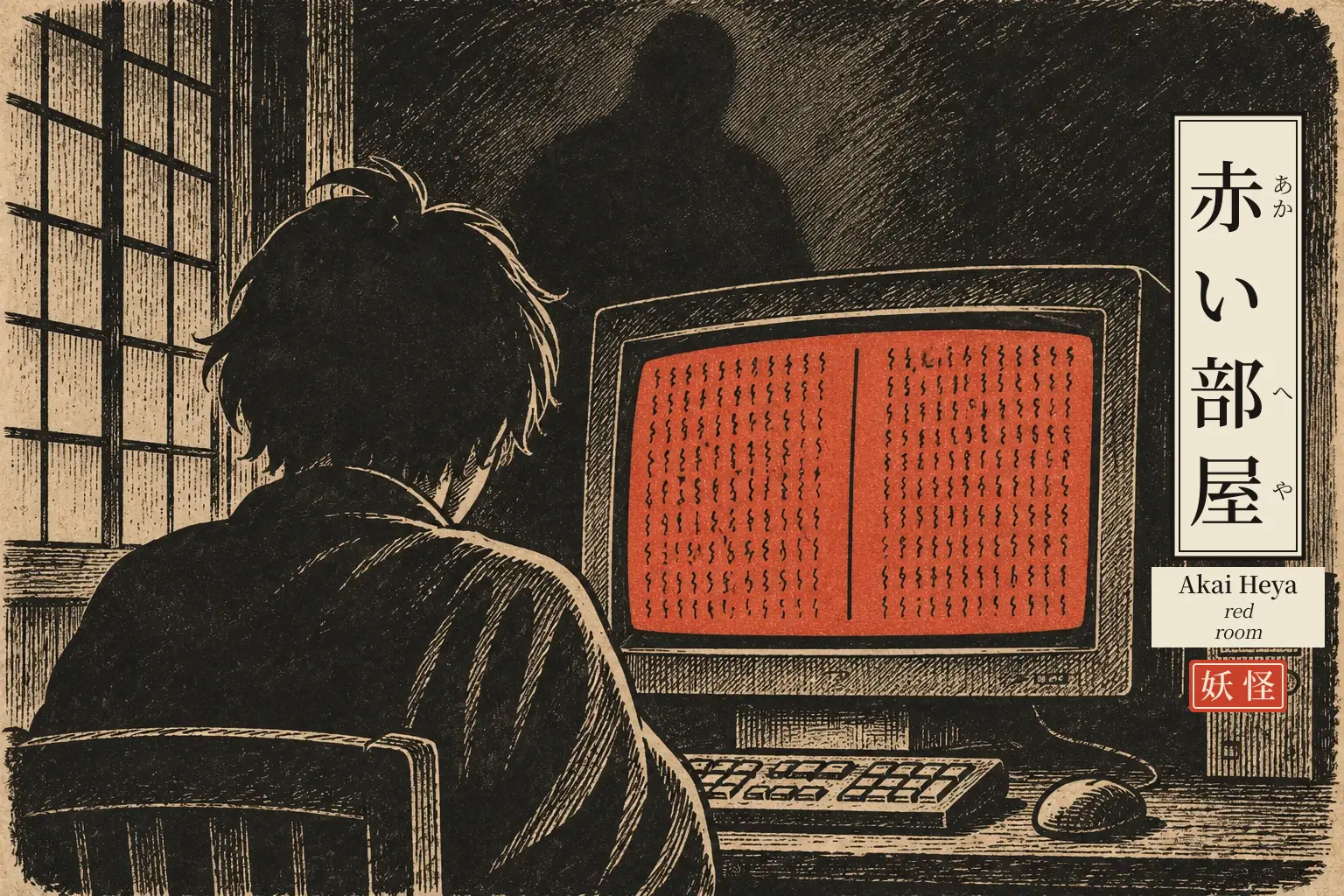
The pop-up is small, red, and covered in black text. It asks, "Do you like...?" and stops there.
Close it, and it reopens. Each time, a little more of the sentence appears, coming out through a thin vertical line. Keep closing it, and the question finally completes: "Do you like the red room?"
In one telling, a high voice reads the words aloud as they appear. Nobody explains how the pop-up finds you, or why it keeps coming back.
What Happens If You Finish It
Accounts disagree about what comes next.
In the most common version, the screen turns red. A list of names fills it. You feel someone standing behind you. Later, you are found dead at home, in a room with walls covered in blood.
A rarer version skips the screen entirely. Instead, a crack opens somewhere on your body. It grows until you split apart.
A third version adds fake error windows. "Your computer is about to have an error," one of them says. Clicking it only makes more windows appear, again and again, until the red pop-up returns.
Two Boys and a Website
The earliest known version of the Red Room is a short cartoon, made with Flash animation software. The legend itself is said to date from the late 1990s. The surviving copy of the cartoon was not uploaded, to a Japanese GeoCities page, until the early 2000s.
The cartoon shows two schoolboys arguing about whether the Red Room is real. That night, the more doubtful boy searches for it online, at home. The pop-up finds him. His friend's name sits at the bottom of a list of names. He feels a presence behind him.
Neither boy comes to school the next day. Classmates say both were later found dead in their rooms, by their own hand.
When the cartoon ends, the same red pop-up appears again, right there on the page, asking its unfinished question. Is this the curse reaching through the screen, or just one last trick to scare the viewer? The cartoon does not say. The original GeoCities page is long gone.
A Real Case, a Real Claim
On 1 June 2004, an 11-year-old girl killed her 12-year-old classmate. It happened at an elementary school in Sasebo, Nagasaki Prefecture. She used a utility knife, in a small study room.
Because she was a child, Japanese law kept the press from naming her. On 15 September, a family court sent her to a child welfare facility.
On 9 June, the Nagasaki Shimbun reported that she had the Red Room cartoon bookmarked on her computer. The claim spread fast: had a ghost story on a website pushed a child toward murder?
No source treats this as proven. The same reports note she had also read and watched Battle Royale. It is a novel and film about students forced to fight to the death. One Japanese scholar cited her bookmark to support a theory of his own. It claimed that heavy screen use makes children violent. Other researchers have called that theory pseudoscience.
What is certain is smaller than that claim. A cartoon about a cursed pop-up, and a real killing, reached the news the same month. Neither story has let go of the other since.
An Old Pattern, One New Object
Older yokai live in rivers, mountains, or old houses. Some live inside everyday objects instead: an umbrella, a futon, a mirror. Tradition calls these tsukumogami (付喪神), "tool spirits," objects that turn vengeful after years of being used, then thrown away.
The Red Room echoes one small part of that pattern, not the whole of it. It is not an old, discarded object with a grudge. It is new technology, hostile from the moment it first appears. What it borrows is only the setting. It is something ordinary, sitting in a child's own bedroom, that turns out not to be safe.
Red Room Today
The Red Room still appears in English-language roundups of Japanese urban legends. The GeoCities page it came from is long gone.
In 2016, a short horror film called The Red Room Curse retold the legend for a new audience.
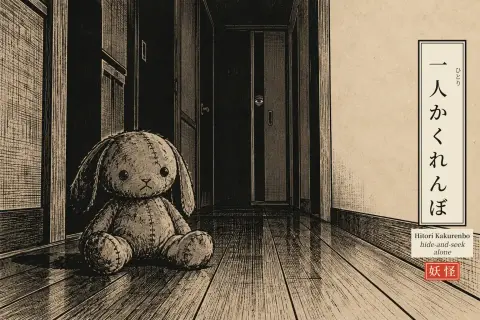
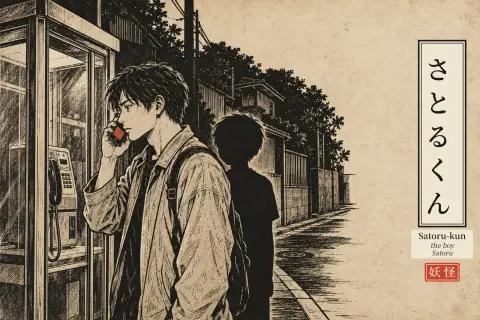
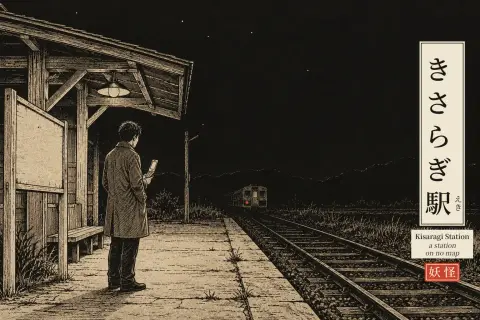
Three other net-born legends share its shape. Kisaragi Station is a 2004 ghost story about a train platform that does not exist. Hitori Kakurenbo is a ritual game said to invite a spirit into a stuffed toy. Satoru-kun is a caller nobody has ever seen or described. Like Red Room, none of the three ever got a confirmed, named author. Each one outgrew the page, call, or post that first spread it.
The red pop-up itself is harder to find now. Pop-up blockers, and the death of Flash animation, have closed most of the doors it once came through. The question, people say, is still out there somewhere, unfinished.