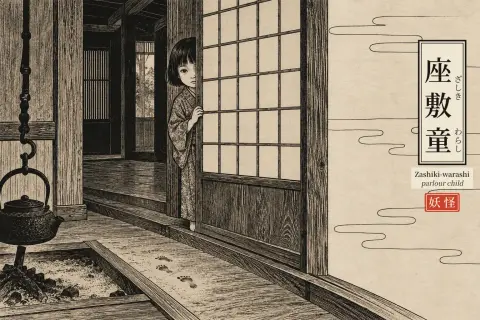
The inn is Ryokufuso, at Kintaichi Onsen in Ninohe, Iwate. It is the best-known place in Japan to look for a zashiki-warashi, the child spirit of old houses. Guests have come for decades hoping to see him.
Booking news: the inn opens bookings for stays up to the end of June 2027 on 6 November 2026, at 1 pm Japan time. It asks guests to book on its own website.
The boy in the back room
The inn tells the story itself, on its own site.
About 680 years ago, Japan had two rival imperial courts. A general of the Southern Court lost the war and fled north with his family. They settled here, in what is now Ninohe. On the way, the elder of his two sons fell ill. His name was Kamemaro, and he was six years old.
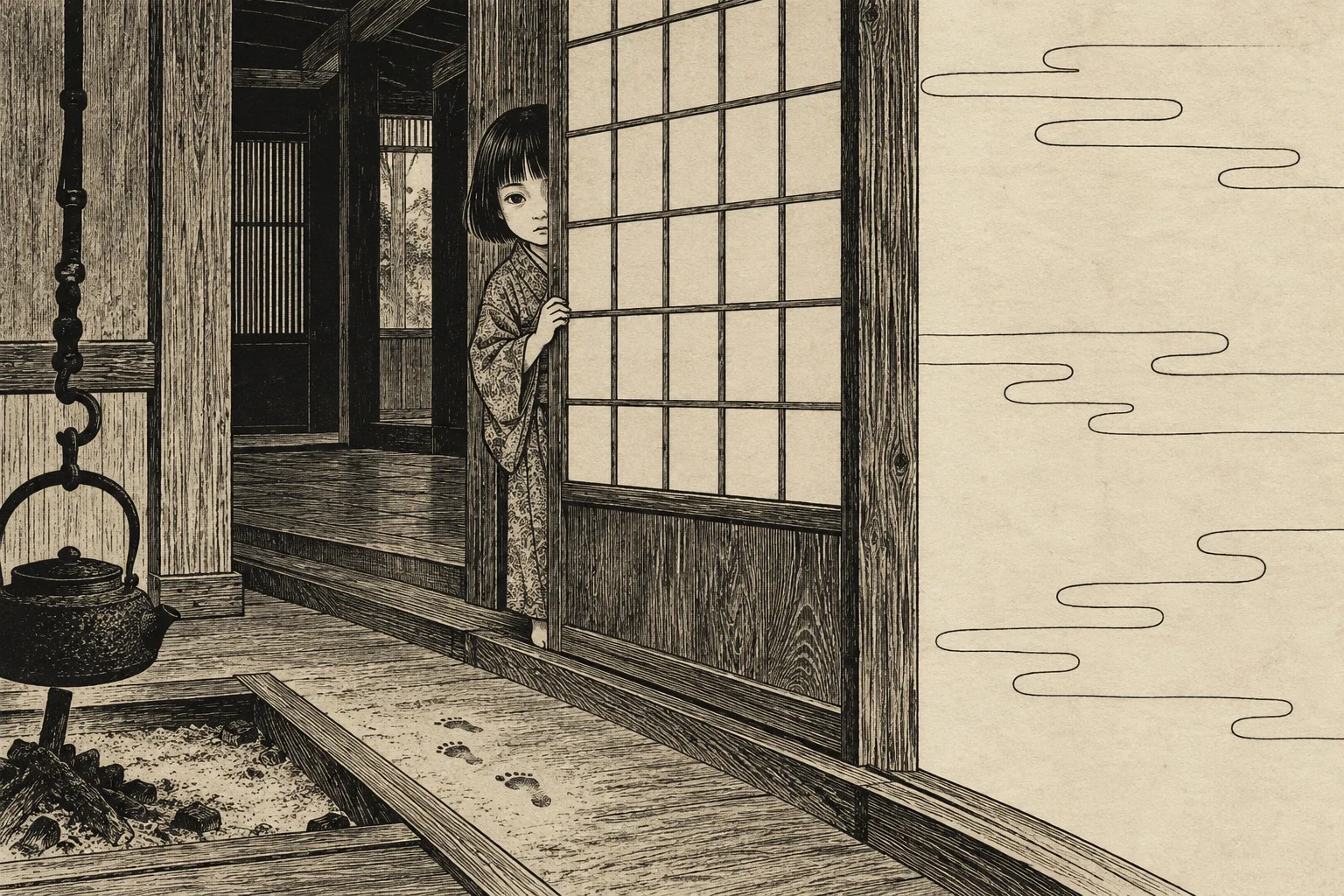
Before he died, the inn says, Kamemaro promised to guard the house for all the generations to come. After that, he began to appear as a zashiki-warashi in the back guest room, called the Enju no ma.
The inn says that people who see him, or feel something strange, have great luck afterward. Once he likes you, the story goes, he will even come to visit you wherever you are.
This is the inn's own family legend. Zashiki-warashi stories in general are much wider. They were written down from farm villages across Iwate, most famously in Yanagita Kunio's Tōno Monogatari of 1910. Ryokufuso is where that old belief became a place you can sleep in.
The fire, and the shrine that did not burn
Ryokufuso opened as an inn in 1950. It became famous enough that the writer Miura Tetsuo used it as the model for a novel about a boy and the spirits of a house.
On 4 October 2009, the inn burned to the ground. The old main house was lost, and so was the original Enju no ma. But the small shrine in the inner garden, Kamemaro Shrine, did not burn.
Letters and donations came from all over Japan. After six and a half years, the inn reopened on 14 May 2016. The shrine still stands, and anyone may visit it to pray.
Inside the inn today
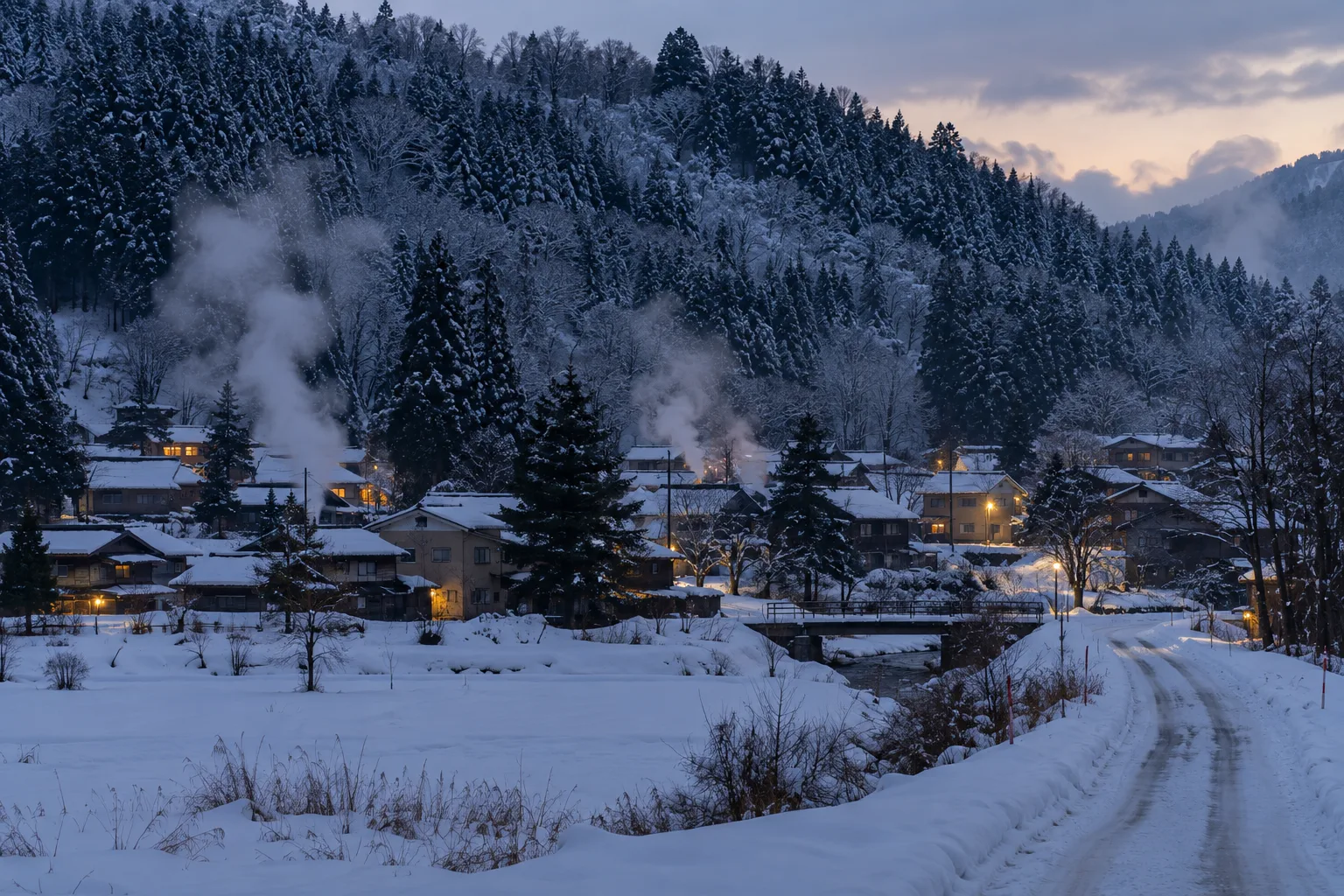 Illustrative image of a hot-spring village at dusk. Ryokufuso itself looks different.
The new building keeps the old story at its centre.
- The Enju no ma: the inn rebuilt a back guest room under the old name. Its walls are covered with guests' accounts of strange things and photos of "orbs", small blurs of light that people take as signs of the boy.
- Kamemaro Shrine: it stands in the inner garden. The inn holds a yearly festival there to honour Kamemaro and thank him.
- The bath: the inn has its own hot spring, Kintaichi Onsen, which locals call "the samurai's bath". The water runs straight from the source.
- Food and rooms: dinner is a seasonal course of local Iwate food. Most rooms are Japanese-style, and a few are Western-style.
The inn also collects new stories. Guests who have a strange night can send their account through a form on its site.
Charms you can bring home
The inn's shop sells charms linked to the boy, and some of them can be ordered online.
- Chibimaro straps: a small mascot of the boy. Each colour stands for a different wish, such as success, money or good grades.
- Shrine charms and seal stamps: from Kamemaro Shrine, as proof of your visit.
- Enju wood bracelets: the name enju sounds like the Japanese words for "long life" and "a good match", so the wood is seen as lucky.
The online shop is linked from the inn's website. It is in Japanese, and it may not ship abroad, so check before you order.
How to book a room
Rooms are hard to get, so plan ahead.
- When: bookings for stays up to the end of June 2027 open on 6 November 2026 at 1 pm Japan time.
- Where: the inn recommends booking on its own website. Big booking sites take longer to update, the inn says.
- In English: the inn is also listed on Trip.com, which has an English booking page. Try it if the Japanese site is too hard or shows no rooms. (This is an affiliate link: we may earn a small fee if you book, at no cost to you.)
- By phone: possible, from 10:30 am to 8 pm Japan time, but the line is very busy on opening days.
- Not accepted: bookings by email or fax.
- Cancelling: the inn charges a fee from seven days before your stay, rising to the full price on the day.
The booking page is in Japanese. A browser's translate button is enough to get through it.
If you cannot get a room
You can still go for the day. The inn opens its hot-spring bath to day visitors, and you can visit Kamemaro Shrine.
- Day bath: 10:30 am to 3 pm, last entry 2:30 pm. Adults 500 yen, children 300 yen.
- Closed days in November 2026: the 10th, 11th, 24th, 25th and 26th. On these days there is no day bath, no visit and no phone line.
Check the inn's site for other months before you go.
How to get there
Ninohe is in the far north of Iwate, close to Aomori.
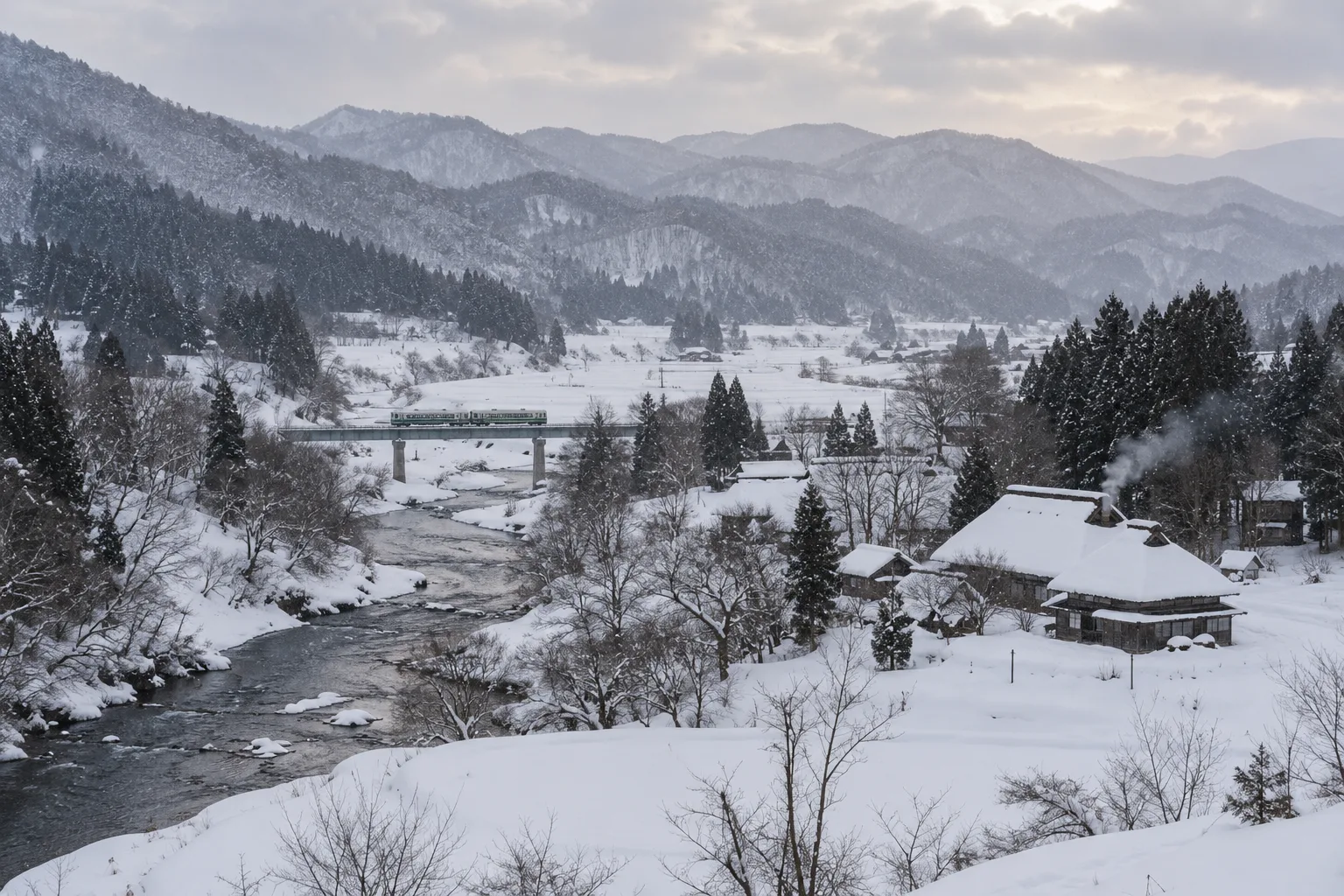 Illustrative image of the snow country in winter, not a photo of the route.
- Take the Tohoku Shinkansen to Ninohe Station.
- Change to the IGR Iwate Galaxy Railway and ride to Kintaichi-onsen Station.
- Take a taxi. It is about five minutes to the inn.
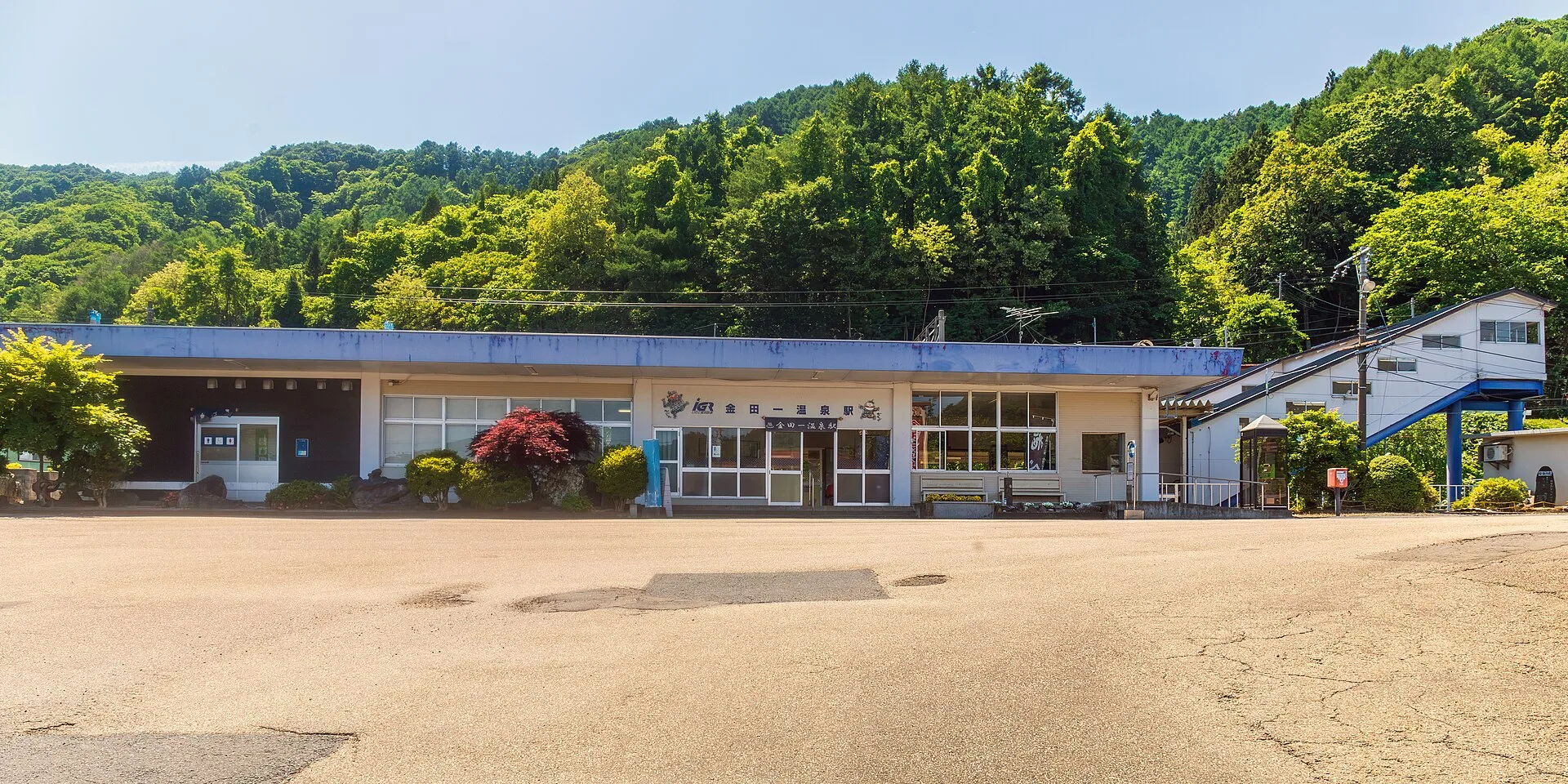 Photo: Yasu, CC BY-SA 3.0
By car, it is about 20 minutes from the Ichinohe exit of the Hachinohe Expressway. If you fly, Iwate Hanamaki Airport has a bus to Morioka Station, where you can catch the train north.
If you have time at Ninohe Station, Basenkyo, a river gorge in the town, is about five minutes away by taxi. Two great rocks stand over the Mabechi River there. The taller one, Ogami Rock, rises about 180 metres above the water.
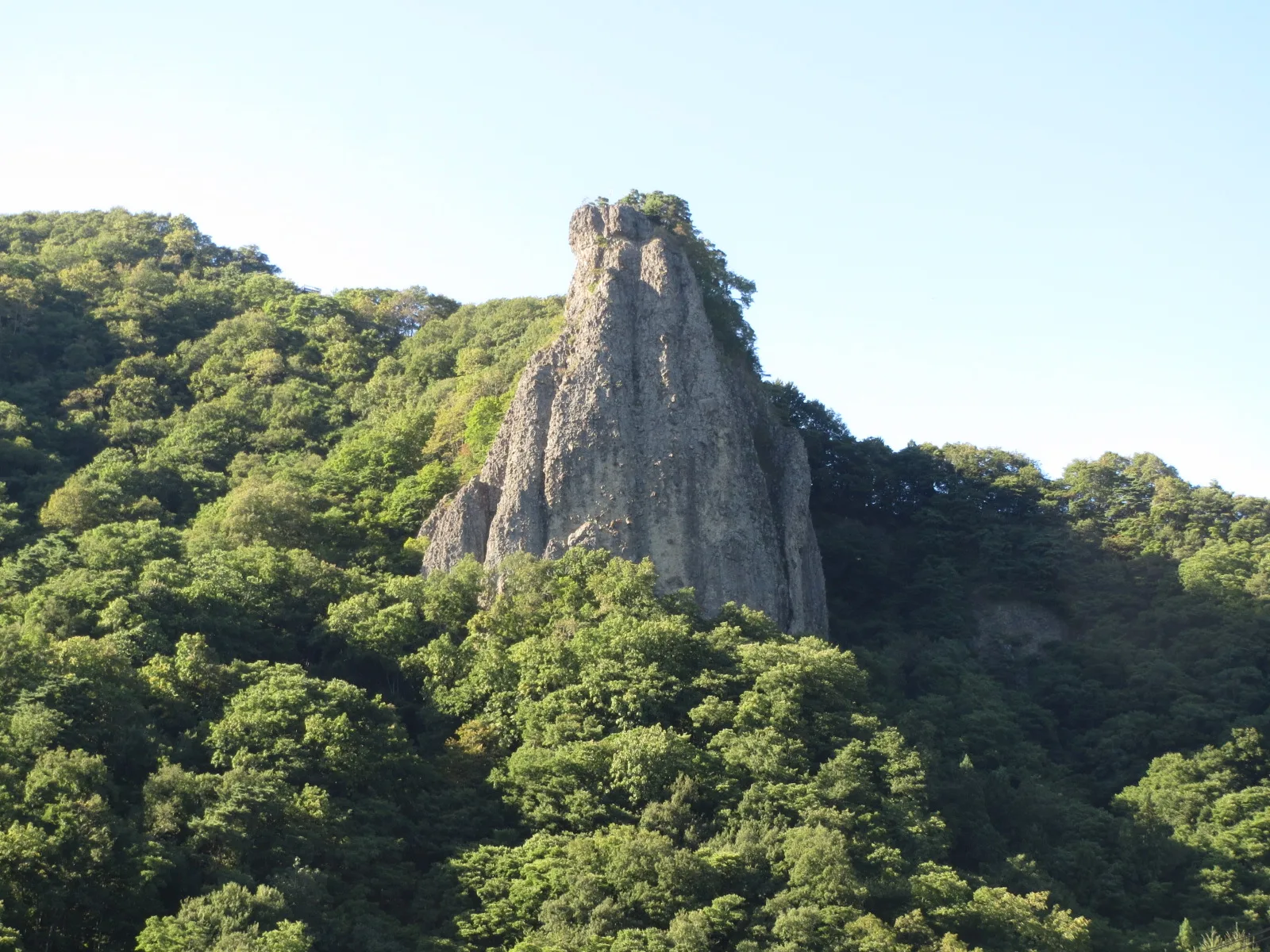 Photo: Ty19080914, CC BY-SA 4.0
What a zashiki-warashi is
A zashiki-warashi is a small child spirit that lives in a house. When it stays, the family does well. When it leaves, the luck leaves with it. Read the full story, and where it was first written down, in our zashiki-warashi entry.
For more spirits that live indoors, from the bath to the storehouse, see Yokai of the House.
The photos on this page come from Wikimedia Commons.