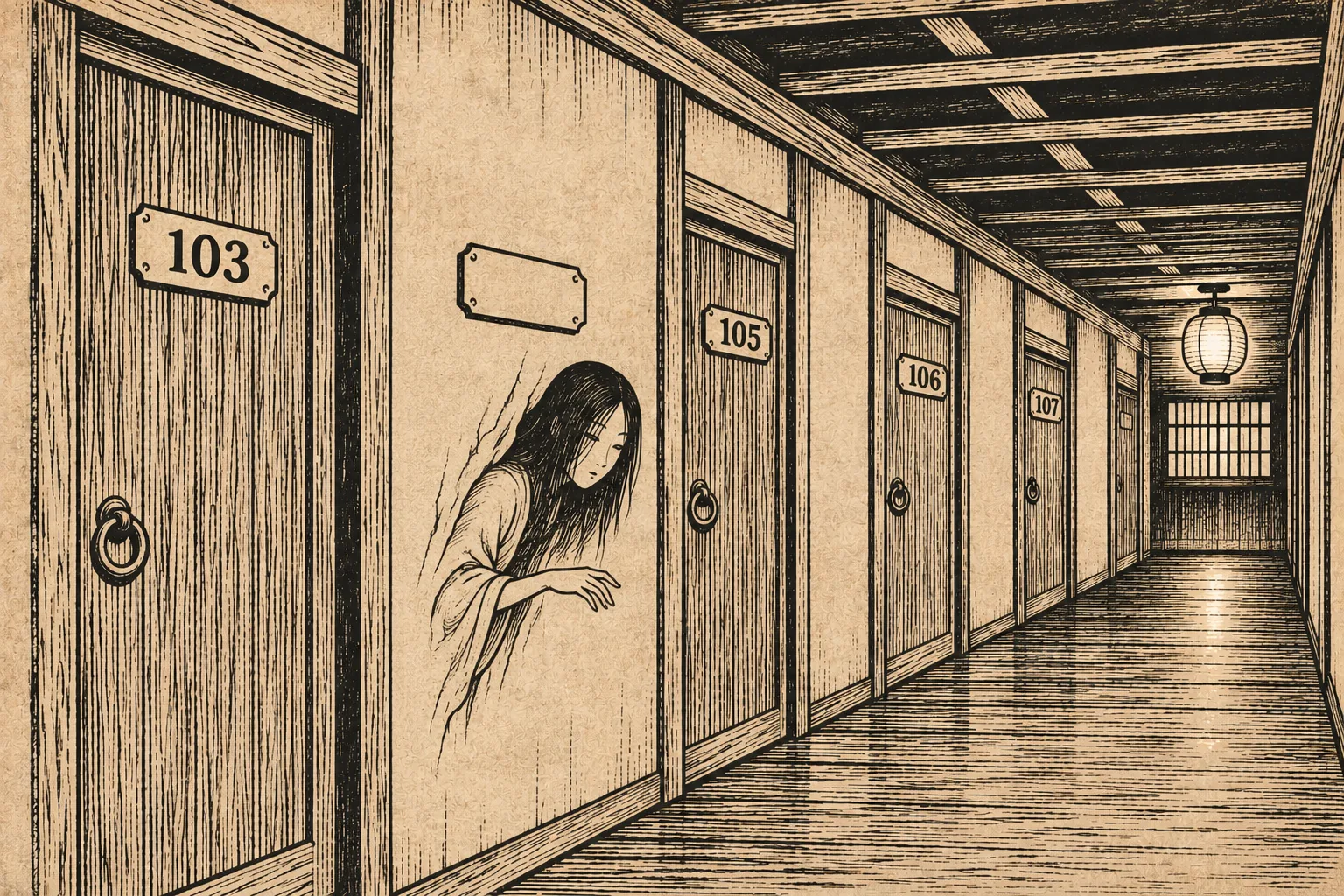
In Japan, 4 and 9 are the unlucky numbers, and 8 is the lucky one. Four can be read shi, which sounds like "death" (死). Nine can be read ku, which sounds like "suffering" (苦).
Eight is lucky in Japan today for a reason you can see. The character 八 opens wider toward the bottom. Dictionaries call this suehirogari, "spreading wider toward the end."
The fear of 4 even shows up in counting. A dictionary says people who dislike shi say yon instead.
| Number | In Japan | The reason given |
|---|---|---|
| 4 | unlucky | shi sounds like death |
| 9 | unlucky | ku sounds like suffering |
| 8 | lucky | 八 widens toward the bottom (suehirogari) |
| 7 | mostly lucky | Seven Lucky Gods, 7-5-3 |
| 42, 49 | unlucky | "shi-ni" (to die), "shi-ku" (death and suffering) |
| 13 | mixed | a Western fear, but also an old Japanese "bad year" |
Four sounds like death, so some people say yon instead
Four has two readings in Japanese: shi and yon. The dictionary Daijisen says people who avoid the sound of death say yo or yon instead.
Another dictionary, the Nihon Kokugo Daijiten, is more exact. It ties the death sound to the short yo- in words like yonin (four people) and yonen (four years). Yon itself grew from the old word yotsu, it says, shaped to sound like san (three).
There is a plain reason too. The same dictionary says yon is used so a number is not misheard.
The fear is old. The same dictionary quotes a comic verse from 1709. It laughs at a hard master who "hates the character 4."
Nine sounds like suffering
Nine can be read kyū or ku. Ku (苦) is also a word for suffering. Daijisen defines unlucky numbers as "numbers people hate, such as 4 (death) and 9 (suffering)."
The Nipponica encyclopedia lists more wordplay of this kind. Nineteen, jūku, can be heard as "heavy suffering." Thirty-three can be heard as sanzan, "terrible."
Eight opens like a fan, and that is today's reason
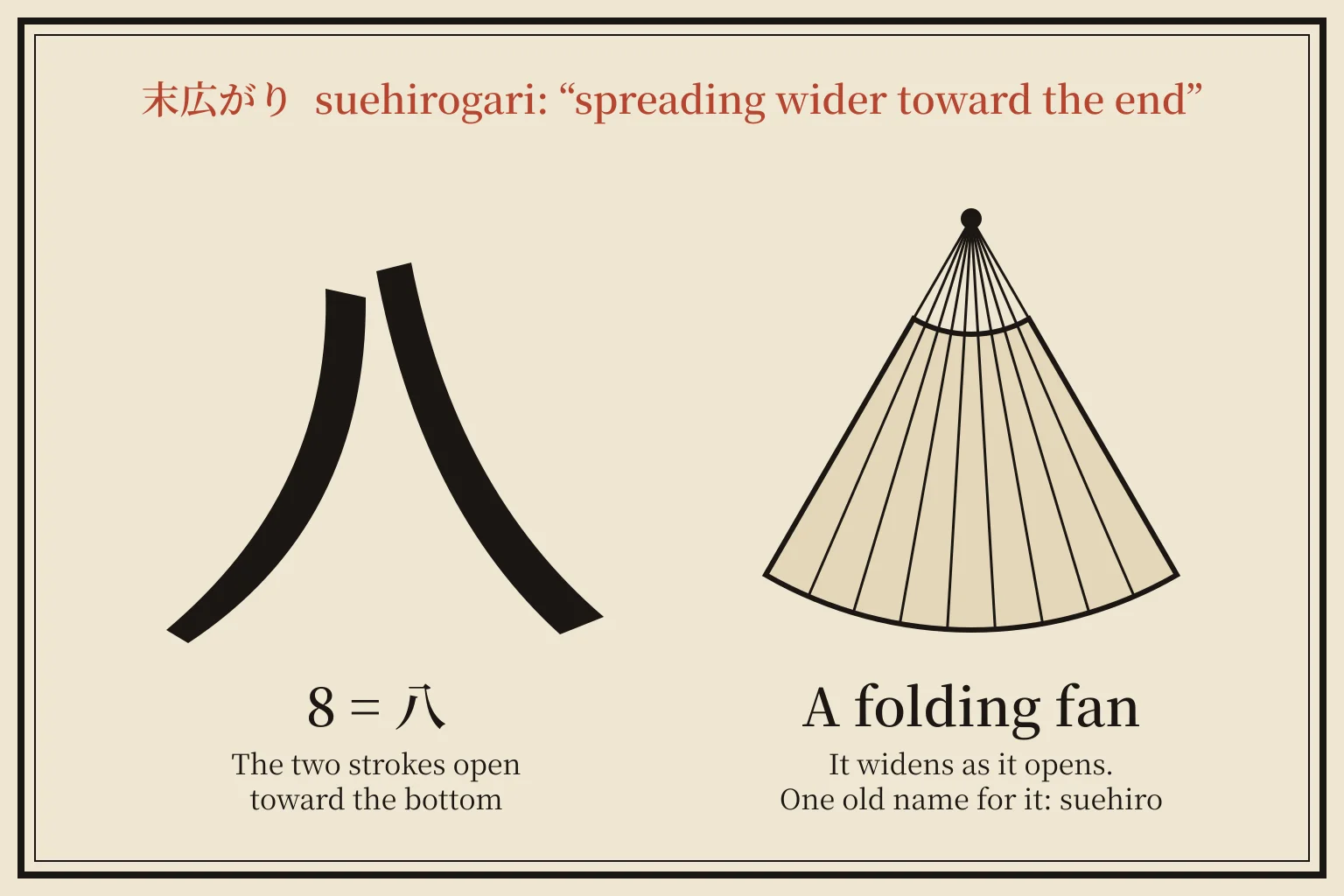 Our diagram: 八 and a folding fan both open wider toward the end.
The lucky word is suehirogari (末広がり). Daijisen gives the example "the 八 that spreads toward the end." A proverb dictionary says plainly: 8 is suehirogari, and it is thought of as a happy number.
But why is a shape that widens lucky? The word is older than its link to 8, and it grew up around the fan.
Its oldest example, says the Nihon Kokugo Daijiten, is in the essay Hōjōki from 1212. A city fire, blown by the wind, spread "like an opened fan." By 1546, suehiro was a name for the folding fan itself, because it opens wider at the end. Around the same late-medieval years, the word also came to mean a family that keeps prospering.
The dictionaries do not say when 八 was first called suehirogari. But the word was a fan word long before. So today's reason for 8 is borrowed from the fan. Daijisen says fans are still used at celebrations for that meaning: "spreading and prospering."
In the oldest myths, 8 meant "many"
But 8 was sacred long before that. In Japan's oldest myths, 8 often means "many." The Sekai Daihyakka encyclopedia gives examples like the eight-headed serpent and yaoyorozu no kami, "eight million gods."
Why did "many" become 8? That encyclopedia says it was "probably" around the time Chinese ideas like the eight trigrams arrived. The Britannica Japan dictionary guesses the shape instead. Both use the word "probably." Sekai Daihyakka adds a sound link too: 8, read ya, echoes iyasaka, a cheer for lasting growth.
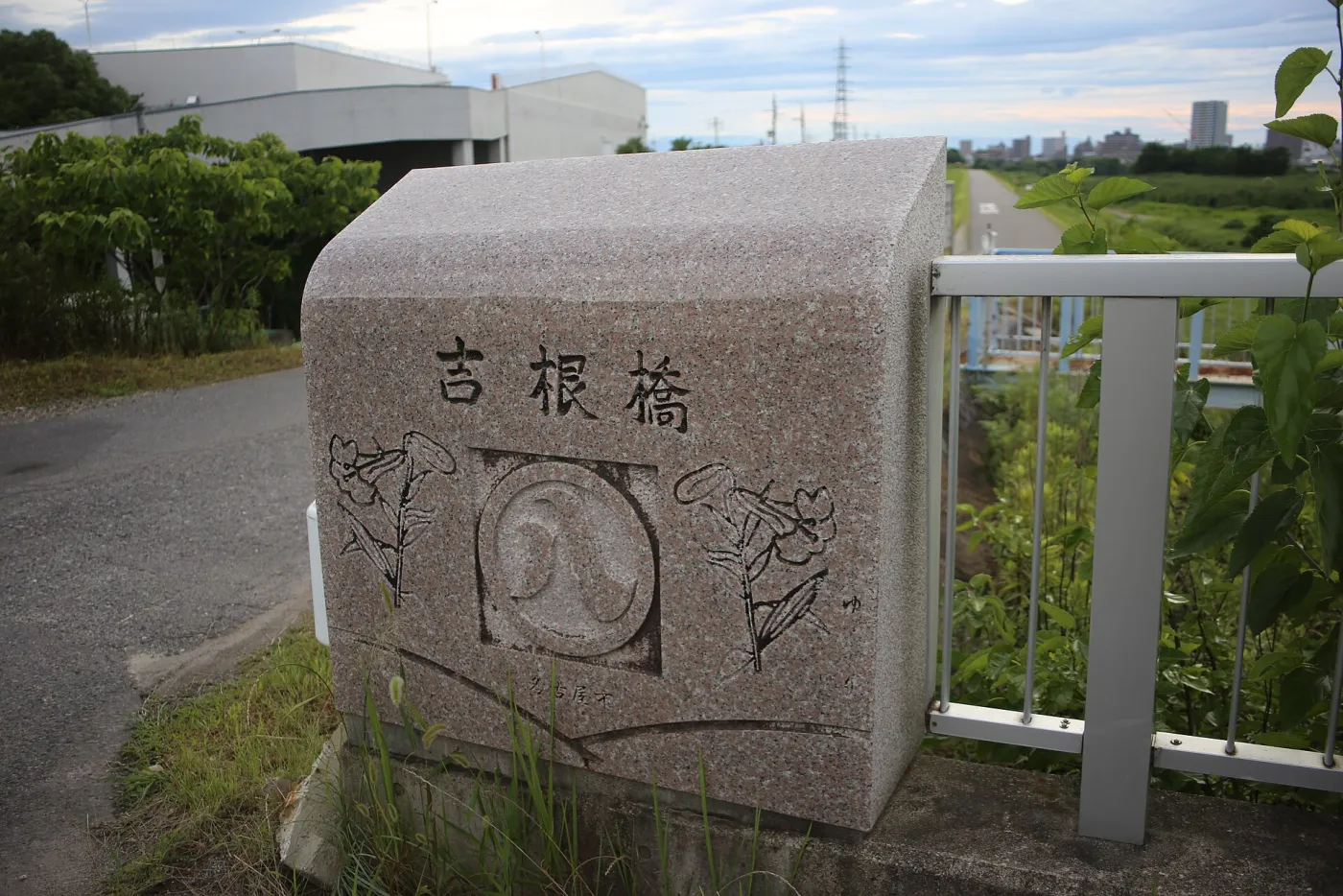 Nagoya's city badge on Kikko Bridge (吉根橋), Moriyama Ward, July 2021. Photo: 円周率3パーセント, CC BY-SA 4.0

You can see 8 on the streets of Nagoya. The city's badge is 八 inside a circle. The city's tourism site quotes the city council's history. It says the 八 is "a shape that supports and spreads," and that it is 発 (hatsu).
China loves 8 too, and fears 4 too
In China, 8 is popular because ba sounds like fa, a word for wealth. That is what the Associated Press reported in 2008. The Beijing Olympics opened at 8:08 p.m. on 08-08-08.
Four is shared as well. Japanese Wikipedia says 4 is avoided across the countries that use Chinese characters. In all of them, 四 sounds like or close to the word for death.
Seven is lucky in Japan, thanks to gods and odd numbers
Seven is mostly lucky in Japan. The Seven Lucky Gods (七福神) are one well-known example. The Nipponica encyclopedia says several gods of fortune were grouped to fit "the sacred number seven." The group existed by the early 1400s. They ride a treasure ship in our Japanese New Year guide.
Then there is Shichi-go-san, "seven-five-three," on November 15. Families take children aged 3, 5 and 7 to a shrine. Daijisen says these odd numbers are lucky because of a Chinese idea. In that idea, odd numbers are yang, the bright and active side.
The Japanese phrase rakkī sebun, "lucky seven," is borrowed from American baseball. Sources do not agree on when it began. The Sekai Daihyakka encyclopedia says the 1930s. Japanese Wikipedia gives one theory: a game in 1885.
But seven has a dark side too. The same encyclopedia says 7 is both sacred and unlucky. It is used at the turning points between life and death. The phrase shichinan hakku means "seven troubles, eight sufferings."
Seven is also the newer favorite. In the oldest myths, the Sekai Daihyakka says, 8 was the sacred number. Seven and 9 rose later, with festivals like July 7 and September 9.
Where you meet these numbers in Japan
Hotel and hospital rooms. Japanese Wikipedia says hotels, hospitals and apartment buildings often have no rooms ending in 4. A former hotel worker, in a book excerpt in Forbes JAPAN, says a custom of skipping rooms 4 and 9 remains. Some buildings have no 4th or 9th floor. No survey says how common this is.
Car plates. When Japanese car plates are handed out in order, numbers ending in 42 or 49 are skipped. The National Automobile Number Plate Association says an official notice removes them. It gives no written reason. One official guessed the old transport ministry was being careful about "shi-ni" and "shi-ku." A driver can still ask for 42 or 49 on purpose.
Parking lots. Japanese Wikipedia says some parking lots skip spaces 4 and 9.
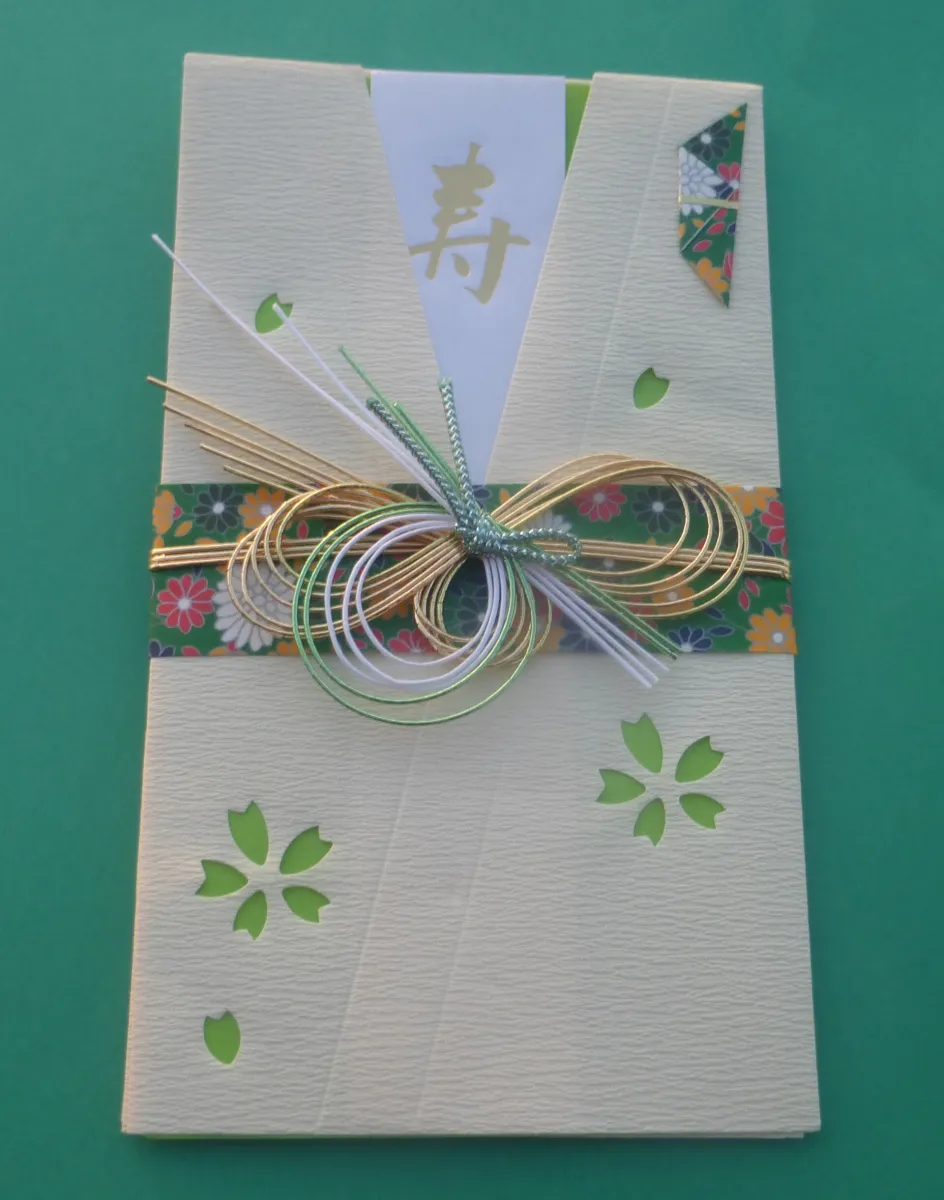 A shūgi-bukuro, an envelope for gift money at celebrations such as weddings. Photo: Nesnad, CC BY 4.0

Wedding money. Guests give cash in a special envelope. The money site Financial Field says even amounts are usually avoided. An even number "divides," which suggests a couple parting. Eighty thousand yen is fine, it says, because 8 is suehirogari. Ninety thousand yen is odd, but it is avoided for 9.
Gifts. Sources give different rules. The Nipponica encyclopedia gives this one: avoid 4, 6 and 8, and favor odd numbers like 9. Nippon.com (2025) puts it differently. It says money gifts avoid 4 and 9, for death and suffering. It says 8 was also thought lucky, because 八 spreads out like a fan.
42, 49, 13: the numbers that combine
Some bad numbers are built from two good-looking digits.
- 42 reads shi-ni, "to die." The Mypedia encyclopedia lists 4, 9 and 42 as Japan's unlucky numbers.
- 49 reads shi-ku, "death and suffering."
- 13 is the Western unlucky number. Nipponica says 13 is also one of the yakudoshi in Japan. These are "bad-luck years" of age.
Nipponica says the same wordplay shapes other bad-luck years. It names the ages 19, 33, 42 and 49.
On one island, Iki, the wordplay even reached marriage. A couple four years apart in age would "part by death," people said. Seven years apart, they would "part in tears."
A good number on your trip
Do you want a lucky number in Japan? Today's guides point to 8, the shape that keeps opening. Keep 4 and 9 out of gifts and cash. Customs still differ by family, region and age. When you are unsure, ask your host.