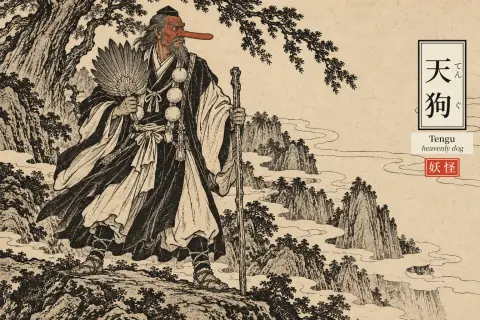
If you want to walk where the tengu lived, go to Mt. Kurama, an hour north of Kyoto Station. It is the mountain of Sōjōbō, the king of the tengu. You can walk over it in half a day, from Kurama Station to Kibune Shrine.
Most of the trail signs are in Japanese. So this page goes stop by stop, in the order you walk. For each place, we give the legend and where it comes from.
Why Kurama is the tengu's mountain
Japan has many tengu mountains. Kurama has the most famous tengu of all.
His name is Sōjōbō. In the 1600s, the scholar Hayashi Razan listed the three greatest tengu in Japan. Sōjōbō of Kurama came first. The other two were Tarōbō of Mt. Atago and Jirōbō of Mt. Hira.
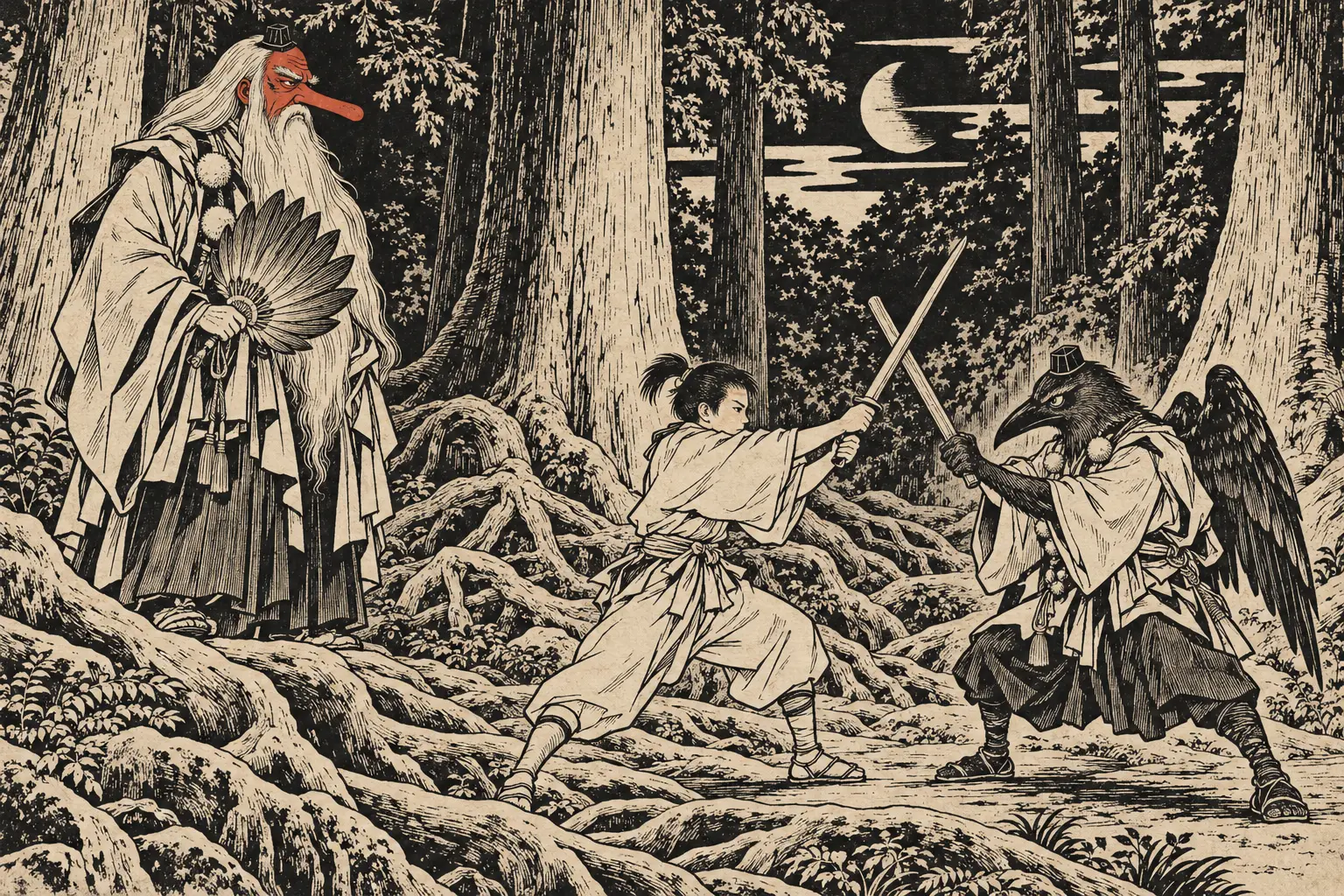
Kurama also has a famous pupil. The great general Minamoto no Yoshitsune lived at Kurama-dera as a boy, from about age 7 to 16. Back then he was called Ushiwakamaru. Legend says the tengu taught him to fight here, at night.
That legend is younger than the boy. The old war tale Gikeiki says Yoshitsune stole a book of strategy from Kiichi Hōgen, a yin-yang master. The best-known early telling with a tengu teacher is the Noh play Kurama Tengu, performed by 1465. In that play, the great tengu of Kurama takes the boy as his pupil. That is the story people still tell on the mountain.
That play changed how people saw the tengu. In older stories, tengu were mostly trouble. The Konjaku Monogatarishū, a story collection from the late Heian period, is full of tengu that lead people astray. A picture scroll of 1296, the Tengu Zōshi, drew proud monks as tengu. In Kurama Tengu, the tengu is something else: a stern teacher who helps a boy grow up. So when you walk on Kurama, you walk where the best-known kind tengu was born.
At the bottom: the station and the temple
1. The giant tengu at Kurama Station
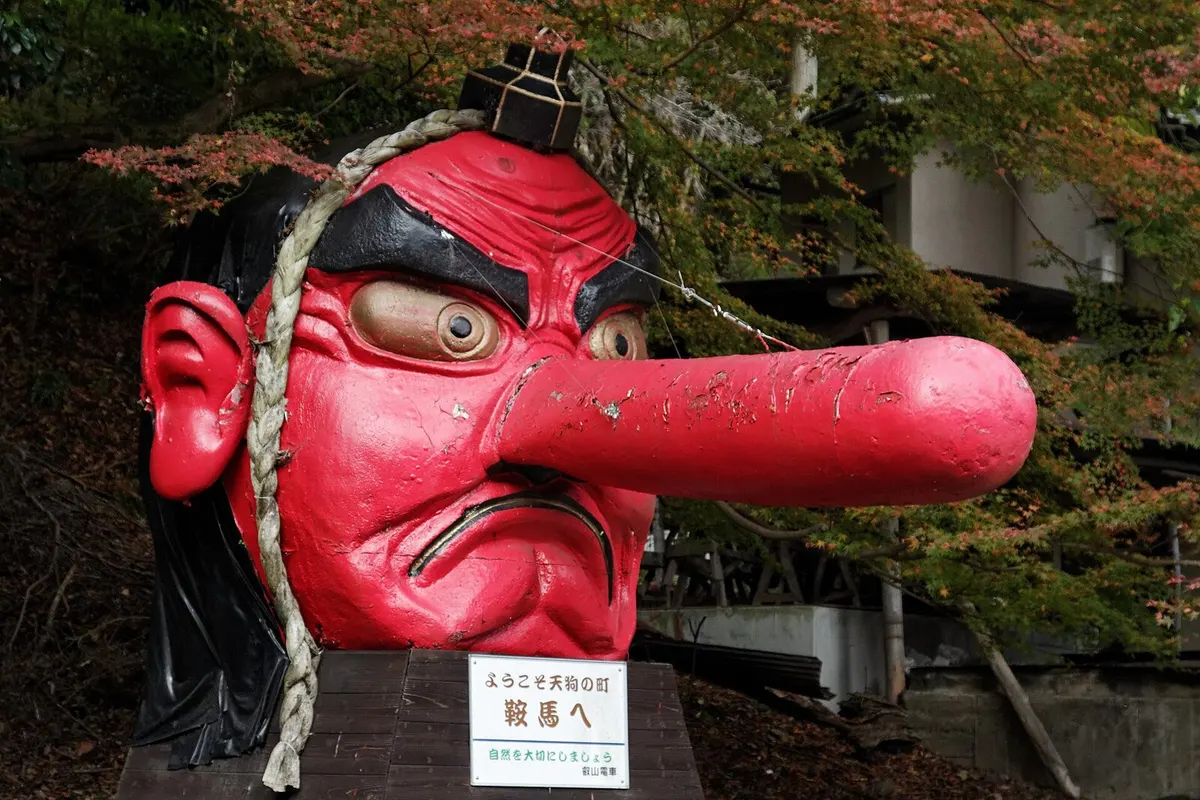 Photo: KimonBerlin, CC BY-SA 2.0
A huge tengu head greets you outside the station. It has a red face and a very long nose. The first one was made in 1994. Heavy snow once broke its nose. The one you see today was unveiled in 2019.
This is the long-nosed tengu. The older tengu had a bird's beak instead. If you want to know when the nose grew, read when tengu got long noses.
2. Kurama-dera
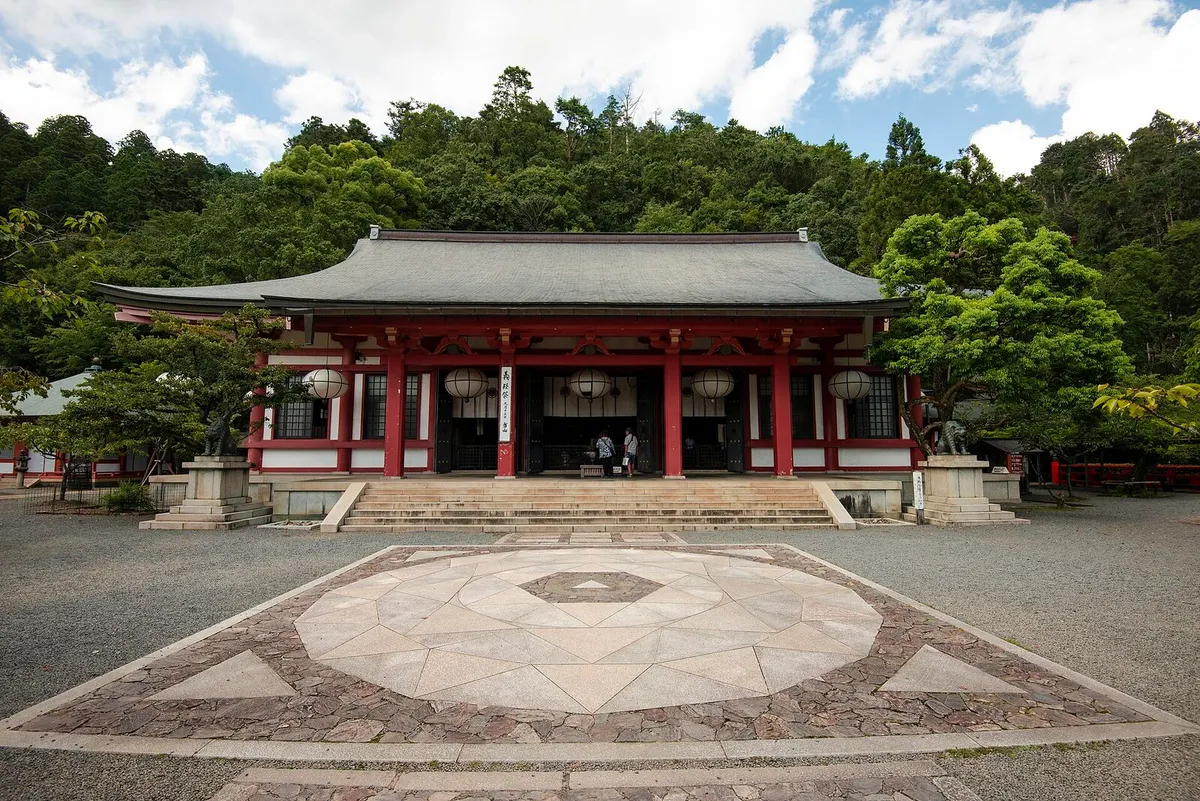 Photo: Maarten Heerlien, CC BY 2.0
The temple starts at the Niōmon gate, a short walk from the station. Entry costs 500 yen. A short cable car goes partway up, for a 200-yen donation. You can also walk up, in about 20 minutes.
At the main hall, look for the spirit called Maōson. Kurama tradition says Maōson came down from Venus 6.5 million years ago. The temple's own pages call it the king of the spirits of the earth.
On the mountain: from the roots to Kibune
3. Kinone-michi, the tree-root path
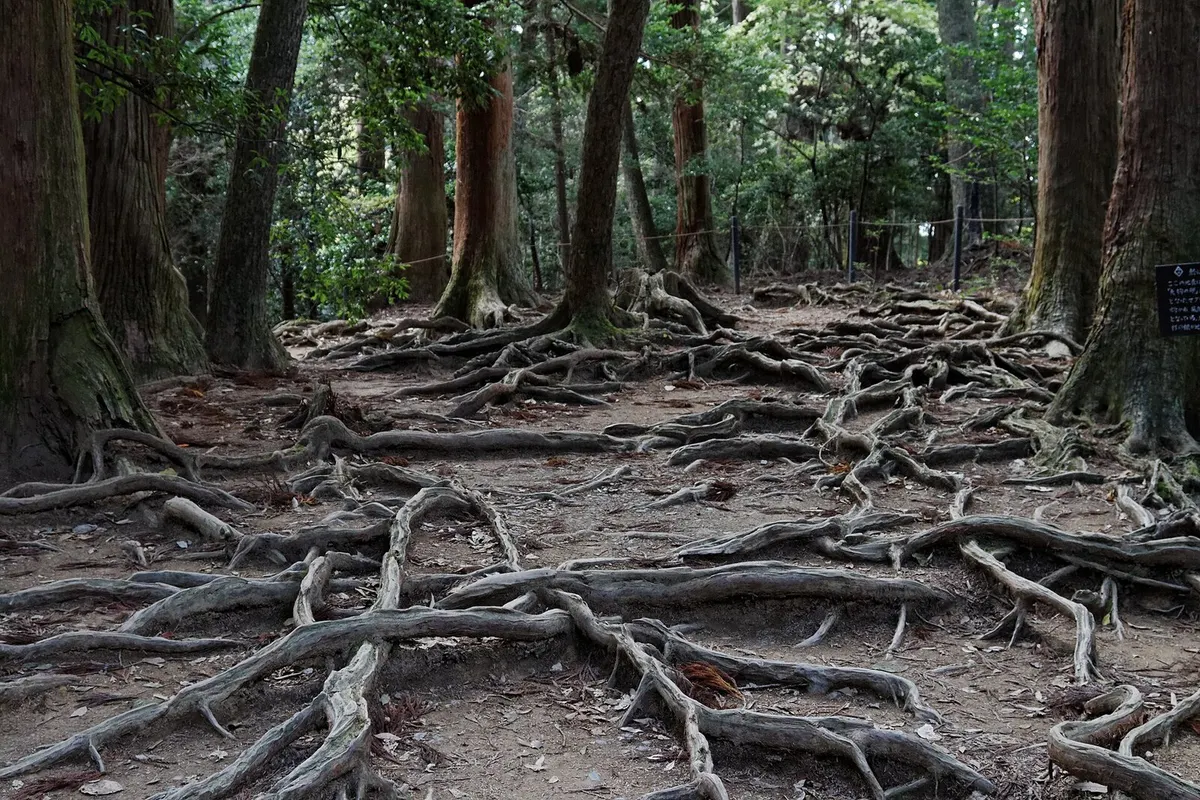 Photo: KimonBerlin, CC BY-SA 2.0
Past the main hall, the trail climbs into old cedar forest. The roots grow over the ground like a net, because the rock is too hard to dig into. The temple says Ushiwakamaru practised here. Walk slowly. The roots are slippery after rain.
4. Sōjōgatani
This small valley is named after the tengu king. The legend puts the night lessons here, between the boy and Sōjōbō. A small hall holds a statue of Fudō, the fierce guardian. A shrine to Yoshitsune stands nearby.
5. Down to Kibune
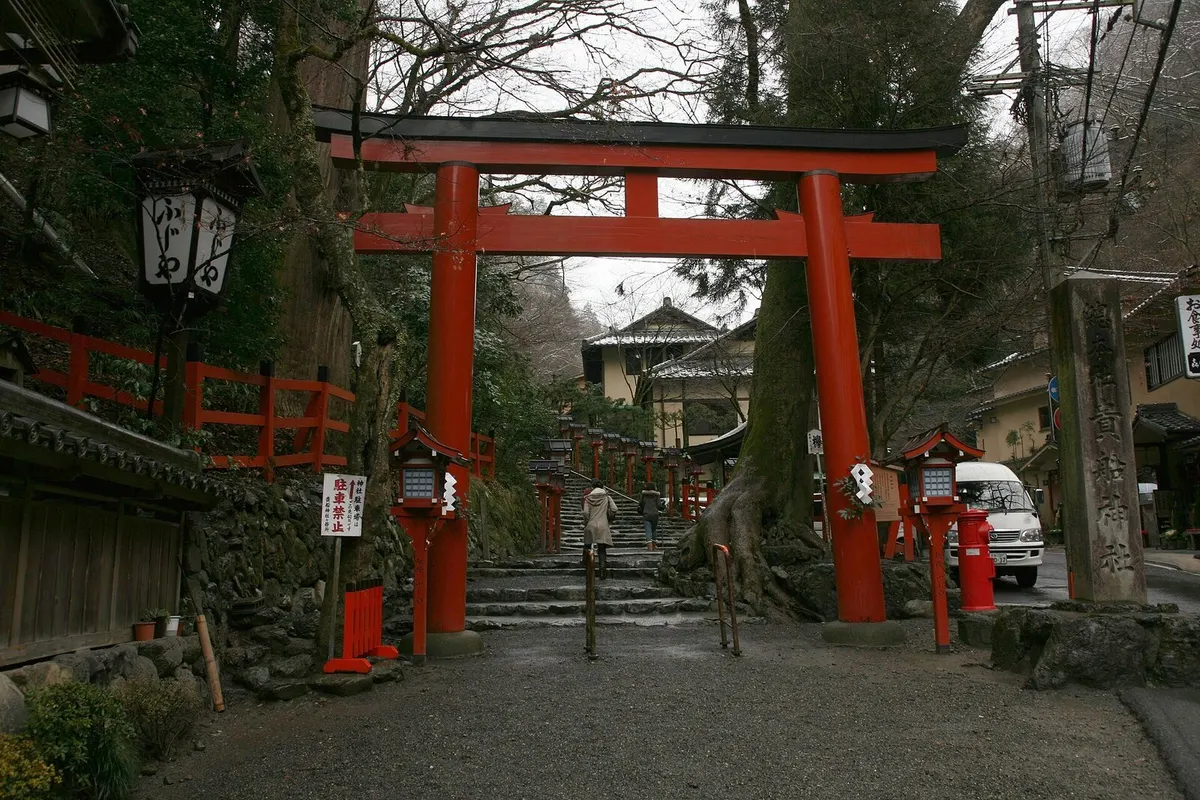 Photo:
From the Maōden hall, the path goes down the west side of the mountain to Kibune. Kibune Shrine honors a god of water and rain. It is the head shrine of about 2,000 water shrines in Japan. It has no tengu story. But its stone steps, lined with red lanterns, are one of the most famous sights in Kyoto.
From the Niōmon gate to Kibune takes about 1.5 to 2 hours on foot. You can do it the other way round, from Kibune up to Kurama.
How to get there
Take the Eizan train from Demachiyanagi Station to Kurama. It takes about 30 minutes. From Kyoto Station, take City Bus 4 to Demachiyanagi. Or take the JR Nara Line to Tōfukuji, then the Keihan line to Demachiyanagi. Plan on about an hour door to door.
For the walk, wear shoes with good grip. There are many steps and roots.
When to go
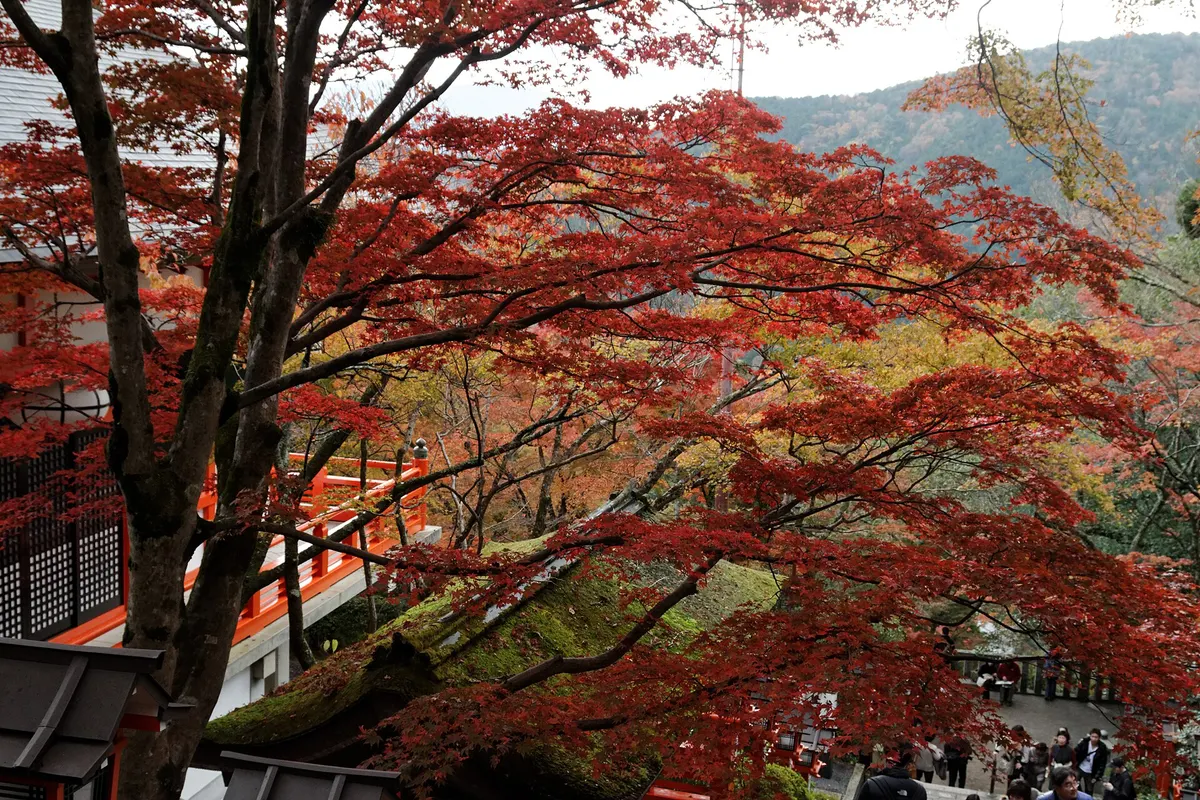 Photo: KimonBerlin, CC BY-SA 2.0
- Mid to late November: red leaves on the mountain. Kibune Shrine also lights up its autumn leaves at night in November.
- May to September: in Kibune, restaurants set up platforms over the river, called kawadoko. You eat right above the water, where it is cool.
- October 22: the Kurama Fire Festival, with huge torches carried through the village. It starts around 6 p.m. Expect big crowds. Cars are not allowed in, so come by train.
- May and June: fresh green, and fewer people than in autumn.
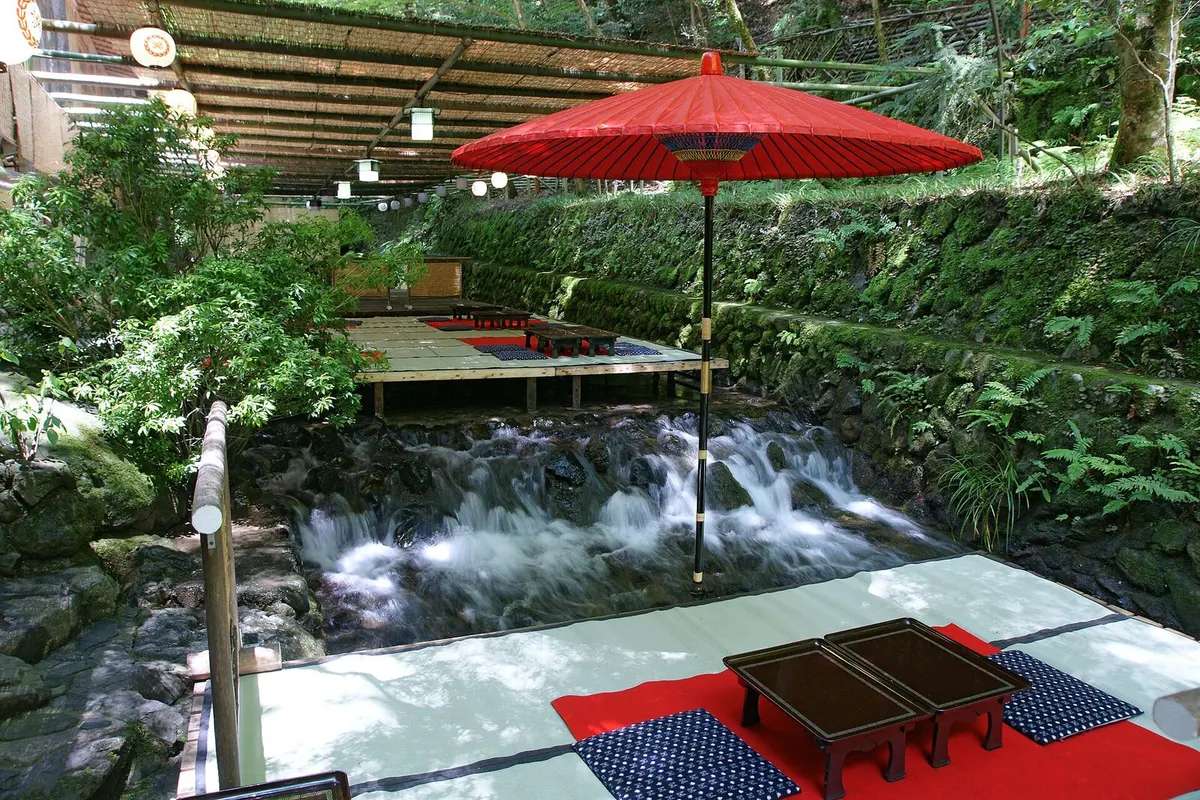 Photo: 663highland, CC BY 2.5
Walk alone, or with a guide?
You can walk the mountain alone. The path is clear, and this page gives you the stories.
But the trail signs are mostly in Japanese. If you want to hear them while you walk, there is a guided hike built around them. It starts at the giant tengu at the station. The guide tells the story of Yoshitsune and the tengu on the way. It is a private tour, about four hours. The walk to Kibune is an option you choose when you book. It is new, with only a few reviews so far, so read them first.
Kurama Temple and Mountain Legends Guided Hike
The photos on this page come from Wikimedia Commons. Each credit links to the photo's own page.